“`html

Unraveling the Affordable Housing Crisis Through Zoning Reforms

The affordable housing crisis in the United States is a complex issue, and no single solution can address it entirely. However, many cities are increasingly looking to zoning reform as a pivotal strategy to boost housing supply. As Urban Land Magazine reports, the severity of the crisis has pushed it to the forefront of political agendas, making politicians more inclined to tackle the issue.

City planner M. Nolan Gray, author of Arbitrary Lines: How Zoning Broke the American City and How to Fix It, highlights the shift in urban policies. “Dozens of cities have scrapped exclusionary single-family home zoning and parking requirements, which was previously inconceivable,” Gray notes.

The Shift Towards Inclusive Zoning

David Garcia, policy director for the Terner Center for Housing Innovation at the University of California, Berkeley, underscores the growing openness to zoning changes. “Many jurisdictions are reluctant to use zoning reform due to backlash, but the idea of allowing multiple units on single-family parcels is gaining traction,” Garcia explains.

Despite the momentum, the impact of recent zoning changes is still unfolding. Garcia warns that piecemeal reforms may not achieve the desired outcomes, and comprehensive zoning changes are often challenging to implement.

According to Toccarra Nicole Thomas, director of land use and development at Smart Growth America, zoning has historically contributed to the crisis by focusing on low-density, auto-centric housing. “Zoning is inherently inflexible,” Thomas asserts. She advocates for comprehensive reform to effectively generate affordable housing.

Downtown los angeles residential deliveries by year

Strategies for Effective Zoning Reform

Gray suggests that allowing “by right” building permits could significantly streamline the development process. Other recommended zoning reforms include reducing lot size requirements, eliminating parking restrictions, and allowing manufactured housing.

  • Reducing lot size requirements
  • Eliminating parking restrictions
  • Allowing manufactured housing

Several cities have successfully implemented zoning reforms. In Oakland, California, the transformation of Auto Row into a residential hub is a prime example. Similarly, Washington, D.C., has seen the revitalization of former industrial areas like the Navy Yard and NoMa into vibrant mixed-use communities.

The national zoning atlas zoning codes

Political Challenges and Opportunities

Zoning reform is not without its political challenges. Thomas points out that reform efforts often face opposition from NIMBYs (Not In My Backyard) and BANANAs (Building Absolutely Nothing Anywhere Near Anything). However, engaging with community stakeholders and building coalitions can help overcome resistance.

Garcia advises developers to engage with communities early in the planning process to demonstrate the benefits of new housing developments. “Data showing that new housing can increase the value of existing homes can be persuasive,” he says.

Ultimately, zoning reform is a gradual process. As Gray emphasizes, “We’re rolling back 100 years of policy that made it nearly impossible to build housing in dense cities, so it will take time to fix.” Yet, progress is being made, and the potential for transformative change is on the horizon.

Portland’s residential infill project

For further insights, explore the Reshaping the City: Zoning for a More Equitable, Resilient, and Sustainable Future report and the accompanying webinar, featuring experts like Nolan Gray and Toccarra Nicole Thomas.

“`

More Articles

Getting licensed or staying ahead in your career can be a journey—but it doesn’t have to be overwhelming. Grab your favorite coffee or tea, take a moment to relax, and browse through our articles. Whether you’re just starting out or renewing your expertise, we’ve got tips, insights, and advice to keep you moving forward. Here’s to your success—one sip and one step at a time!

AI Assistants Reshaping Real Estate: Embrace the Future

In the rapidly evolving world of real estate, AI assistants are making waves, promising to enhance the efficiency of agents without replacing the invaluable human touch.

By |August 19, 2025|Categories: AI Technology, Article, Real Estate|Tags: , |0 Comments

Revolv Real Estate Launches Orange Key Academy to Empower Future Real Estate Professionals

In a transformative initiative, revolv Real Estate has launched the Orange Key Academy, an educational platform aimed at empowering the next generation of real estate professionals.

Navigating Financial Success in 2025: Top 10 Strategic Wealth Planning Tips

In the ever-evolving landscape of financial planning, 2025 presents an array of opportunities and challenges. With the dawn of a new U.S. administration, the potential for significant tax law changes looms large, prompting individuals to reassess their financial strategies.

Copyright Office’s New Guidance on Fair Use in AI: A Delicate Balance

In a groundbreaking move, the U.S. Copyright Office has released its third and final report in the "Copyright and Artificial Intelligence" series, offering nuanced guidance on fair use in the realm of generative AI (GenAI) training. This comprehensive analysis, dated May 16, 2025, sheds light on the intricate legal landscape surrounding the use of copyrighted materials in AI model training.

By |August 17, 2025|Categories: Article, Artificial Intelligence, Copyright Law|Tags: , |0 Comments

CE Shop Crowned Best Overall Online Real Estate School for August 2025

The CE Shop has emerged as the top contender in the realm of online real estate education. According to a recent Investopedia article, the CE Shop was distinguished as the best overall online real estate school for August 2025.

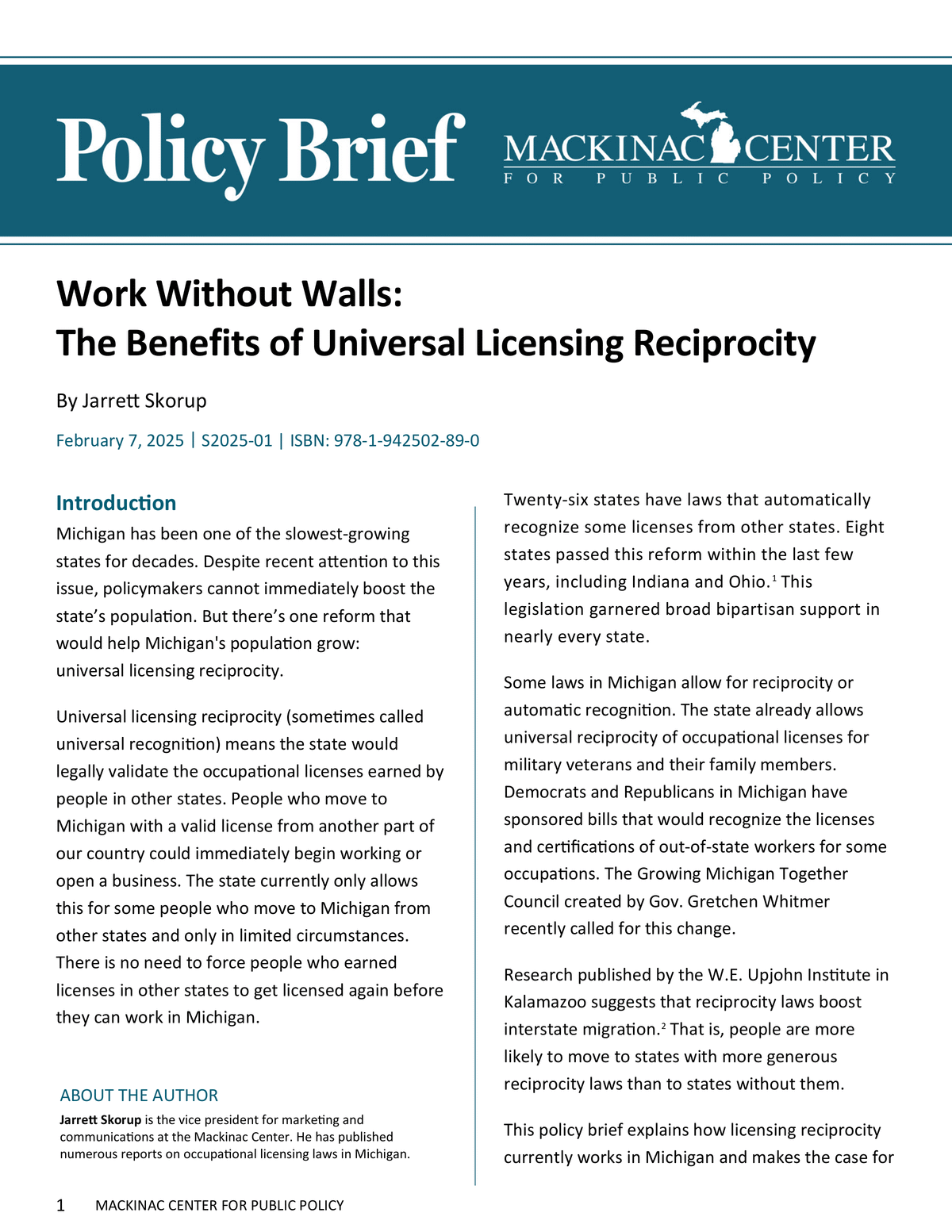
Michigan’s Path to Economic Revival: Embracing Universal Licensing Reciprocity

Michigan has grappled with slow population growth for decades, but introducing universal licensing reciprocity could catalyze change. By legally validating out-of-state occupational licenses, Michigan could attract a diverse array of skilled professionals, fostering economic expansion and addressing workforce shortages.