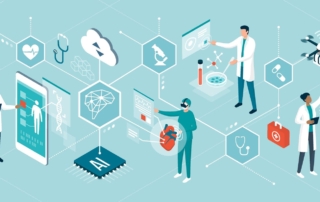
Unveiling Greece’s Digital Health Landscape

In the rapidly evolving realm of digital health, Greece finds itself at a pivotal juncture. While the term “digital health” lacks a precise legal definition in Greek law, it is broadly understood to include telemedicine, software as medical devices, and other digital healthcare services. This expansive interpretation aligns with definitions provided by the World Health Organization and the European Commission, emphasizing the integration of ICTs in health-related fields.

Emerging Technologies and Market Growth

Greece is witnessing a surge in digital health technologies, with telemedicine, wearable devices, and AI-powered tools leading the charge. These innovations are not only reshaping healthcare delivery but are also projected to boost the digital health market to a staggering $454.70 million by 2027, as per Statista Market Forecast.

Regulatory Framework and Legal Challenges

Navigating the digital health landscape in Greece involves a complex interplay of regulatory frameworks. Key legislations such as Greek Laws 4931/2022 and 4715/2020, alongside EU regulations like the MDR and IVDR, form the backbone of healthcare governance. However, core legal issues persist, particularly in data privacy, security, and the categorization of digital tools as medical devices.

Data Privacy and Security

The protection of personal data remains a cornerstone of digital health regulation. Compliance with the GDPR and Greek Law 4624/2019 is imperative, with stringent requirements for processing, storing, and sharing health data. The Hellenic Data Protection Authority plays a crucial role in enforcing these regulations, ensuring that entities prioritize data integrity and confidentiality.

Intellectual Property and Innovation

In the realm of intellectual property, the Greek Patent Law and the European Patent Convention offer a framework for protecting digital health innovations. While AI and software-driven inventions present unique challenges, the potential for patentability exists if they demonstrate technical character and solve specific problems.

Future Prospects and Government Initiatives

Looking ahead, Greece’s strategic focus on healthcare digitization is evident through initiatives like the Digital Bible of Transformation and the Recovery and Resilience Plan Greece 2.0. These projects aim to enhance digital infrastructure, expand telemedicine, and streamline electronic health records, with a completion target set for 2025.

For a comprehensive understanding of Greece’s digital health laws and regulations, the original article on ICLG.com offers an in-depth analysis of the current landscape and future trends.

More Articles

Getting licensed or staying ahead in your career can be a journey—but it doesn’t have to be overwhelming. Grab your favorite coffee or tea, take a moment to relax, and browse through our articles. Whether you’re just starting out or renewing your expertise, we’ve got tips, insights, and advice to keep you moving forward. Here’s to your success—one sip and one step at a time!

KBank’s Crypto Dilemma: Navigating Legislative Changes Amid IPO Plans

The financial landscape in South Korea is poised for a seismic shift as KBank, a major digital bank, grapples with a legislative curveball. The bank, which is heavily reliant on deposits from Upbit, Korea’s dominant cryptocurrency exchange, is facing a potential profit squeeze. The new Virtual Asset User Protection Act, set to take effect on July 19, 2024, mandates that banks must pay interest on crypto exchange deposits, a move that could severely impact KBank's bottom line.

By |December 29, 2024|Categories: Article, Cryptocurrency, Finance|Tags: |0 Comments

The Transformation of Healthcare: AI’s Role in Diagnostics and Personalized Medicine

AI's ability to analyze vast amounts of data is paving the way for a profound change in medical diagnostics. Khosla predicted that AI could take over up to 80% of standard medical tasks, reducing errors and biases in human diagnosis. This is particularly evident in fields like radiology and pathology, where AI's proficiency in analyzing medical imaging allows for the early detection of diseases such as cancer, significantly improving treatment outcomes.

The Geography of Pandemic-Era Home Price Trends and Implications for Affordability

The COVID-19 pandemic has dramatically reshaped the housing market landscape, resulting in an unprecedented surge in home prices throughout the United States.

By |December 28, 2024|Categories: Affordability Issues, Article, Housing Market|Tags: |0 Comments

AI in Healthcare: Transforming the Industry Today and Tomorrow

In a world where technology is rapidly evolving, artificial intelligence (AI) is proving to be a game-changer in the healthcare sector. AI-powered tools are improving patient outcomes, enhancing operational efficiency, and reducing costs, reshaping the very fabric of healthcare delivery.

By |December 28, 2024|Categories: Article, Artificial Intelligence, Healthcare|Tags: |0 Comments

Revolutionizing Surgical Training with VR and AI

In a groundbreaking study published by Nature, researchers have unveiled a novel approach to surgical training using a low-fidelity virtual reality (VR) simulator enhanced with artificial intelligence (AI) for objective assessment. This pioneering method is poised to transform how medical students acquire laparoscopic skills, offering a cost-effective and efficient alternative to traditional training models.

AI and Machine Learning: Revolutionizing the Healthcare Industry

AI in healthcare is projected to grow into a $188 billion industry worldwide by 2030, promising to revolutionize the field. From drug development to improved diagnostics, AI is already making significant strides, transforming medical practices and enhancing patient care efficiency.

By |December 27, 2024|Categories: Article, Healthcare, Technology|Tags: , |0 Comments