Unveiling Pandemic’s Unequal Educational Impact Across Communities

In a groundbreaking revelation, the Harvard Graduate School of Education has released new data detailing the profound and unequal effects of the COVID-19 pandemic on student learning across the United States. The comprehensive analysis, spearheaded by the Education Recovery Scorecard in collaboration with the Center for Education Policy Research (CEPR) at Harvard University and Stanford University’s Educational Opportunity Project, underscores the urgent need for expanded learning opportunities.


The research, which encompasses data from 8,000 communities across 40 states and Washington, D.C., paints a stark picture of how school closures and local conditions have exacerbated educational inequalities. The findings reveal that the location where children lived during the pandemic had a more significant impact on their academic progress than factors such as family background, income, or internet speed. This highlights the pressing need for school leaders to intensify recovery efforts.


Thomas Kane, faculty director at CEPR, emphasized the gravity of the situation, noting that “the hardest-hit communities, such as Richmond, Virginia, St. Louis, Missouri, and New Haven, Connecticut, need to teach 150 percent of a typical year’s worth of material for three consecutive years to catch up.”


Sean Reardon, a professor at Stanford Graduate School of Education, echoed these sentiments, stating, “The educational impacts of the pandemic were not only historically large but also disproportionately affected communities with many low-income and minority students.” He added that schools, while not the sole cause of decreased learning, are best positioned to address these disparities.


Key Findings and Recommendations

  • The average U.S. public school student in grades 3-8 lost the equivalent of a half year of learning in math and a quarter of a year in reading.
  • Test scores declined more in areas with higher COVID death rates and where adults reported increased depression and anxiety.
  • Communities with higher voting and Census response rates, indicators of “institutional trust,” experienced smaller declines in test scores.

The research also highlights the need for increased instructional time, such as summer school, extended school year, and tutoring, to help students recover lost ground. The study suggests that schools should not only focus on traditional academic calendars but also create learning opportunities outside of them.


For more in-depth insights, readers can explore the research brief and the interactive map that highlights disparities between neighboring school districts.


The ongoing support from entities like Citadel founder and CEO Kenneth C. Griffin, Carnegie Corporation of New York, and the Walton Family Foundation underscores the importance of these findings and the need for action.


More Articles

Getting licensed or staying ahead in your career can be a journey—but it doesn’t have to be overwhelming. Grab your favorite coffee or tea, take a moment to relax, and browse through our articles. Whether you’re just starting out or renewing your expertise, we’ve got tips, insights, and advice to keep you moving forward. Here’s to your success—one sip and one step at a time!

Phoenix Housing Market Surges Ahead of the Nation in 2025

The Phoenix housing market continues to outperform the rest of the country, posting stronger sales, rising equity, and an influx of qualified buyers. With closed sales, pending sales, new listings, and median prices all trending upward, the Valley is outpacing national growth by a wide margin. City‑level data shows impressive strength across Scottsdale, Goodyear, Gilbert, Phoenix, and more—making 2025 a powerful year for agents, investors, and professionals watching the Arizona market.

20 High-Demand Jobs to Watch as 2026 Approaches — Major Events Are Fueling New Opportunities

With the 2026 FIFA World Cup and America’s 250th birthday celebrations on the horizon, the U.S. job market is gearing up for a surge across multiple industries. Seasonal, flexible, and part‑time roles are expected to rise—especially for workers 50+ who have struggled in a cooling labor market. From accounting and HR leadership to event staffing and delivery driving, major cities are preparing for increased hiring tied to tourism, infrastructure, and yearlong national celebrations. Many of these fast‑growing roles connect directly to licensing and certification pathways, giving professionals new chances to pivot or upskill through programs offered by Cameron Academy.

New Florida Laws Taking Effect January 1, 2026: Key Updates for Professionals

Florida is rolling out a new wave of laws on January 1, 2026 that will impact professionals in real estate, insurance, healthcare, education, and other regulated industries. From new insurance rules and healthcare billing requirements to condo association deadlines and statewide databases, these updates reshape compliance expectations across the state. Whether you work in property, finance, or public‑facing services, understanding these changes is essential for staying aligned with Florida’s evolving regulations.

Commercial Real Estate Pros Are Almost All Bullish on 2026

Nearly every commercial real estate professional is expecting a stronger year ahead, with 97% predicting increased or stable activity in 2026, according to Avison Young’s latest outlook. Confidence has surged dramatically since mid‑2025 as strong sales, anticipated rate cuts, and improving fundamentals across key sectors signal that CRE recovery and growth may finally be taking hold.

Dallas‑Fort Worth’s 2025 Boom: The Metroplex Redefining U.S. Growth

Dallas‑Fort Worth is finishing 2025 as the nation’s top real estate and business powerhouse, fueled by corporate relocations, a dominant industrial sector, infrastructure megaprojects, and a rapidly evolving workforce landscape. From data center expansion to the launch of the DART Silver Line, the region continues to outpace national trends—while also confronting a growing demand for skilled professionals and licensed talent across construction, real estate, and technical fields.

FEMA and NJDEP Unveil New Morris County Flood Maps, Triggering Key Changes for Property Owners and Professionals

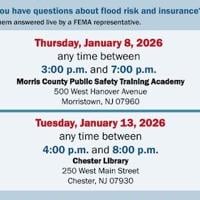
FEMA and the NJDEP have released revised preliminary flood maps for Morris County, reshaping how homeowners, real estate agents, insurers, and mortgage professionals assess flood risk. The updated FIRMs may shift properties into or out of higher‑risk zones, affecting insurance requirements, closing processes, and long‑term property values. With public review and appeals ahead, industry professionals are urged to study the changes now and prepare clients for potential impacts.