Unveiling the Intricacies of Fraud Detection

Fraud detection, a critical process in safeguarding financial and data resources, involves identifying suspicious activities that could signify criminal theft. As highlighted in a recent IBM article, such activities can significantly impact both individuals and businesses. The Association of Certified Fraud Examiners (ACFE) estimates that U.S. businesses lose an average of 5% of their gross annual revenues to fraud, underscoring the urgency of effective fraud detection strategies.

The Importance of Fraud Detection

Fraud detection is paramount not only for minimizing financial losses but also for maintaining customer trust and adhering to regulatory mandates. Without robust fraud detection measures, businesses risk reputational damage and operational disruptions. Notably, during the COVID-19 pandemic, the Bank of America faced a hefty fine of USD 225 million due to a faulty fraud detection system.

Techniques in Fraud Detection

Organizations employ various techniques to combat fraud, including transaction monitoring, artificial intelligence, and statistical data analysis. Transaction monitoring tools analyze transaction data in real-time, using anomaly detection to flag unusual activities. Meanwhile, AI and machine learning models can predict fraudulent behavior more efficiently, adapting to evolving fraud trends.

Common Types of Fraud

Fraud manifests in numerous forms, from credit card fraud to money laundering. Credit card fraud involves unauthorized use of card information, leading to chargebacks and financial losses for merchants. Money laundering, on the other hand, involves concealing illegally obtained funds to make them appear legitimate.

Challenges in Fraud Detection

The landscape of fraud detection is fraught with challenges. Generative AI, for instance, enables fraudsters to create convincing fake content, complicating detection efforts. Additionally, systems that produce excessive false positives can deter legitimate customers and slow down operations. Staying ahead of sophisticated fraud tactics, such as those used by the China-based fraud ring BogusBazaar, requires continuous adaptation and vigilance.

Data Privacy and Fraud Detection

Balancing fraud detection with data privacy regulations presents another hurdle. While organizations need access to personally identifying information (PII) for effective fraud detection, privacy laws can restrict data access, potentially hindering detection efforts.
The original IBM article provides a comprehensive overview of these issues, emphasizing the need for innovative strategies to counteract fraud in an ever-evolving digital landscape.

More Articles

Getting licensed or staying ahead in your career can be a journey—but it doesn’t have to be overwhelming. Grab your favorite coffee or tea, take a moment to relax, and browse through our articles. Whether you’re just starting out or renewing your expertise, we’ve got tips, insights, and advice to keep you moving forward. Here’s to your success—one sip and one step at a time!

Massachusetts Investment Firm Makes Strategic Move Into Connecticut With $3.65M Red Robin-Anchored Purchase

Newman Properties, a Massachusetts-based investment firm, has expanded its footprint into Connecticut with the $3.65 million acquisition of a 6,350‑square‑foot retail building in Enfield. Anchored by national restaurant chain Red Robin, the property offers the type of stable tenancy investors seek when entering new markets. The deal underscores growing confidence in anchored retail assets and provides a valuable real-world example for real estate professionals studying market analysis, investment strategy, and portfolio expansion.

JPMorgan Flags a Sunbelt Slowdown as Florida and Texas See Sharp Home Price Drops

JPMorgan now expects national home prices to flatten in 2026, but the Sunbelt is telling a very different story. Florida home values are down 5.1%, Texas is down 2.4%, and analysts warn that years of rapid building are finally catching up to the region. As demand stabilizes and inventory swells, real estate professionals — especially in Florida — face a market full of challenges, opportunities, and critical timing decisions.

AI Is Reshaping Mortgage Underwriting in 2026 as Industry Pros Brace for Major Change

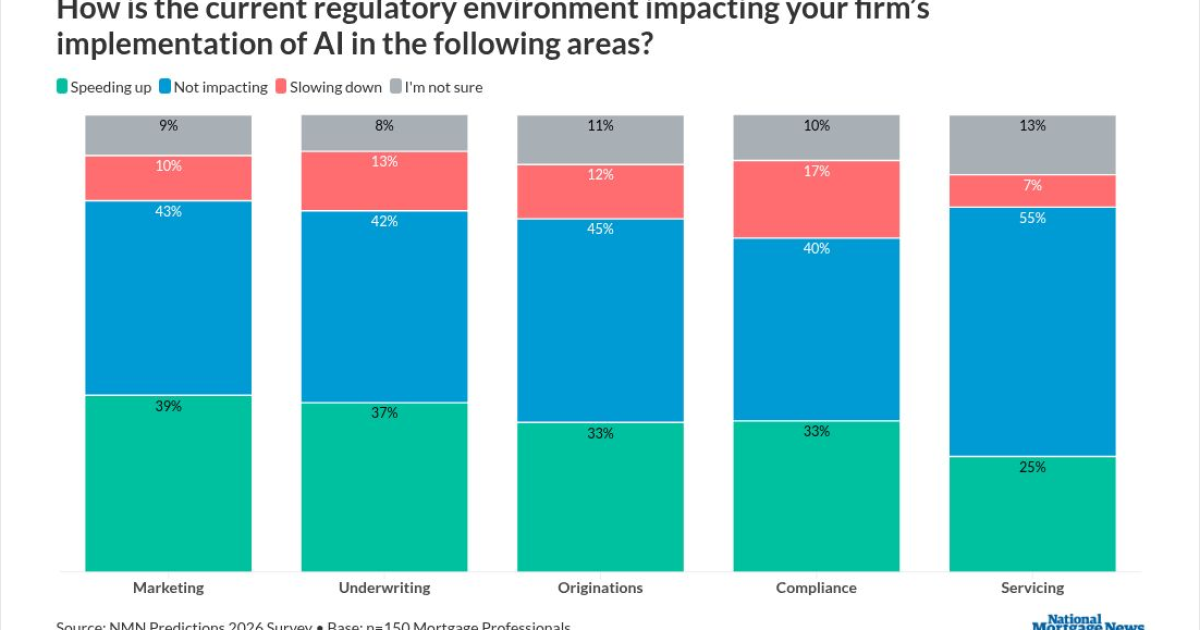
Artificial intelligence is finally stepping into the mortgage underwriting spotlight, with 57% of mortgage professionals predicting it will drive the most transformative industry shift in 2026. Thanks to major advancements in language models and workflow automation, AI is now capable of navigating the messy, document-heavy realities that have long slowed underwriting. From faster preapprovals to improved credit analysis and real‑time income verification, AI is streamlining processes while allowing underwriters to focus on true risk management. As regulatory winds shift and grassroots pressure builds within lending teams, the industry is entering a pivotal era where AI‑powered underwriting becomes not just an advantage — but an expectation.

Portland’s Commercial Market Suffers a Historic $2 Billion Collapse

Portland’s top 20 office towers have lost an unprecedented 70% of their value since 2019—plunging from $3 billion to under $1 billion—triggering tax revenue shortfalls, budget crises, and a surge in appeals as the city grapples with its biggest commercial real estate reset in modern history.

When Virtual Reality Becomes the New Penthouse Tour: Miami Students Step Inside a $1M Tech-Driven Luxury Tower Experience

South Florida’s luxury real estate market just raised the bar again — this time with a $1 million virtual reality system that lets buyers walk through Dolce & Gabbana’s upcoming Miami tower long before construction wraps. Real estate master’s students were given an immersive look inside the project, discovering how VR is transforming high‑end development, influencing buyer psychology, and shaping the future skills today’s professionals need.

Long Island’s Latest Commercial Moves: From Pizza Huts to Auto Parts Warehouses

Long Island’s commercial real estate scene is kicking off 2026 with a surge of activity—industrial leases in Medford, neighborhood retail trades in Bohemia, Pizza Hut’s new DELCO expansion in Centereach, mixed‑use acquisitions in Melville, and major investor interest in bank‑leased and franchise-backed properties. From warehouses to restaurant rebrands, these deals highlight a region evolving fast and offering fresh opportunities for agents, investors, and professionals looking to stay ahead in the market.