
Upholding the REALTOR® Code of Ethics: A Century of Integrity

In the realm of real estate, where trust and integrity form the bedrock of client relationships, the REALTOR® Code of Ethics stands as a beacon of ethical practice. Since its adoption in 1913, this code has guided REALTORS® in fostering cooperation and ensuring that consumers’ best interests are always at the forefront.

The original article from the National Association of REALTORS® (NAR) delves into the historical significance and evolution of this pivotal document. It underscores how the Code of Ethics has evolved to address contemporary challenges while maintaining its core values of honesty, integrity, and professionalism.

One of the key facets of the Code is its emphasis on cooperation among REALTORS®. This cooperation is not merely a suggestion but a requirement, ensuring that clients receive the best possible service and representation. The Code’s impact is further amplified by its availability in multiple languages, making it accessible to a diverse range of professionals and clients.

Recent Developments and Resources

The NAR continues to update and refine the Code, with the latest 2024 edition reflecting the association’s commitment to upholding the highest ethical standards. This ongoing evolution is supported by a wealth of resources, including previous editions and translations.

For those interested in a deeper dive, the Code of Ethics & Professional Standards Policies provide a comprehensive overview of the policies that govern REALTORS®’ professional conduct.

Code of ethics banner

As the real estate industry continues to evolve, the REALTOR® Code of Ethics remains a cornerstone, ensuring that integrity and trust are never compromised. This commitment to ethical practice not only benefits clients but also elevates the profession as a whole, fostering an environment where ethical considerations are at the heart of every transaction.

More Articles

Getting licensed or staying ahead in your career can be a journey—but it doesn’t have to be overwhelming. Grab your favorite coffee or tea, take a moment to relax, and browse through our articles. Whether you’re just starting out or renewing your expertise, we’ve got tips, insights, and advice to keep you moving forward. Here’s to your success—one sip and one step at a time!

Artificial Intelligence in Diagnostics: A Revolution in Healthcare

The global market for artificial intelligence in diagnostics is poised for remarkable growth, with projections estimating it to reach USD 7.3 billion by 2032.

By |December 10, 2024|Categories: Article, Artificial Intelligence, Healthcare|Tags: , |0 Comments

Revolutionizing Medical Education with Extended Reality

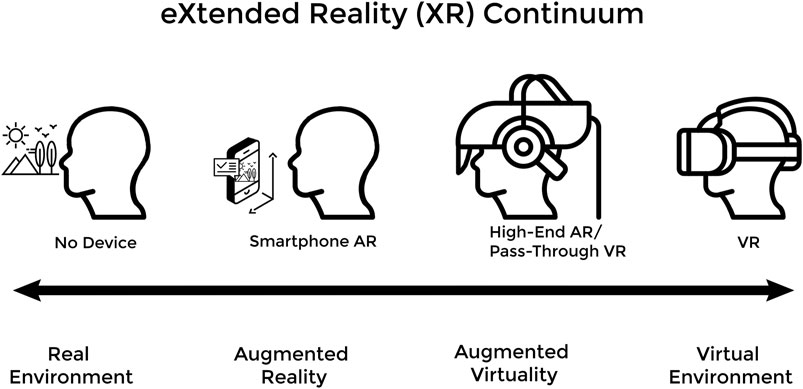
In the ever-evolving landscape of medical education, a new player has emerged, promising to revolutionize the way future doctors are trained. The integration of eXtended Reality (XR) technologies is reshaping the educational landscape by addressing the limitations of traditional methods.

Genetic Testing: A New Dawn in Healthcare

Genetic testing represents more than just a scientific advancement; it signifies a fundamental shift in how we approach health and wellness.

Sustainable Architecture: Blending Innovation with Ecological Responsibility

The journey toward sustainable architecture is ongoing, with each project serving as a beacon of what's achievable when creativity meets ecological awareness.

By |December 9, 2024|Categories: Architecture, Article, Sustainability|Tags: |0 Comments

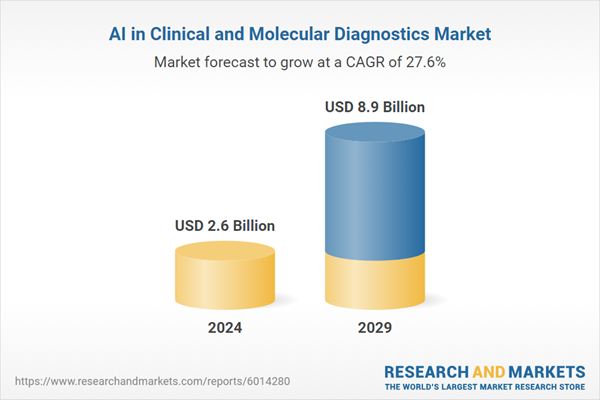
AI in Clinical and Molecular Diagnostics: A Market on the Rise

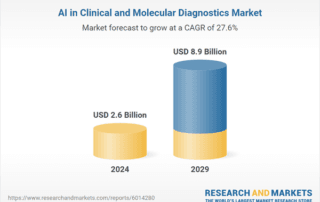
AI in Clinical and Molecular Diagnostics Market is set to experience remarkable growth, projected to surge from USD 2.6 billion in 2024 to USD 8.9 billion by 2029. This growth is driven by the integration of advanced AI technologies such as machine learning and deep learning into traditional diagnostic methodologies like imaging, genomics, and laboratory testing.

AI: A Revolution in Healthcare’s Future

AI is not a distant dream but a present reality, already integrated into everyday life through virtual assistants like Alexa and Siri. AI shows promise in enhancing medical accuracy, such as in predicting mesothelioma survival and improving colonoscopy accuracy, it is not intended to replace healthcare professionals.