US Workers’ Comp Market Faces Rising Costs and Regulatory Shifts in 2026
The US workers’ compensation landscape is heading into a defining year as 2026 approaches, with rising medical expenses, complex claim types, and shifting state regulations reshaping the market. According to the latest Workers’ Compensation Market Outlook from Risk Placement Services, insurers, brokers, and employers will need to adapt quickly to maintain stability and manage escalating risks.
Medical Costs and Complex Claims on the Rise
Medical inflation remains one of the largest drivers behind rising claim severity. In several states, healthcare costs continue climbing beyond national averages, stretching claim duration and increasing overall losses. These escalating expenses are forcing insurers to rethink how they structure reserves and refine forecasting models.
Cumulative trauma claims—such as repetitive stress injuries and musculoskeletal disorders—are also intensifying pressure. These injuries often require specialized diagnostics and long-term treatment, causing unexpected surges in medical spending.
Regulatory Changes Tighten State-Level Pressures
Expanding state presumption laws are providing broader protections for first responders, healthcare staff, and workers in high-risk fields. As states extend coverage for conditions like PTSD, insurers must evolve underwriting strategies to stay aligned with emerging risk categories.
California continues to influence nationwide trends, reporting a sharp combined loss ratio of 127%. States such as Florida, Texas, and New York show fluctuating claim patterns shaped by unique workforce demographics and economic factors.
Technology and Innovation Transform Workplace Safety
AI-driven monitoring, predictive analytics, and wearable safety devices are becoming vital for reducing injury frequency. Companies that adopt these technologies are experiencing improved safety outcomes and more accurate underwriting insights—an essential shift in a tightening marketplace.
Alternative Risk Financing Gains Momentum
More organizations are embracing captives, hybrids, and self-insured structures as traditional markets harden. These strategies create flexibility and help businesses better navigate industries where claim severity continues to climb.
Altogether, the 2026 forecast suggests continued pressure—yet also significant opportunities for innovation, preparedness, and smarter risk management.
Where Professionals Go From Here
For professionals in insurance, risk management, and compliance, staying educated is key. Institutions like Cameron Academy support both new and experienced professionals by offering licensing, continuing education, and skill‑building programs across all 50 states. In a changing market, education is the strongest advantage.
Explore the Original Report
For a deeper look into the 2026 workers’ comp outlook, visit Insurance Business Magazine. Tap or click to open the full feature.
More Articles
Getting licensed or staying ahead in your career can be a journey—but it doesn’t have to be overwhelming. Grab your favorite coffee or tea, take a moment to relax, and browse through our articles. Whether you’re just starting out or renewing your expertise, we’ve got tips, insights, and advice to keep you moving forward. Here’s to your success—one sip and one step at a time!
In 2026, financial advisors are no longer just experimenting with AI — they’re relying on it. Once confined to back-office duties, AI now supports meeting prep, portfolio analysis, and even early-stage financial planning. Advisors say the tech is strengthening client relationships by freeing them from administrative overload, though entry-level roles like paraplanners may feel the squeeze as automation accelerates.
Cybercriminals are weaponizing AI to launch highly convincing email scams and system breaches across the mortgage industry, overwhelming lenders and servicers whose cybersecurity measures can’t keep up. With major companies already hit and regulation lagging behind, experts warn the sector—now considered critical infrastructure—must rapidly upgrade protections, collaborate on threat intelligence, and improve AI governance before the risks escalate further.
Escrow payments are quietly surging across the country as property taxes and insurance premiums spike—pushing many homeowners toward delinquencies and even foreclosure. New data from Cotality shows the sharpest increases hitting the South and Midwest, with Florida among the hardest‑hit states. Even with fixed mortgage rates, rising escrow requirements are driving monthly payments higher and threatening affordability heading into 2026.
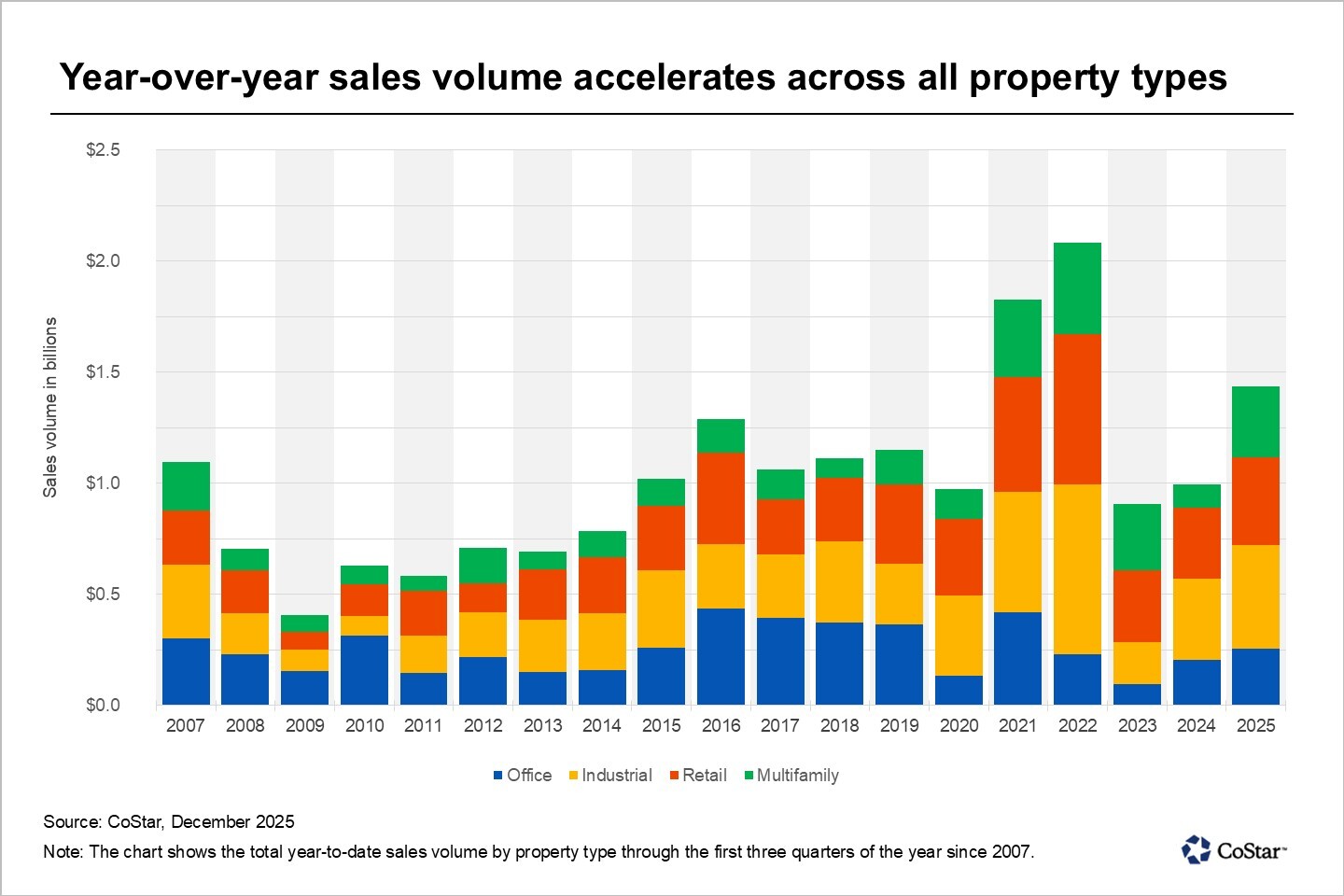
Milwaukee entered 2025 with renewed momentum, posting its strongest commercial real estate sales volume in three years. After a period of uncertainty and high capital costs, investors are returning with a sharper focus on quality assets, realistic pricing, and reliable cash flow. Activity is increasing across industrial, office, multifamily, and retail sectors, signaling a broad-based recovery fueled by stabilizing interest rates and improved market confidence.
As 2026 approaches, the title insurance industry is navigating a complex mix of market recovery, rising fraud threats, and sweeping regulatory changes. Industry leaders say the path forward centers on smarter technology, leaner operations, and stronger support for title agents. With AI-driven workflows, enhanced fraud prevention, and new compliance demands—including FinCEN’s expanded Geographic Targeting Orders—companies like Stewart and First American are reshaping how title work gets done. For real estate and mortgage professionals, the year ahead promises more automation, heightened standards, and major opportunities for those who stay ahead of the curve.
The real estate industry is undergoing a major transformation in 2025 as advancements in AI, proptech, blockchain, and data intelligence redefine how properties are marketed, valued, financed, and experienced. From instant digital valuations and immersive virtual tours to tokenized investments and predictive analytics, technology is reshaping every stage of the real estate lifecycle. Professionals who embrace these innovations—while maintaining the human expertise clients still rely on—will lead the next era of the industry.