Want Job Security in the Age of AI? Get a State License
Every generation has that one timeless piece of career advice. For the author of the original Guardian column, it came from a father who insisted on the power of becoming a certified public accountant. Not because the work was glamorous, but because it was stable. Taxes need filing. Finances need managing. And a state-issued license meant you could always put food on the table.
Today, in an era where artificial intelligence, automation and robotics continue to push boundaries, that same advice rings louder than ever: get a state license. Any license. In any profession. It remains one of the most effective forms of job protection we have.
Why Licensing Still Matters
Despite scrutiny from organizations like the Cato Institute and federal interest in reforming boards (read more), the reality remains unchanged: a state license creates opportunity, upward mobility and credibility.
Licensing validates competence through education, exams, and ongoing professional development. It signals to employers and clients that you’re not just trained — you’re vetted and accountable.
From beauticians to pharmacists, engineers to nurses, electricians to home inspectors, licensed professionals remain deeply insulated from the rapid automation affecting other fields. AI tools will certainly improve efficiency and reduce dangerous tasks, but they will still require trained, certified, licensed humans to operate, oversee and apply them.
The Rise of Licensed Trades in a Tech-Driven World
Tech isn’t replacing skilled trades — it’s supercharging them. Trade schools have seen enrollment rise more than 35% since 2020 according to Fox Business. Licensing across states has increased nearly 30% as more workers recognize that verified credentials unlock higher pay and job security (NCSL report).
And investors have taken notice. The Wall Street Journal reports private equity firms scooping up HVAC, plumbing and electrical companies — turning licensed contractors into unexpected millionaires.
Where Cameron Academy Fits In
For many professions — especially real estate, insurance, mortgage and finance — your career doesn’t begin without a state-approved license. Cameron Academy provides the education, exam prep and continuing education required to stay current, stay competitive and stay licensed in industries that AI will support — but not replace.
If stability, credibility and long-term earning potential matter, licensing is your foundation. We’re here to help you build it.
AI Won’t Replace Licensed Professionals — It Will Empower Them
Even in fields like accounting, where AI may soon handle tax prep, financial analysis and research, licensed professionals won’t become obsolete. Instead, they’ll become more valuable. AI can’t replace judgment, communication, empathy or ethical responsibility — core components of every licensed career.
Clients will assume their advisors, contractors and agents use the latest tech to do their work better. And they should. But they also trust that the person behind the tools is qualified by the state to guide them.
As the next tech boom rolls in, the biggest winners will be those who do work with their hands and minds — supported by tools, not replaced by them.
And for that future, nothing prepares you better than a state license.
More Articles
Getting licensed or staying ahead in your career can be a journey—but it doesn’t have to be overwhelming. Grab your favorite coffee or tea, take a moment to relax, and browse through our articles. Whether you’re just starting out or renewing your expertise, we’ve got tips, insights, and advice to keep you moving forward. Here’s to your success—one sip and one step at a time!
Palm Beach protests erupted as intensified immigration enforcement reached the heart of Trump’s hometown, while millions in Florida brace for rising health care costs as key subsidies near expiration. At the same time, state regulators boldly declare the long‑running property insurance crisis “over,” leaving homeowners and industry professionals questioning whether true stability has finally returned.
As 2025 comes to a close, the real estate industry is shifting from uncertainty to strategic expansion. According to DWS’s Year-End 2025 Outlook, property values are stabilizing after years of repricing, capital is concentrating on high-quality assets, and Sunbelt markets—especially Florida—continue to outperform. With technology enhancing rather than replacing professional expertise, 2026 is shaping up to reward professionals who stay informed, skilled, and strategically positioned for the next cycle.
Texas capital is pouring into San Francisco’s long‑struggling commercial real estate market, with Lone Star investors buying up discounted Union Square buildings and signaling what many experts believe is the city’s market bottom. As office activity and confidence begin to return, buyers from across the country are joining the rush, turning SF’s post‑pandemic slump into one of the nation’s hottest bargain opportunities.
With 2026 HousingWire Tech100 nominations closing on December 19, the housing tech sector is accelerating at full speed. AI‑powered data platforms, digital closing breakthroughs, embedded insurance growth, and next‑generation servicing automation are reshaping real estate, mortgage, insurance, and finance. From ATTOM’s AI‑ready property intelligence to Hapi Homes’ Martha Stewart design revival, Obie’s nationwide expansion, Outamation’s servicing automation, and ServiceLink’s next‑level borrower scheduling, this year’s standout innovators are defining the future of the housing economy.
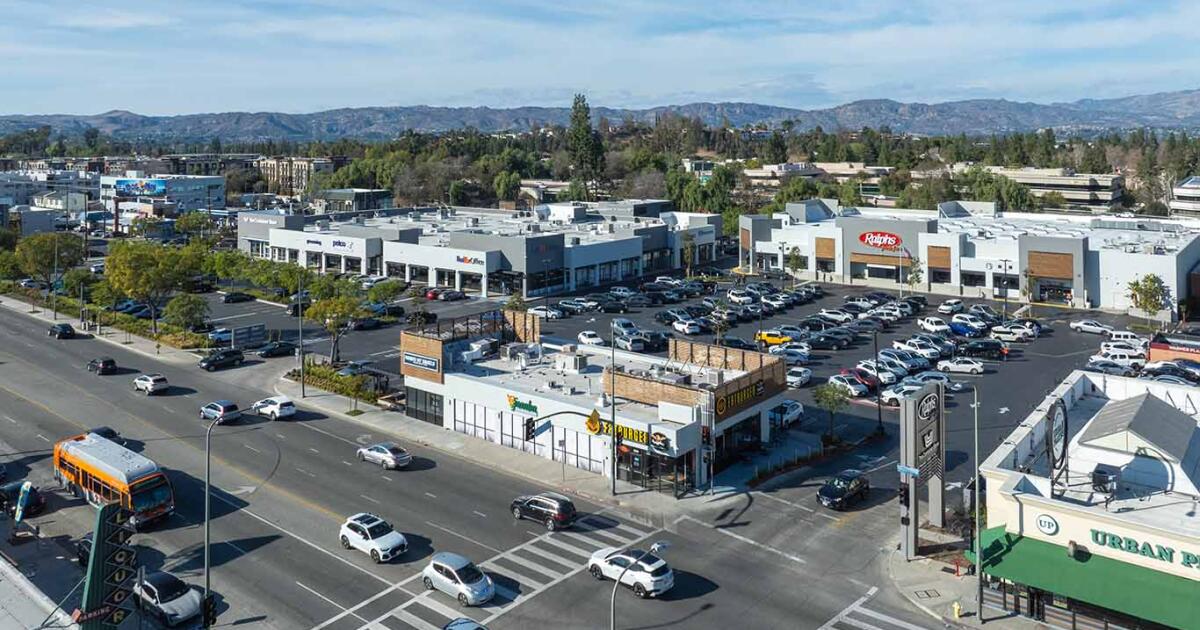
Space Investment Partners has acquired the 123,402‑square‑foot Topanga Gateway retail center in Woodland Hills for $64 million, marking another significant move in the firm’s expanding grocery‑anchored investment strategy. Located at a high‑visibility intersection and 97% occupied at the time of sale, the property strengthens the company’s push toward $500 million to $1 billion in retail acquisitions for 2026, underscoring continued investor confidence in necessity‑based retail assets.
After the Federal Reserve’s final 2025 rate cut on December 10, mortgage markets are recalibrating, giving buyers and homeowners a glimmer of relief. Rates remain lower than earlier in the year, with 30-year fixed loans at 6.12% and refinances dipping as well. This shift may spark renewed activity for buyers, refinancers, and real estate professionals heading into 2026.