Washington Homebuyers and the National Real Estate Settlement: What You Need to Know
Saturday, August 17, marked a pivotal moment for the real estate industry, with the National Association of Realtors (NAR) and several brokerages agreeing to pay over $970 million to settle a federal lawsuit in Missouri. The lawsuit alleged that traditional agent commission structures inflated costs for homebuyers.
As part of the settlement, NAR-affiliated listing services must remove broker compensation offers from their websites, and brokers are now required to negotiate written service agreements with clients before home tours. However, these changes do not directly impact Seattle or most of Washington. This is due to existing state requirements and the Northwest Multiple Listing Service (NWMLS) opting not to join the settlement.
Washington’s Agency Law, effective since January, already mandates agents to have written service agreements with their clients. The NWMLS, covering 26 of Washington’s 39 counties, including King, Pierce, and Snohomish, is not affiliated with NAR and thus not subject to the settlement’s terms. Consequently, brokers in these areas can continue to post compensation offers on the MLS.
The NWMLS has argued that removing commission offers from home listings could harm transparency and potentially lead to deceptive practices. While the settlement might not bring immediate changes to the Seattle area, it has certainly brought the issue of broker compensation into the spotlight.
Industry observers suggest that the increased attention, along with the state’s Agency Law update and NWMLS’s earlier reforms, could eventually lead to more price competition and lower average brokerage fees. This could potentially benefit home sellers by reducing the cost of agent commissions.
In Eastern Washington, where the Spokane MLS is NAR-owned, there have been some adjustments following the settlement’s new requirements. Karene Loman, president-elect of the Spokane Realtors, noted that it will take some time for brokers to adapt to the new way of doing business.
While some analysts predict that the changes could lower brokerage fees by 1% to 2% or encourage alternative payment models, such as flat fees, others remain skeptical about the long-term impact. In the Seattle metro area, agent commissions have largely remained the same despite the reforms.
Stephen Brobeck, senior fellow at the Consumer Federation of America, pointed out that despite new rules offering consumers more choices, practices have not substantially changed. He advocates for a system where homebuyers and sellers make separate payment arrangements with brokers.
Some Seattle-area brokers have welcomed the national changes as a step toward more transparency. John Manning, managing broker at RE/MAX Gateway in Seattle, emphasized the importance of allowing consumers input and choice regarding commissions.
Kevin Broveleit, principal of West Seattle Realty, believes that the national trends and local changes will lead to real change in how compensation is negotiated, supporting a more competitive environment where consumers can compare prices between different vendors.
As the real estate landscape continues to evolve, it remains to be seen how these changes will ultimately impact the market. For now, Washington homebuyers should stay informed about the ongoing developments and consider how they might affect their real estate transactions.
For more details, you can read the original article on The Seattle Times.
“`
More Articles
Getting licensed or staying ahead in your career can be a journey—but it doesn’t have to be overwhelming. Grab your favorite coffee or tea, take a moment to relax, and browse through our articles. Whether you’re just starting out or renewing your expertise, we’ve got tips, insights, and advice to keep you moving forward. Here’s to your success—one sip and one step at a time!
In 2026, financial advisors are no longer just experimenting with AI — they’re relying on it. Once confined to back-office duties, AI now supports meeting prep, portfolio analysis, and even early-stage financial planning. Advisors say the tech is strengthening client relationships by freeing them from administrative overload, though entry-level roles like paraplanners may feel the squeeze as automation accelerates.
Cybercriminals are weaponizing AI to launch highly convincing email scams and system breaches across the mortgage industry, overwhelming lenders and servicers whose cybersecurity measures can’t keep up. With major companies already hit and regulation lagging behind, experts warn the sector—now considered critical infrastructure—must rapidly upgrade protections, collaborate on threat intelligence, and improve AI governance before the risks escalate further.
Escrow payments are quietly surging across the country as property taxes and insurance premiums spike—pushing many homeowners toward delinquencies and even foreclosure. New data from Cotality shows the sharpest increases hitting the South and Midwest, with Florida among the hardest‑hit states. Even with fixed mortgage rates, rising escrow requirements are driving monthly payments higher and threatening affordability heading into 2026.
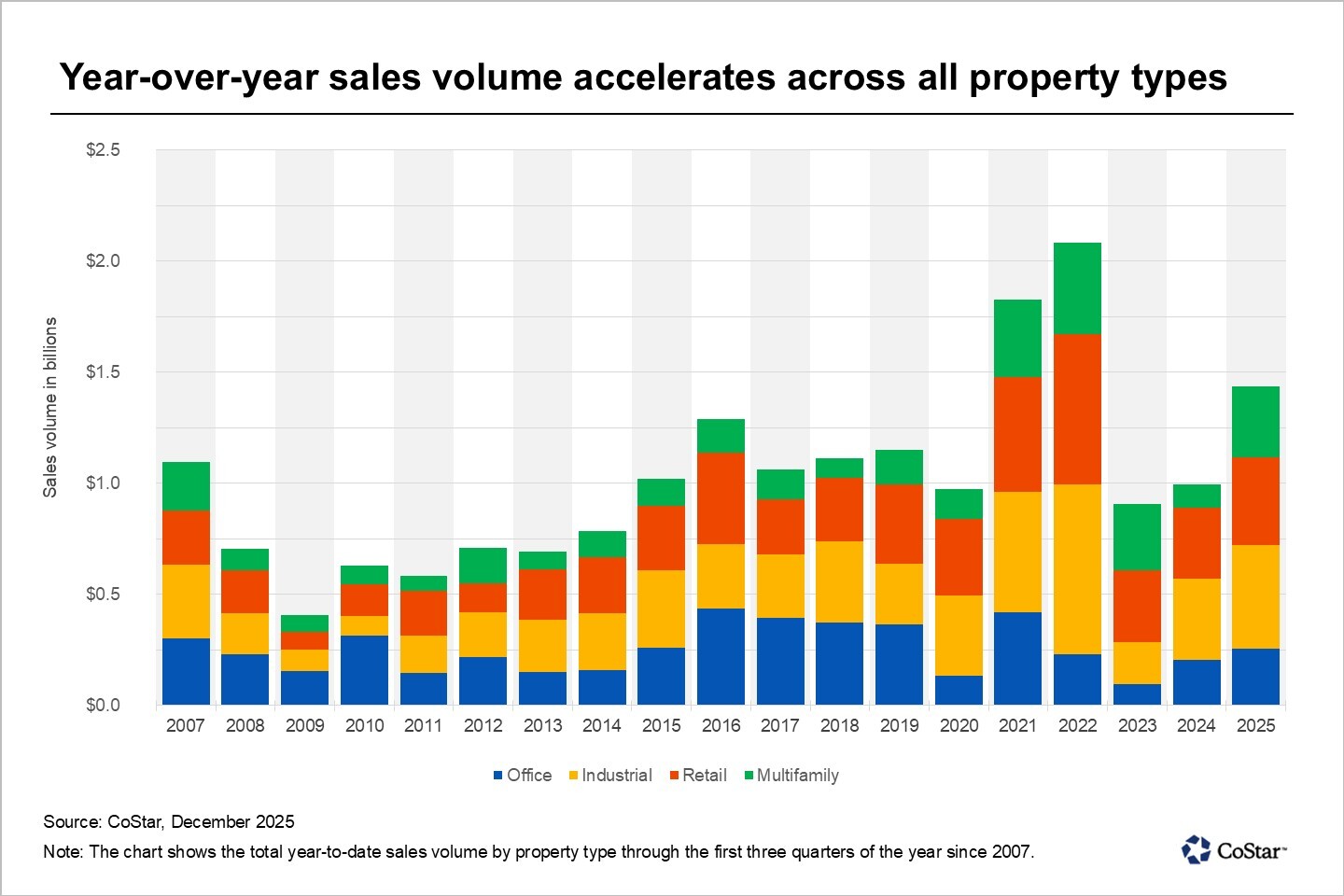
Milwaukee entered 2025 with renewed momentum, posting its strongest commercial real estate sales volume in three years. After a period of uncertainty and high capital costs, investors are returning with a sharper focus on quality assets, realistic pricing, and reliable cash flow. Activity is increasing across industrial, office, multifamily, and retail sectors, signaling a broad-based recovery fueled by stabilizing interest rates and improved market confidence.
As 2026 approaches, the title insurance industry is navigating a complex mix of market recovery, rising fraud threats, and sweeping regulatory changes. Industry leaders say the path forward centers on smarter technology, leaner operations, and stronger support for title agents. With AI-driven workflows, enhanced fraud prevention, and new compliance demands—including FinCEN’s expanded Geographic Targeting Orders—companies like Stewart and First American are reshaping how title work gets done. For real estate and mortgage professionals, the year ahead promises more automation, heightened standards, and major opportunities for those who stay ahead of the curve.
The real estate industry is undergoing a major transformation in 2025 as advancements in AI, proptech, blockchain, and data intelligence redefine how properties are marketed, valued, financed, and experienced. From instant digital valuations and immersive virtual tours to tokenized investments and predictive analytics, technology is reshaping every stage of the real estate lifecycle. Professionals who embrace these innovations—while maintaining the human expertise clients still rely on—will lead the next era of the industry.