When Luxury Meets Learning: VR Takes Miami’s Real Estate Market to the Next Level
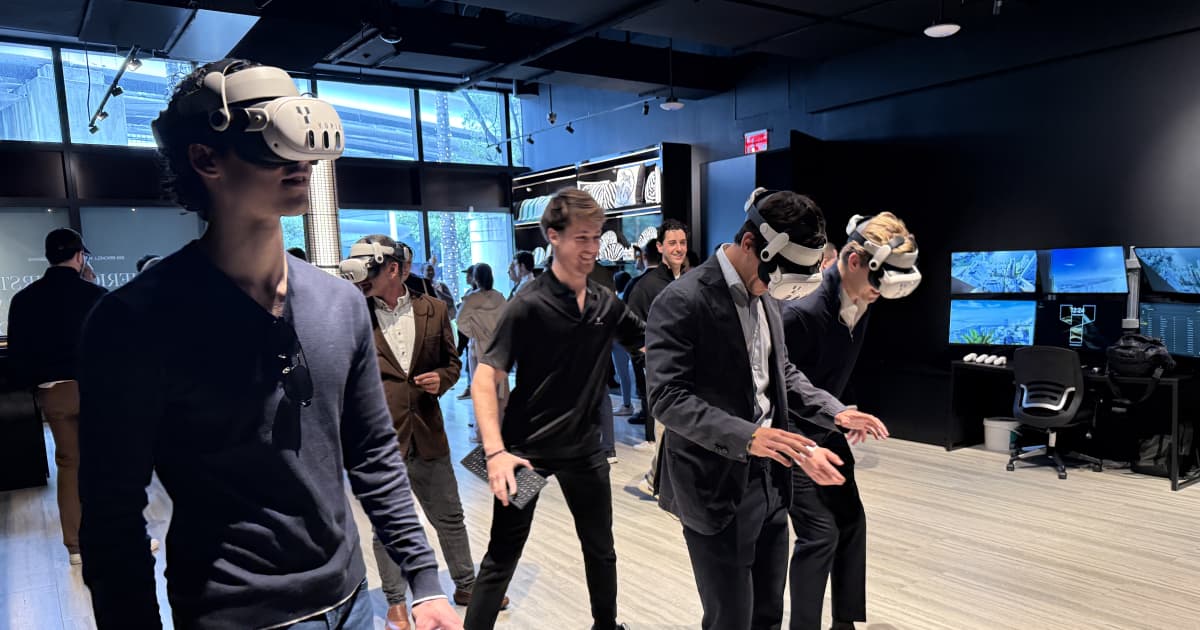
South Florida’s luxury real estate scene has never been shy about embracing the extraordinary — but this time, it’s not a penthouse view or a private concierge turning heads. It’s virtual reality. And for a group of ambitious real estate master’s students, the groundbreaking technology behind the upcoming Dolce & Gabbana tower in Miami offered a rare, up-close look at how high‑end development is evolving.
As part of a hands‑on learning experience, students stepped inside a fully immersive VR simulation of the under‑construction tower — a technological masterpiece already redefining the ultra‑luxury market. With over $1 million invested into its development, this VR system allows potential buyers to explore expansive floor plans, examine finishes, and take in Miami’s panoramic vistas long before the first wall is built.
“People Are Buying Experience and Emotion”
Elliot Lee, the project’s sales director, emphasized that VR isn’t just a tool — it’s a transformation in philosophy. “People are buying experience and emotion as much as they are buying an investment,” he said. “This puts them inside that experience before the building even exists.”
This shift matters enormously in South Florida, where ultra‑luxury towers compete not only in amenities but in sensory experiences and emotional connection.
A Real‑World Lesson for Future Professionals
Beyond the glamorous visuals and polished interior concepts, students also explored the real business mechanics behind luxury development. FIU Business adjunct professor Clay Dickenson highlighted the importance of bridging classroom learning with real‑world application.
“They can see the marketing, the production value and the numbers that go into a project like this,” Dickenson explained. “It connects what they learn in class to what actually happens in the real world.”
Professional education providers — including industry‑focused schools like Cameron Academy — understand how vital this bridge is. Modern real estate professionals need more than contract knowledge; they need fluency in technology, branding strategy, and market psychology. Experiences like these show exactly where the future of the industry is heading.
The Rise of Branded Residences
The Dolce & Gabbana tower represents a powerful trend reshaping Miami’s luxury skyline: the rapid expansion of branded residences. These homes merge traditional high‑end condo living with the prestige of world-renowned brands — offering curated design, luxe amenities, and a lifestyle narrative buyers instantly recognize.
Driven by remote work, seasonal migration, and heightened demand for service‑rich living, branded residences have become a defining staple of Miami’s luxury identity. VR technology accelerates this momentum by allowing developers to present the full “brand world” before breaking ground.
Luxury, Technology, and the Future of the Industry
For students, developers, and real estate professionals alike, the message is unmistakable: technology is no longer an accessory — it’s a foundation. Success in the evolving real estate market will require mastery of digital tools, experiential marketing, and high‑end consumer expectations, alongside traditional industry knowledge.
Those looking to strengthen or expand their real estate careers — especially in fast‑growing states like Florida — can get ahead by aligning with institutions that embrace innovation. This is where Cameron Academy continues to serve as a trusted partner, providing adaptive education for the next generation of market leaders.
Getting licensed or staying ahead in your career can be a journey—but it doesn’t have to be overwhelming. Grab your favorite coffee or tea, take a moment to relax, and browse through our articles. Whether you’re just starting out or renewing your expertise, we’ve got tips, insights, and advice to keep you moving forward. Here’s to your success—one sip and one step at a time!
Financial analysis remains one of the strongest career paths for professionals seeking high earnings, steady growth, and long-term stability. With median salaries above $100K, expanding demand across industries, and clear promotion tracks leading to senior leadership roles, the field offers both opportunity and resilience—even as AI reshapes the workplace. This article breaks down what analysts do, salary expectations, job outlook, industry demand, and whether this career is the right fit for you.
After losing their home in the Los Angeles wildfires, Jessica and Matt Conkle expected their insurance policy to help them rebuild. Instead, they found themselves trapped in delays, lowball offers, and endless adjuster changes — a struggle now shared by thousands across California. Their experience highlights a nationwide problem: insurers pulling back from climate‑risk areas, soaring premiums, shrinking coverage, and regulators under fire. For professionals in real estate, mortgage, and insurance, this growing instability is reshaping transactions, lending, risk assessment, and the future of homeownership in America.
Kansas City’s housing market is finally gaining momentum heading into 2026 as falling interest rates, new construction, and a renewed focus on affordable homes open the door for first‑time buyers. Economists say improved supply and softer mortgage rates could shift the market after a challenging 2025, giving real estate professionals and buyers a promising window of opportunity.
Nevada has become the first state to allow insurers to sell homeowners policies without wildfire protection—a move aimed at lowering premiums but raising concerns about consumer risk and mortgage barriers. The law introduces new wildfire‑only policies and a regulatory sandbox for insurance innovation, potentially setting a precedent for other Western states.
Investment groups across the U.S. are rapidly expanding into tax‑deferred real estate programs as demand for Delaware Statutory Trusts (DSTs) accelerates. Major players like Blackstone, Brookfield, Denholtz, and PREP are launching new offerings fueled by stronger market certainty, a historic generational wealth transfer, and renewed confidence in 1031 exchange benefits. As DSTs move into the mainstream, real estate professionals are finding new opportunities to guide clients through advanced tax‑advantaged investment strategies.
Canada’s proptech sector is evolving fast as AI adoption accelerates and investor caution forces startups to mature. Funding has tightened, growth rounds have slowed, and companies are shifting from rapid expansion to profitability and real product‑market fit. AI‑driven platforms like Mave are gaining traction, consolidation is rising, and government housing initiatives may boost construction‑focused tech. For real estate professionals, these trends signal a new industry standard where AI tools and ongoing education are essential to staying competitive.