Why Lower Rates Aren’t Saving Commercial Real Estate (Yet)

Commercial real estate finance

The Federal Reserve has begun cutting interest rates again—something commercial real estate investors hoped would finally bring relief after years of upward pressure. Yet instead of creating momentum, the market remains frozen. Deals stall. Refinancing panic grows. And long-term borrowing costs refuse to follow the Fed’s lead.

For investors across Florida and the nation—especially those sharpening their expertise through institutions like Cameron Academy—understanding this disconnect is critical for navigating the months ahead.

Short-Term Rates Are Falling. Long-Term Rates Aren’t.

The Fed cut its benchmark rate to 3.75%–4.00% in October 2025. Traditionally, that should unlock cheaper borrowing. But the 10-year Treasury yield—the anchor for commercial mortgages—has hovered around 4.1% and recently ticked upward.

Why it matters:
Commercial mortgages follow long-term Treasuries, not the Fed funds rate. So even when the Fed cuts, persistent inflation fears keep long-term yields—and mortgage rates—stubbornly elevated.

Today’s commercial mortgages often sit 200–300 basis points above Treasuries, turning what once seemed “exceptionally high” into the industry’s uncomfortable new standard.

The Math That Broke the Market

A retail property that thrived in 2021 at a 5% cap rate with 65% leverage and 3% debt becomes nearly impossible to finance today when that same debt now demands 7%.

Sellers cling to yesterday’s valuations. Buyers underwrite today’s reality. The result? A national transaction slowdown that refuses to budge.

The Trillion-Dollar Refinancing Wave

Nearly $1 trillion in commercial loans will mature soon—many written during the unusually low-rate era of 2020–2021.

A $50M loan at 3% costs $1.5M per year in interest. At 7%, that cost rockets to $3.5M—an annual increase that many properties simply cannot absorb.

The consequence:
Borrowers must inject equity, sell at a loss, or default. While office assets get the most headlines, this challenge extends across property types where income growth hasn’t kept pace with rates.

Where Smart Investors See Opportunity

This environment isn’t just stressful—it’s a strategic opening. Well-capitalized investors are watching for owners who can’t refinance, paving the way for acquisitions at realistic prices or offering rescue capital at premium terms.

Private credit funds are already stepping in, frequently earning 10%+ on junior debt.

A New Era of Return Expectations

Investors accustomed to double-digit levered returns during cheap-debt years are adjusting their expectations. Today, an 8% return on a stable asset may be far more attractive when viewed through a risk-adjusted lens.

Operational strength—not financial engineering—is becoming the true differentiator.

Positioning for What’s Next

The coming year won’t be defined by rapid deal-making, but by preparation. The refinancing wave will create opportunities slowly—and the most disciplined investors will capture the best ones.

• Underwrite using today’s rates, not tomorrow’s hopes
• Prioritize strong day-one cash flow
• Focus on fundamentals over speculation
• Stay ready to pounce when distressed assets emerge

Bottom Line

Rate cuts alone can’t rescue commercial real estate while long-term yields remain elevated. But for investors who understand these dynamics, the next several quarters may reveal the most attractive buying conditions in years.

For professionals expanding their expertise—whether in real estate, mortgage, insurance, finance, or beyond—staying ahead of market shifts is essential. Educational partners like Cameron Academy help ensure you’re not just licensed, but fully prepared for the evolving landscape.

Source: WealthManagement.com

More Articles

Getting licensed or staying ahead in your career can be a journey—but it doesn’t have to be overwhelming. Grab your favorite coffee or tea, take a moment to relax, and browse through our articles. Whether you’re just starting out or renewing your expertise, we’ve got tips, insights, and advice to keep you moving forward. Here’s to your success—one sip and one step at a time!

Massachusetts Investment Firm Makes Strategic Move Into Connecticut With $3.65M Red Robin-Anchored Purchase

Newman Properties, a Massachusetts-based investment firm, has expanded its footprint into Connecticut with the $3.65 million acquisition of a 6,350‑square‑foot retail building in Enfield. Anchored by national restaurant chain Red Robin, the property offers the type of stable tenancy investors seek when entering new markets. The deal underscores growing confidence in anchored retail assets and provides a valuable real-world example for real estate professionals studying market analysis, investment strategy, and portfolio expansion.

JPMorgan Flags a Sunbelt Slowdown as Florida and Texas See Sharp Home Price Drops

JPMorgan now expects national home prices to flatten in 2026, but the Sunbelt is telling a very different story. Florida home values are down 5.1%, Texas is down 2.4%, and analysts warn that years of rapid building are finally catching up to the region. As demand stabilizes and inventory swells, real estate professionals — especially in Florida — face a market full of challenges, opportunities, and critical timing decisions.

AI Is Reshaping Mortgage Underwriting in 2026 as Industry Pros Brace for Major Change

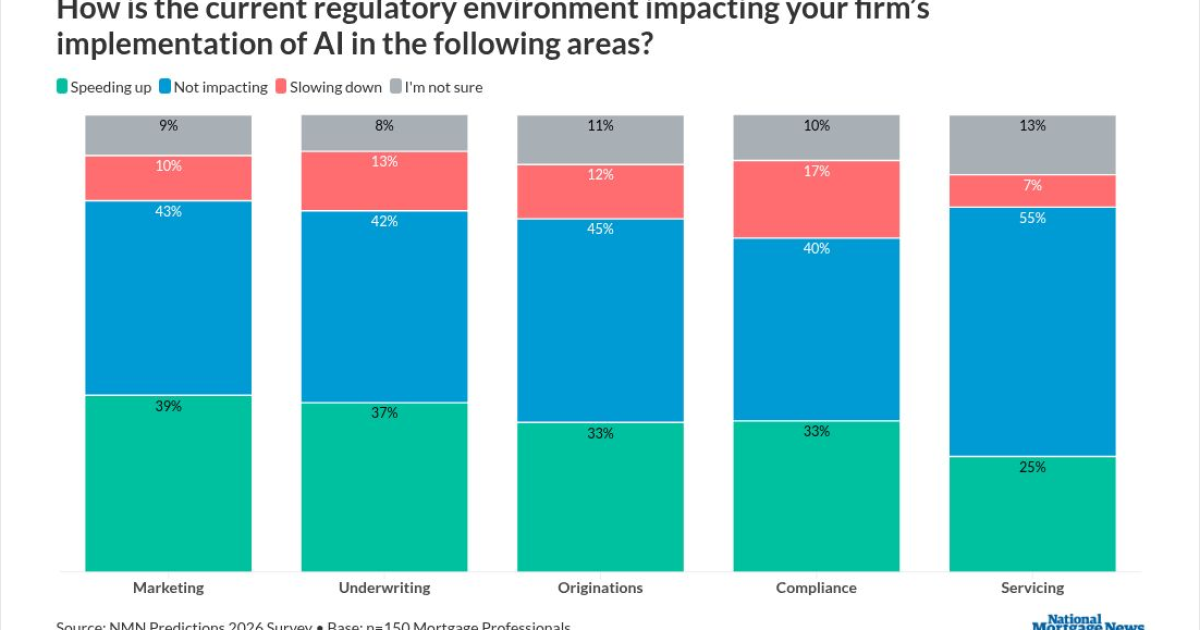
Artificial intelligence is finally stepping into the mortgage underwriting spotlight, with 57% of mortgage professionals predicting it will drive the most transformative industry shift in 2026. Thanks to major advancements in language models and workflow automation, AI is now capable of navigating the messy, document-heavy realities that have long slowed underwriting. From faster preapprovals to improved credit analysis and real‑time income verification, AI is streamlining processes while allowing underwriters to focus on true risk management. As regulatory winds shift and grassroots pressure builds within lending teams, the industry is entering a pivotal era where AI‑powered underwriting becomes not just an advantage — but an expectation.

Portland’s Commercial Market Suffers a Historic $2 Billion Collapse

Portland’s top 20 office towers have lost an unprecedented 70% of their value since 2019—plunging from $3 billion to under $1 billion—triggering tax revenue shortfalls, budget crises, and a surge in appeals as the city grapples with its biggest commercial real estate reset in modern history.

When Virtual Reality Becomes the New Penthouse Tour: Miami Students Step Inside a $1M Tech-Driven Luxury Tower Experience

South Florida’s luxury real estate market just raised the bar again — this time with a $1 million virtual reality system that lets buyers walk through Dolce & Gabbana’s upcoming Miami tower long before construction wraps. Real estate master’s students were given an immersive look inside the project, discovering how VR is transforming high‑end development, influencing buyer psychology, and shaping the future skills today’s professionals need.

Long Island’s Latest Commercial Moves: From Pizza Huts to Auto Parts Warehouses

Long Island’s commercial real estate scene is kicking off 2026 with a surge of activity—industrial leases in Medford, neighborhood retail trades in Bohemia, Pizza Hut’s new DELCO expansion in Centereach, mixed‑use acquisitions in Melville, and major investor interest in bank‑leased and franchise-backed properties. From warehouses to restaurant rebrands, these deals highlight a region evolving fast and offering fresh opportunities for agents, investors, and professionals looking to stay ahead in the market.