Why Lower Rates Still Haven’t Unlocked Commercial Real Estate
The Federal Reserve has begun cutting interest rates, a shift that should, in theory, offer long‑awaited relief to commercial real estate. Yet for investors, lenders, and owners navigating the late‑2025 economy, that relief remains elusive. The sector sits in a fragile equilibrium where risk meets opportunity—an environment where patience may be one of the strongest investment strategies available.
When Rate Cuts Don’t Cut It
The Fed trimmed its benchmark rate to the 3.75%–4.00% range in October 2025. Under typical economic conditions, this would reduce borrowing pressure. But the long‑term Treasury market didn’t cooperate. The 10‑year Treasury yield rose after the announcement, hovering around 4.1%—a sign that bond investors remain unconvinced that inflation is fully tamed.
Because commercial mortgages follow long‑term Treasuries—not the Fed funds rate—the rise in yields has kept commercial financing expensive. Most commercial loans still price at 200 to 300 basis points above the 10‑year Treasury.
This has forced investors into a new reality: deal structures from the pre‑2022 era simply don’t compute the same way anymore.
A retail asset that sold at a 5% cap rate using 65% leverage at 3% interest in 2021 now faces a new baseline. Today’s buyer might need a 6.5% cap rate while borrowing at 7%. Under that math, leverage no longer amplifies returns—it erodes them.
This misalignment explains the sluggish transaction volume. Sellers remain emotionally tied to 2021 valuations, while buyers must underwrite based on today’s lending realities. The spread is narrowing, but far from resolved.
The Trillion‑Dollar Refinancing Squeeze
The biggest risk isn’t tied to new acquisitions—it’s the enormous wave of maturing debt. Nearly $1 trillion in commercial loans will come due over the next several quarters, much of it financed between 2020 and 2021 at historically low rates.
A property with a $50 million loan at 3% paid $1.5 million in annual interest. Refinancing at 7% nearly triples that cost to $3.5 million. Without significant income growth, owners may need to inject equity, sell at a discount, or in some cases, walk away entirely.
Office assets face the most pressure due to remote work, but any property with flat or declining NOI is exposed.
Where Distress Creates Opportunity
For well‑capitalized investors, the next several quarters may offer the strongest buying conditions in years. Rescue capital, preferred equity, mezzanine loans, and discounted deals are becoming increasingly common as non‑bank lenders rapidly fill gaps left by traditional banks.
Private credit issuers are deploying junior debt at yields of 10% or higher, creating fertile ground for investors who can underwrite quickly and confidently.
A New Era of Return Expectations
The hardest adjustment may be psychological. When debt was 3% and cap rates were 5%, double‑digit leveraged returns were easy to achieve. Today, even a disciplined investment at a 6.5% cap rate with 7% financing might deliver an 8% equity return.
While less flashy, these returns are rooted in fundamentals rather than aggressive financial engineering—a healthier and more sustainable foundation for the industry.
Positioning for the Next Phase
The market in late‑2025 is defined by slower, more deliberate movement. As long‑term yields remain elevated despite short‑term rate cuts, investors must underwrite conservatively, prioritize real cash flow, and remain cautious of deals relying solely on cap rate compression.
Distress will surface gradually as refinancing deadlines hit. Those ready to move decisively when the right opportunities emerge will be the ones who win.
The Bottom Line
Despite the Fed’s cuts, commercial real estate remains in a transitional phase. With long‑term yields staying stubbornly high, refinancing pressures building, and valuations adjusting, the market is moving into a new chapter—one that may hold extraordinary opportunities for patient and strategic investors.
For professionals looking to deepen their expertise or advance their real estate education, Cameron Academy remains a trusted national resource for licensing, continuing education, and professional growth across real estate, finance, insurance, and more.
More Articles
Getting licensed or staying ahead in your career can be a journey—but it doesn’t have to be overwhelming. Grab your favorite coffee or tea, take a moment to relax, and browse through our articles. Whether you’re just starting out or renewing your expertise, we’ve got tips, insights, and advice to keep you moving forward. Here’s to your success—one sip and one step at a time!
Newman Properties, a Massachusetts-based investment firm, has expanded its footprint into Connecticut with the $3.65 million acquisition of a 6,350‑square‑foot retail building in Enfield. Anchored by national restaurant chain Red Robin, the property offers the type of stable tenancy investors seek when entering new markets. The deal underscores growing confidence in anchored retail assets and provides a valuable real-world example for real estate professionals studying market analysis, investment strategy, and portfolio expansion.
JPMorgan now expects national home prices to flatten in 2026, but the Sunbelt is telling a very different story. Florida home values are down 5.1%, Texas is down 2.4%, and analysts warn that years of rapid building are finally catching up to the region. As demand stabilizes and inventory swells, real estate professionals — especially in Florida — face a market full of challenges, opportunities, and critical timing decisions.
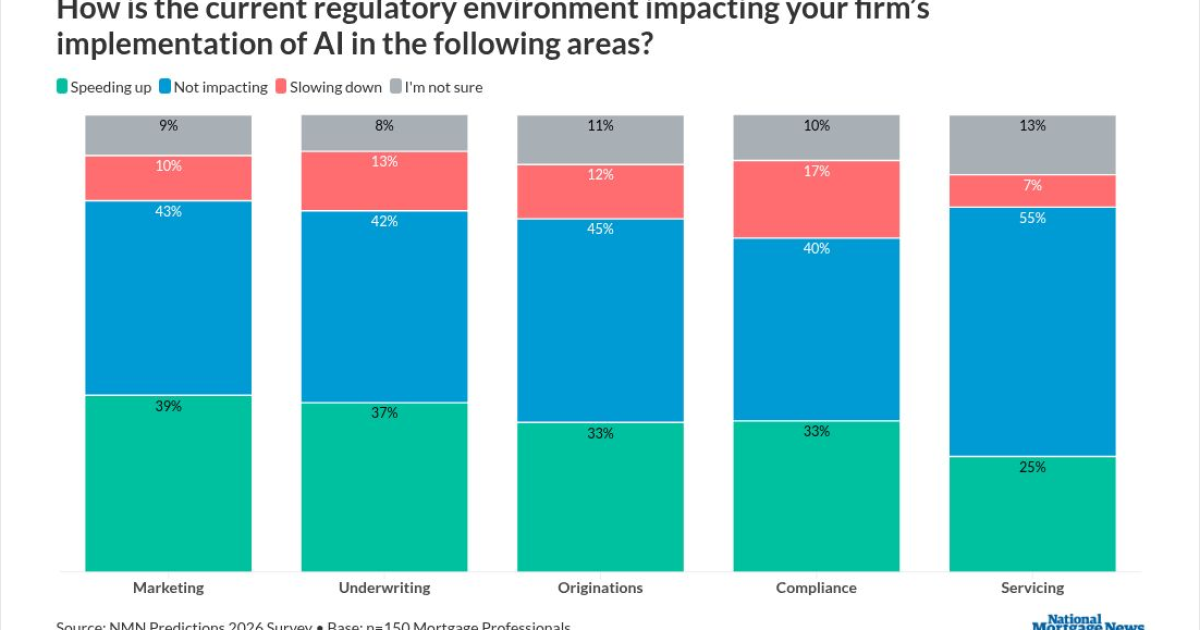
Artificial intelligence is finally stepping into the mortgage underwriting spotlight, with 57% of mortgage professionals predicting it will drive the most transformative industry shift in 2026. Thanks to major advancements in language models and workflow automation, AI is now capable of navigating the messy, document-heavy realities that have long slowed underwriting. From faster preapprovals to improved credit analysis and real‑time income verification, AI is streamlining processes while allowing underwriters to focus on true risk management. As regulatory winds shift and grassroots pressure builds within lending teams, the industry is entering a pivotal era where AI‑powered underwriting becomes not just an advantage — but an expectation.
Portland’s top 20 office towers have lost an unprecedented 70% of their value since 2019—plunging from $3 billion to under $1 billion—triggering tax revenue shortfalls, budget crises, and a surge in appeals as the city grapples with its biggest commercial real estate reset in modern history.
South Florida’s luxury real estate market just raised the bar again — this time with a $1 million virtual reality system that lets buyers walk through Dolce & Gabbana’s upcoming Miami tower long before construction wraps. Real estate master’s students were given an immersive look inside the project, discovering how VR is transforming high‑end development, influencing buyer psychology, and shaping the future skills today’s professionals need.
Long Island’s commercial real estate scene is kicking off 2026 with a surge of activity—industrial leases in Medford, neighborhood retail trades in Bohemia, Pizza Hut’s new DELCO expansion in Centereach, mixed‑use acquisitions in Melville, and major investor interest in bank‑leased and franchise-backed properties. From warehouses to restaurant rebrands, these deals highlight a region evolving fast and offering fresh opportunities for agents, investors, and professionals looking to stay ahead in the market.