Why Lower Rates Still Haven’t Unlocked Commercial Real Estate
The Federal Reserve has begun cutting interest rates, a shift that should, in theory, offer long‑awaited relief to commercial real estate. Yet for investors, lenders, and owners navigating the late‑2025 economy, that relief remains elusive. The sector sits in a fragile equilibrium where risk meets opportunity—an environment where patience may be one of the strongest investment strategies available.
When Rate Cuts Don’t Cut It
The Fed trimmed its benchmark rate to the 3.75%–4.00% range in October 2025. Under typical economic conditions, this would reduce borrowing pressure. But the long‑term Treasury market didn’t cooperate. The 10‑year Treasury yield rose after the announcement, hovering around 4.1%—a sign that bond investors remain unconvinced that inflation is fully tamed.
Because commercial mortgages follow long‑term Treasuries—not the Fed funds rate—the rise in yields has kept commercial financing expensive. Most commercial loans still price at 200 to 300 basis points above the 10‑year Treasury.
This has forced investors into a new reality: deal structures from the pre‑2022 era simply don’t compute the same way anymore.
A retail asset that sold at a 5% cap rate using 65% leverage at 3% interest in 2021 now faces a new baseline. Today’s buyer might need a 6.5% cap rate while borrowing at 7%. Under that math, leverage no longer amplifies returns—it erodes them.
This misalignment explains the sluggish transaction volume. Sellers remain emotionally tied to 2021 valuations, while buyers must underwrite based on today’s lending realities. The spread is narrowing, but far from resolved.
The Trillion‑Dollar Refinancing Squeeze
The biggest risk isn’t tied to new acquisitions—it’s the enormous wave of maturing debt. Nearly $1 trillion in commercial loans will come due over the next several quarters, much of it financed between 2020 and 2021 at historically low rates.
A property with a $50 million loan at 3% paid $1.5 million in annual interest. Refinancing at 7% nearly triples that cost to $3.5 million. Without significant income growth, owners may need to inject equity, sell at a discount, or in some cases, walk away entirely.
Office assets face the most pressure due to remote work, but any property with flat or declining NOI is exposed.
Where Distress Creates Opportunity
For well‑capitalized investors, the next several quarters may offer the strongest buying conditions in years. Rescue capital, preferred equity, mezzanine loans, and discounted deals are becoming increasingly common as non‑bank lenders rapidly fill gaps left by traditional banks.
Private credit issuers are deploying junior debt at yields of 10% or higher, creating fertile ground for investors who can underwrite quickly and confidently.
A New Era of Return Expectations
The hardest adjustment may be psychological. When debt was 3% and cap rates were 5%, double‑digit leveraged returns were easy to achieve. Today, even a disciplined investment at a 6.5% cap rate with 7% financing might deliver an 8% equity return.
While less flashy, these returns are rooted in fundamentals rather than aggressive financial engineering—a healthier and more sustainable foundation for the industry.
Positioning for the Next Phase
The market in late‑2025 is defined by slower, more deliberate movement. As long‑term yields remain elevated despite short‑term rate cuts, investors must underwrite conservatively, prioritize real cash flow, and remain cautious of deals relying solely on cap rate compression.
Distress will surface gradually as refinancing deadlines hit. Those ready to move decisively when the right opportunities emerge will be the ones who win.
The Bottom Line
Despite the Fed’s cuts, commercial real estate remains in a transitional phase. With long‑term yields staying stubbornly high, refinancing pressures building, and valuations adjusting, the market is moving into a new chapter—one that may hold extraordinary opportunities for patient and strategic investors.
For professionals looking to deepen their expertise or advance their real estate education, Cameron Academy remains a trusted national resource for licensing, continuing education, and professional growth across real estate, finance, insurance, and more.
More Articles
Getting licensed or staying ahead in your career can be a journey—but it doesn’t have to be overwhelming. Grab your favorite coffee or tea, take a moment to relax, and browse through our articles. Whether you’re just starting out or renewing your expertise, we’ve got tips, insights, and advice to keep you moving forward. Here’s to your success—one sip and one step at a time!
The global market for artificial intelligence in diagnostics is poised for remarkable growth, with projections estimating it to reach USD 7.3 billion by 2032.
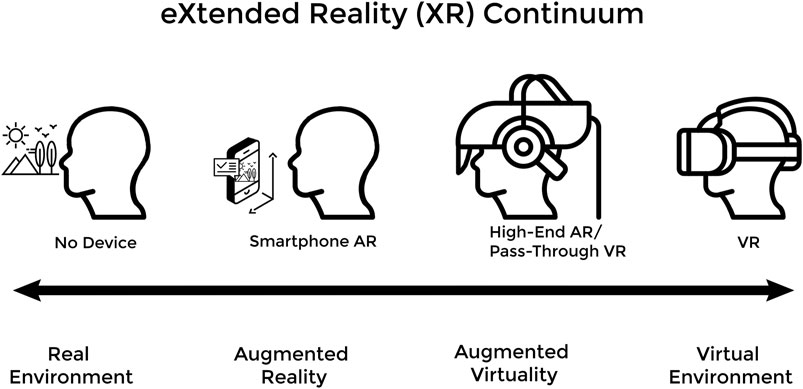
In the ever-evolving landscape of medical education, a new player has emerged, promising to revolutionize the way future doctors are trained. The integration of eXtended Reality (XR) technologies is reshaping the educational landscape by addressing the limitations of traditional methods.
The journey toward sustainable architecture is ongoing, with each project serving as a beacon of what's achievable when creativity meets ecological awareness.
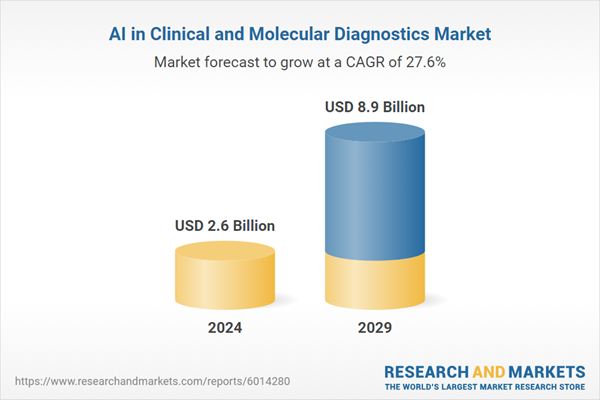
AI in Clinical and Molecular Diagnostics Market is set to experience remarkable growth, projected to surge from USD 2.6 billion in 2024 to USD 8.9 billion by 2029. This growth is driven by the integration of advanced AI technologies such as machine learning and deep learning into traditional diagnostic methodologies like imaging, genomics, and laboratory testing.
AI is not a distant dream but a present reality, already integrated into everyday life through virtual assistants like Alexa and Siri. AI shows promise in enhancing medical accuracy, such as in predicting mesothelioma survival and improving colonoscopy accuracy, it is not intended to replace healthcare professionals.