Why Microcredentials Will Rule 2026 Hiring — And What Every Professional Should Do Now
The job market heading into 2026 is shaping up to be one of the most competitive and transformative in years. With managers balancing AI adoption, economic shifts, and evolving workforce needs, the people who rise above the noise will be those who can prove they are still learning, adapting, and upskilling.
That’s exactly why microcredentials — compact, targeted professional certificates — are becoming the No. 1 hiring advantage across nearly every industry. And according to Coursera CEO Greg Hart, companies are demanding them at record levels.
In an exclusive Fortune interview, Hart explains that more than 90% of employers prefer candidates who have microcredentials over those who do not.
Tap to Explore: Why Employers Love Microcredentials
• They show commitment to learning
• They signal adaptability during rapid AI change
• They demonstrate real, measurable skills
• They differentiate applicants in crowded fields
Gen Z Is Feeling the Pressure — But They’re Not Alone
Young workers have been hit the hardest. Recent analyses from Oxford Economics reveal unemployment rates of 14% for ages 16–19 and around 9% for ages 19–24.
With employers seeking job-ready skills and demonstrated knowledge, microcredentials help bridge the gap between “I’m capable” and “Here’s proof.”
The AI Skills Explosion: What Everyone Must Learn
Coursera reports that its most in-demand certificates are AI-driven, including Google’s “Foundations of Data Science,” “Data, Data Everywhere,” and its cybersecurity and project management tracks.
“It’s the most in-demand skill in our history as a company right now,” Hart says of generative AI.
Popular Skills for 2026
• Generative AI
• Data analytics
• HR technology
• Soft skills: communication, assertiveness, collaboration
And Don’t Forget Soft Skills
A report from General Assembly highlights a major warning: fewer than half of workers — and only 12% of mid-level executives — believe entry-level talent is prepared for the workforce. Missing communication skills and weak adaptability are among the top concerns.
As AI automates more functional tasks, Hart believes the value of uniquely human abilities will rise: “The value of the human side of the equation actually increases.”
Real Advice From a CEO to His Gen Z Sons
Hart’s guidance to his two sons reflects the reality many young people — and career‑shifting adults — now face.
To his finance‑major son, he suggested starting with “Gen AI for finance,” then building into data analytics tools that can reshape modern spreadsheet-heavy workflows.
To his game-design‑major son, he emphasized project management, entrepreneurship, and expanding every adjacent skill possible.
Lesson for All Professionals
Your major doesn’t matter — your momentum does.
What This Means for Licensed Professionals
Whether you’re in real estate, mortgage, insurance, medical services, or financial fields, employers and clients expect ongoing proof of your commitment to staying sharp. Licensing alone is no longer the finish line — it’s the foundation.
That’s where organizations like Cameron Academy become invaluable. From Florida real estate licensing to mortgage, insurance, and continuing education across the U.S., Cameron Academy helps professionals stay competitive, relevant, and opportunity‑ready.
The Bottom Line
2026 will reward learners — not the perfect, not the overly experienced, but the ones who keep building, keep adapting, and keep sharpening their skills.
Microcredentials aren’t a trend. They’re becoming the new career currency.
And there has never been a better moment to start earning them.
More Articles
Getting licensed or staying ahead in your career can be a journey—but it doesn’t have to be overwhelming. Grab your favorite coffee or tea, take a moment to relax, and browse through our articles. Whether you’re just starting out or renewing your expertise, we’ve got tips, insights, and advice to keep you moving forward. Here’s to your success—one sip and one step at a time!
Despite billions poured into proptech and a decade of flashy digital upgrades, the real estate experience remains largely unchanged. Apps made processes smoother, but not more transparent — because the industry’s core structures, data control and power dynamics stayed the same. True disruption will come from platforms that shift information and control to consumers, not just digitize outdated systems.
Early 2026 is delivering a clear message: commercial real estate is entering a recalibration phase. Construction is softening, pending home sales just saw a sharp drop, consumer sentiment is inching upward but remains fragile, and capital markets are tightening as major CRE sectors face rising distress. From data centers powering ahead to CMBS foreclosures climbing and office-to-residential conversions gaining momentum, professionals across real estate, mortgage, insurance, and finance need to stay sharp as the industry shifts.
Discover the real estate roles earning the biggest paychecks in 2026. From investment consultants to commercial leasing managers, this breakdown highlights the salaries, responsibilities, and career paths offering the strongest financial potential in today’s evolving market—perfect for newcomers and seasoned professionals mapping their next big move.
Montana is taking major steps to remove outdated licensing barriers and strengthen its workforce. Governor Greg Gianforte has created a new Licensing Reform Task Force aimed at modernizing regulations, speeding up approvals, and helping more professionals enter high‑demand fields like construction and healthcare. With licensing numbers doubling over the past decade and rural communities facing critical shortages, the state is pushing for faster, more efficient pathways to work. The task force begins meeting in February and will deliver its full reform report by September 2026 — a move that could influence licensing modernization efforts nationwide.
Artificial intelligence has officially moved from novelty to necessity in the real estate world. According to new industry data, 97% of brokerage leaders say their agents now rely on AI tools for everything from listing descriptions to full-scale marketing campaigns. As adoption skyrockets, so do concerns over training, accuracy, and compliance — especially among smaller firms. The message is clear: for today’s real estate professionals, AI literacy isn’t optional anymore.
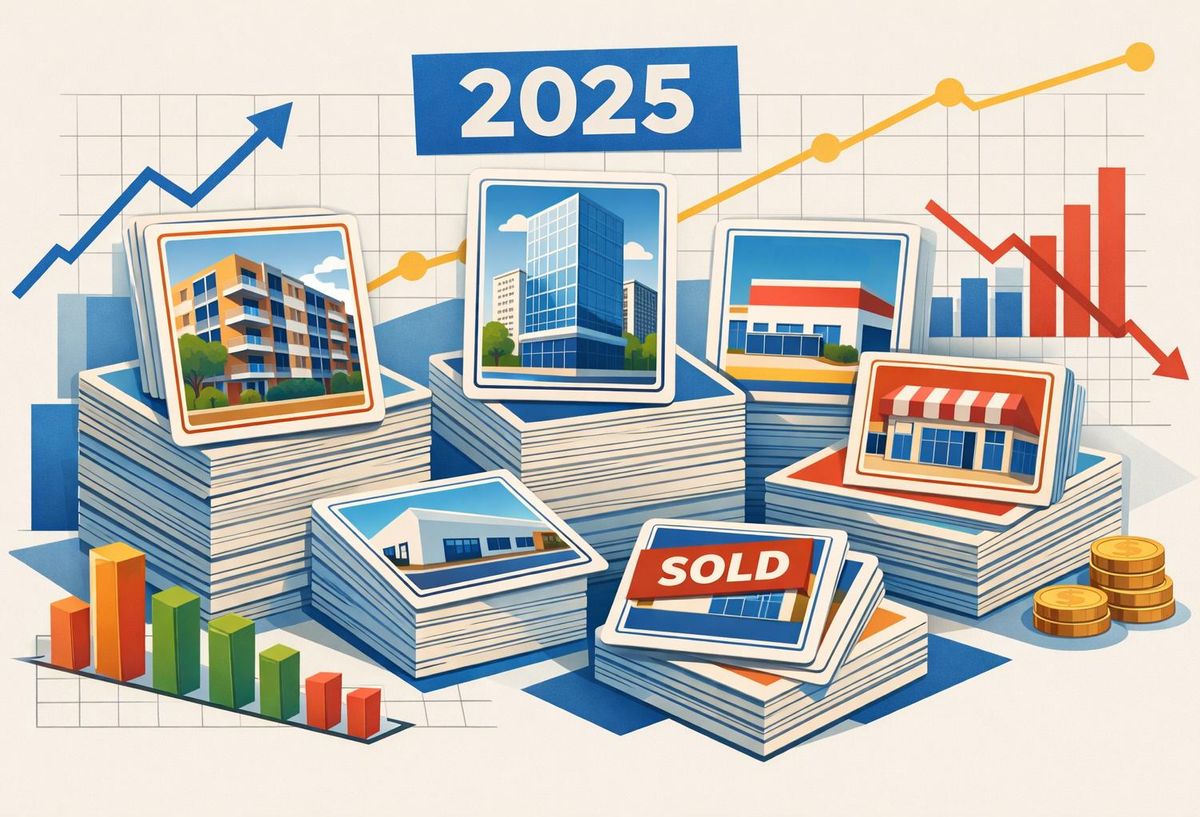
Commercial real estate roared back to life in 2025, with more than $255B pouring into multifamily, industrial, office and retail assets. Major investors moved fast on falling interest rates, improving bond yields and rising confidence across sectors. Multifamily dominated with over $115B in deals, industrial surged under private equity leadership, office saw renewed activity from owner-users and retail proved surprisingly resilient. For today’s real estate and finance professionals, the message is clear: opportunity favors those who stay informed and ready to act.