Why Microcredentials Will Rule 2026 Hiring — And What Every Professional Should Do Now
The job market heading into 2026 is shaping up to be one of the most competitive and transformative in years. With managers balancing AI adoption, economic shifts, and evolving workforce needs, the people who rise above the noise will be those who can prove they are still learning, adapting, and upskilling.
That’s exactly why microcredentials — compact, targeted professional certificates — are becoming the No. 1 hiring advantage across nearly every industry. And according to Coursera CEO Greg Hart, companies are demanding them at record levels.
In an exclusive Fortune interview, Hart explains that more than 90% of employers prefer candidates who have microcredentials over those who do not.
Tap to Explore: Why Employers Love Microcredentials
• They show commitment to learning
• They signal adaptability during rapid AI change
• They demonstrate real, measurable skills
• They differentiate applicants in crowded fields
Gen Z Is Feeling the Pressure — But They’re Not Alone
Young workers have been hit the hardest. Recent analyses from Oxford Economics reveal unemployment rates of 14% for ages 16–19 and around 9% for ages 19–24.
With employers seeking job-ready skills and demonstrated knowledge, microcredentials help bridge the gap between “I’m capable” and “Here’s proof.”
The AI Skills Explosion: What Everyone Must Learn
Coursera reports that its most in-demand certificates are AI-driven, including Google’s “Foundations of Data Science,” “Data, Data Everywhere,” and its cybersecurity and project management tracks.
“It’s the most in-demand skill in our history as a company right now,” Hart says of generative AI.
Popular Skills for 2026
• Generative AI
• Data analytics
• HR technology
• Soft skills: communication, assertiveness, collaboration
And Don’t Forget Soft Skills
A report from General Assembly highlights a major warning: fewer than half of workers — and only 12% of mid-level executives — believe entry-level talent is prepared for the workforce. Missing communication skills and weak adaptability are among the top concerns.
As AI automates more functional tasks, Hart believes the value of uniquely human abilities will rise: “The value of the human side of the equation actually increases.”
Real Advice From a CEO to His Gen Z Sons
Hart’s guidance to his two sons reflects the reality many young people — and career‑shifting adults — now face.
To his finance‑major son, he suggested starting with “Gen AI for finance,” then building into data analytics tools that can reshape modern spreadsheet-heavy workflows.
To his game-design‑major son, he emphasized project management, entrepreneurship, and expanding every adjacent skill possible.
Lesson for All Professionals
Your major doesn’t matter — your momentum does.
What This Means for Licensed Professionals
Whether you’re in real estate, mortgage, insurance, medical services, or financial fields, employers and clients expect ongoing proof of your commitment to staying sharp. Licensing alone is no longer the finish line — it’s the foundation.
That’s where organizations like Cameron Academy become invaluable. From Florida real estate licensing to mortgage, insurance, and continuing education across the U.S., Cameron Academy helps professionals stay competitive, relevant, and opportunity‑ready.
The Bottom Line
2026 will reward learners — not the perfect, not the overly experienced, but the ones who keep building, keep adapting, and keep sharpening their skills.
Microcredentials aren’t a trend. They’re becoming the new career currency.
And there has never been a better moment to start earning them.
More Articles
Getting licensed or staying ahead in your career can be a journey—but it doesn’t have to be overwhelming. Grab your favorite coffee or tea, take a moment to relax, and browse through our articles. Whether you’re just starting out or renewing your expertise, we’ve got tips, insights, and advice to keep you moving forward. Here’s to your success—one sip and one step at a time!
Florida families are feeling the squeeze as everyday costs, insurance premiums, and homeownership barriers continue to climb. House District 102 candidate Jayden D’Onofrio is calling for a broader, more unified affordability strategy—one that tackles the state’s insurance crisis, supports first‑time homebuyers, and restores real competition in the market. His message centers on transparency, practical solutions, and keeping Florida livable for the professionals, workers, and families who power its economy.
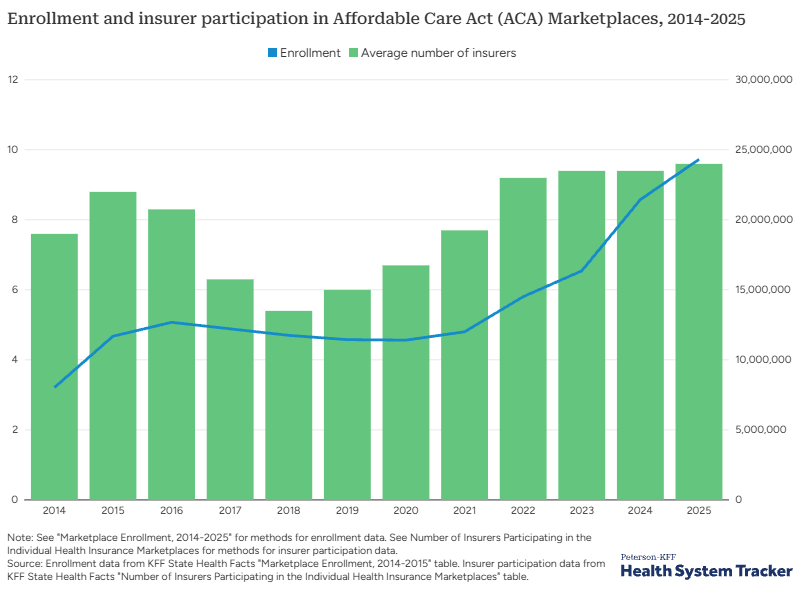
A decade of dramatic change is reshaping America’s health insurance markets. Employer group plans are becoming increasingly dominated by a few powerful insurers, while the ACA individual marketplace is experiencing record‑breaking competition and enrollment. Self‑funded plans are surging, small‑group premiums are driving employers to new coverage models, and major policy shifts in 2025 could redefine affordability for millions. This data‑driven Peterson‑KFF analysis breaks down the trends every insurance, finance, and business professional needs to understand as the industry enters a transformative new era.
Sarasota County is inching closer to approving Winchester Ranch, a massive 8,999‑home community planned for more than 3,100 acres in North Port. With a 7‑1 vote from the Planning Commission and a final decision expected in early 2026, the project could become one of Southwest Florida’s largest developments in decades—bringing new housing, commercial space, and industry while raising fresh questions about growth, the environment, and the region’s rapidly evolving real estate market.
Lument Finance Trust has closed a major $663.8 million commercial real estate CLO, marking one of the standout CRE finance deals of 2025. The transaction, LMNT 2025-FL3, features a strong reinvestment period, non‑recourse and non‑mark‑to‑market financing, and a diversified pool of 32 loans tied to 49 properties nationwide. With J.P. Morgan leading the structuring and more than $585 million placed in investment‑grade securities, the deal highlights renewed stability in transitional CRE debt—making it a development real estate and finance professionals will want to watch closely.
Walmart has partnered with Alquist 3D to roll out the nation’s first large‑scale wave of 3D‑printed commercial buildings, signaling a major shift in how future retail and industrial spaces will be constructed. After completing an 8,000‑square‑foot 3D‑printed expansion in Tennessee—the largest of its kind—the company is moving forward with over a dozen new projects nationwide, accelerating a tech‑driven transformation in commercial real estate.
Citizens Property Insurance Corp. is recommending statewide rate reductions for 2026—the first proposed decrease in more than a decade. Most Citizens policyholders could see an average 11.5% drop, reflecting recent insurance‑market reforms that have stabilized Florida’s turbulent property sector. With hundreds of thousands of policies moving back to private insurers and state‑backed Citizens shrinking to record‑low enrollment, real estate and insurance professionals should prepare for how lower premiums may influence affordability, buyer confidence, and market activity heading into 2026.