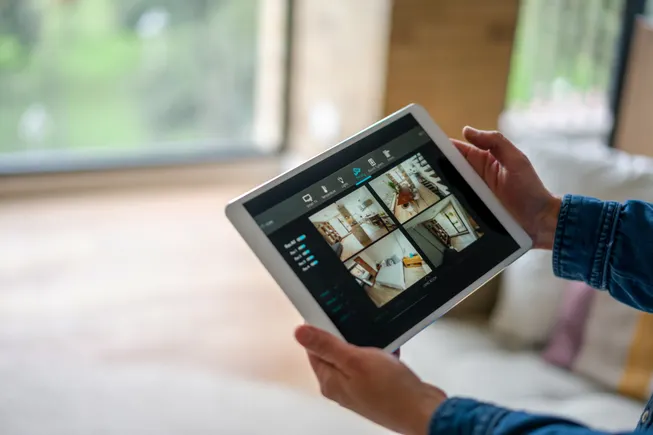
Artificial intelligence is no longer a distant concept living in tech conventions or sci‑fi films. It has become the engine driving modern mortgage lending — transforming workflows, borrower expectations, compliance strategies and the competitive environment leaders must navigate.
This insight, originally reported by MBA Newslink, underscores a truth every mortgage, finance and real estate professional must face: AI literacy is now essential. Not optional.
Tap to Explore: See how AI is quietly reshaping the operations you depend on every day.
AI Has Moved Beyond Automation — It Now Thinks, Predicts and Learns
For many years, the industry relied on automated underwriting systems, valuation models and fraud‑detection engines. Impressive tools, yes — but limited. Today’s AI is dramatically more powerful. It learns dynamically, absorbs massive datasets within seconds and offers real‑time decision intelligence.
Borrowers — especially younger demographics — now expect a fast, digital‑first lending experience. Competitors using advanced AI are already matching that expectation. And with rising regulatory pressures, efficiency has transitioned from a luxury to a necessity.
Concerns Are Real — But AI Literacy Turns Fear Into Strategy
According to the Pew Research Center, half of American adults feel more worried than excited about AI’s growing influence. Another 32% fear job displacement. These concerns carry weight — but they can be eased through education and familiarity.
Start simple: marketing automation, document sorting, initial compliance reviews or borrower FAQ handling. Small steps build confidence quickly.
Hover for a Tip: Top professionals don’t use AI to replace people — they use it to elevate them.
Real AI Use Cases Already Revolutionizing the Industry
AI is making marketing campaigns sharper, reducing manual processing errors, accelerating document workflows and delivering 24/7 borrower support through intelligent chat systems. It’s even identifying potential fraud long before traditional systems detect suspicious activity.
But integrating AI requires responsibility and mindfulness:
• Stay transparent and compliant — AI decisions must remain explainable.
• Mitigate bias through continuous human review.
• Begin small, measure results and scale strategically.
The Executive Edge: Lead Confidently by Using AI Wisely
The future isn’t about AI replacing humans. It’s about professionals who know how to use AI outperforming those who don’t. When paired with human intuition, empathy and experience, AI becomes a powerful multiplier.
For mortgage executives, real estate leaders and professionals shaping their financial or housing careers, this is why continuous education is critical. Licensing is just the beginning — evolution is what keeps you competitive. At Cameron Academy, we see how pros who embrace new technologies quickly become industry front‑runners.
To explore the original reporting, visit the source below:
Open Source Article: Why Mortgage Executives Can’t Afford to Ignore AI
More Articles
Getting licensed or staying ahead in your career can be a journey—but it doesn’t have to be overwhelming. Grab your favorite coffee or tea, take a moment to relax, and browse through our articles. Whether you’re just starting out or renewing your expertise, we’ve got tips, insights, and advice to keep you moving forward. Here’s to your success—one sip and one step at a time!
PropTech investment surged nearly 68% in 2025, hitting a massive $16.7 billion and surpassing pre-pandemic highs. Investors are shifting toward practical, AI-powered tools that streamline operations, improve efficiency, and deliver immediate results. With 2026 shaping up to be a year of selective but strong growth, real estate professionals who stay ahead of tech trends will gain a major competitive edge.
Florida homeowners are finally seeing real relief as Citizens Property Insurance Corp. unveils an average 8.7% rate decrease for 2026—its largest cut in over a decade. Sparked by recent legislative reforms, a calm hurricane season, and renewed competition from insurers reentering the state, the drop is poised to significantly impact homeowners, real estate professionals, and industry trainees across Florida.
Tampa’s commercial real estate market is still growing, but investors are shifting from rapid dealmaking to highly selective, detail‑driven decisions. Population growth, steady office demand, stabilizing industrial activity, and a rebound in retail are keeping the market strong, while health‑care properties are emerging as a major sector for 2026. The region’s next chapter is defined by precision, disciplined underwriting, and long‑term strategy rather than speed.
Homesage.ai has released a new AI-powered comps engine that cuts property valuation time from hours to seconds by analyzing hundreds of data points across listings, public records, and proprietary datasets. Designed for agents, investors, and lenders, the tool delivers highly accurate comparable properties and real-time market insights, giving professionals a competitive edge in today’s rapidly shifting housing landscape.
A panel of federal judges is closely examining whether the National Association of Realtors’ billion‑dollar antitrust settlements—and similar deals struck by major brokerages—are genuinely fair to the millions of buyers and sellers affected. With plaintiffs arguing that homebuyers’ rights were improperly dismissed and compensation falls far short of true losses, the court’s upcoming decision could reshape commission practices and spark one of the most significant structural shifts in modern real estate.
The SEC is proposing a dramatic shift in how it defines a “small” registered investment adviser — raising the threshold from under 25 million in assets to under 1 billion. The change would instantly reclassify about 96 percent of RIAs and could create ripple effects across mergers and acquisitions, integration planning, and breakaway adviser activity. While the move aims to reduce administrative burden, it may also introduce new complexities for firms scaling past the billion‑dollar mark.