Why Tax‑Deferred Property Programs Are Surging — and What It Means for Today’s Real Estate Professionals
Investment managers across the U.S. are rapidly rolling out new tax‑deferred real estate investment programs as demand skyrockets. With stronger market certainty, favorable conditions, and one of the largest generational wealth transfers in history underway, Delaware Statutory Trusts (DSTs) are becoming a major force in modern estate planning.
In recent weeks, major development and investment groups such as Denholtz, Forum Investment Group, and PREP Property Group have launched new DST offerings. These programs allow property sellers to defer capital gains taxes by reinvesting through 1031 exchanges—an increasingly appealing strategy for owners seeking passive income and long‑term estate benefits.
Even real estate powerhouse Blackstone has entered the DST arena, joining Brookfield, Starwood, Nuveen, Hines, and Ares Management. As DSTs move into the mainstream, both new and seasoned professionals are paying close attention.
“The DST market is projected to have an increase of about 30% year‑over‑year,” said Jennifer McCool, Executive Vice President and Head of Capital Markets at Denholtz.
The Mechanics Behind the Demand
DSTs allow investors to shift from active property management to passive income while maintaining tax‑deferred real estate exposure via fractional interests in institutional‑grade assets. Through 1031 exchanges, sellers can reinvest proceeds into like‑kind commercial properties, avoiding taxes that would otherwise be due immediately.
According to Mountain Dell Consulting, DST‑related sales hit $7.34 billion through November, with projections of $7.5 billion in 2025—up 33% from the prior year.
The Wealth‑Transfer Wave
With more than $100 trillion expected to change hands over the next two decades, estate planning strategies like DSTs are seeing structural demand growth. The recent federal “Big Beautiful Bill” preserved 100% capital gains deferral through like‑kind exchanges, removing the uncertainty that had previously slowed some investors’ planning.
As Forum Investment CEO Darren Fisk explained, many property owners hold highly appreciated assets and are seeking reduced operational intensity without sacrificing upside potential.
Risks Still Matter
DSTs aren’t without drawbacks. Investors must accept long capital lock‑ups, illiquid assets, and reliance on sponsor performance. These risks are familiar territory for many approaching retirement, reinforcing the need for proper education and due diligence—areas where real estate professionals can add tremendous value.
Market Conditions Fueling Rapid Growth
A tight supply of quality replacement properties and rising tax concerns are amplifying interest in DSTs. Denholtz recently launched its first DST—DX SB Industrial I DST—featuring a nine‑building industrial campus in Tampa, Florida. The offering sold out in just six weeks, demonstrating powerful investor demand.
Sponsors are increasingly focusing on defensive assets such as industrial, multifamily, and essential‑needs retail, backed by long‑term, predictable cash flow. PREP Property Group, known for retail assets like Hillside Village Mall in Texas, plans to launch its inaugural DST offering in early 2026.
“Retail real estate is experiencing its strongest fundamentals in decades,” said PREP CEO Michael Phillips. “New supply is at historic lows, making this a prime moment for investors to reposition capital.”
Why This Matters for Real Estate Professionals
DSTs and 1031 strategies are more than investment buzzwords—they’re essential knowledge for today’s real estate agents, brokers, and advisors. Clients increasingly seek professionals who understand advanced tax‑advantaged investment structures.
This is where education becomes a differentiator. At Cameron Academy, real estate professionals across Florida and beyond are strengthening their expertise in topics like 1031 exchanges, investment analysis, and portfolio‑driven real estate strategy—making them more competitive in a rapidly evolving market.
Source
This article was inspired by reporting from CoStar News, a leading authority on commercial real estate insights.
More Articles
Getting licensed or staying ahead in your career can be a journey—but it doesn’t have to be overwhelming. Grab your favorite coffee or tea, take a moment to relax, and browse through our articles. Whether you’re just starting out or renewing your expertise, we’ve got tips, insights, and advice to keep you moving forward. Here’s to your success—one sip and one step at a time!
Florida families are feeling the squeeze as everyday costs, insurance premiums, and homeownership barriers continue to climb. House District 102 candidate Jayden D’Onofrio is calling for a broader, more unified affordability strategy—one that tackles the state’s insurance crisis, supports first‑time homebuyers, and restores real competition in the market. His message centers on transparency, practical solutions, and keeping Florida livable for the professionals, workers, and families who power its economy.
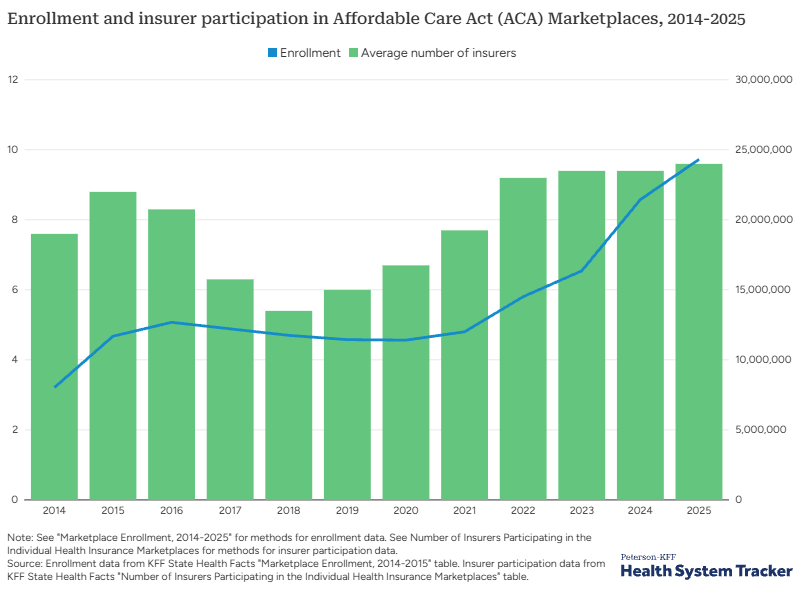
A decade of dramatic change is reshaping America’s health insurance markets. Employer group plans are becoming increasingly dominated by a few powerful insurers, while the ACA individual marketplace is experiencing record‑breaking competition and enrollment. Self‑funded plans are surging, small‑group premiums are driving employers to new coverage models, and major policy shifts in 2025 could redefine affordability for millions. This data‑driven Peterson‑KFF analysis breaks down the trends every insurance, finance, and business professional needs to understand as the industry enters a transformative new era.
Sarasota County is inching closer to approving Winchester Ranch, a massive 8,999‑home community planned for more than 3,100 acres in North Port. With a 7‑1 vote from the Planning Commission and a final decision expected in early 2026, the project could become one of Southwest Florida’s largest developments in decades—bringing new housing, commercial space, and industry while raising fresh questions about growth, the environment, and the region’s rapidly evolving real estate market.
Lument Finance Trust has closed a major $663.8 million commercial real estate CLO, marking one of the standout CRE finance deals of 2025. The transaction, LMNT 2025-FL3, features a strong reinvestment period, non‑recourse and non‑mark‑to‑market financing, and a diversified pool of 32 loans tied to 49 properties nationwide. With J.P. Morgan leading the structuring and more than $585 million placed in investment‑grade securities, the deal highlights renewed stability in transitional CRE debt—making it a development real estate and finance professionals will want to watch closely.
Walmart has partnered with Alquist 3D to roll out the nation’s first large‑scale wave of 3D‑printed commercial buildings, signaling a major shift in how future retail and industrial spaces will be constructed. After completing an 8,000‑square‑foot 3D‑printed expansion in Tennessee—the largest of its kind—the company is moving forward with over a dozen new projects nationwide, accelerating a tech‑driven transformation in commercial real estate.
Citizens Property Insurance Corp. is recommending statewide rate reductions for 2026—the first proposed decrease in more than a decade. Most Citizens policyholders could see an average 11.5% drop, reflecting recent insurance‑market reforms that have stabilized Florida’s turbulent property sector. With hundreds of thousands of policies moving back to private insurers and state‑backed Citizens shrinking to record‑low enrollment, real estate and insurance professionals should prepare for how lower premiums may influence affordability, buyer confidence, and market activity heading into 2026.