Why Tax‑Deferred Property Programs Are Surging — and What It Means for Today’s Real Estate Professionals
Investment managers across the U.S. are rapidly rolling out new tax‑deferred real estate investment programs as demand skyrockets. With stronger market certainty, favorable conditions, and one of the largest generational wealth transfers in history underway, Delaware Statutory Trusts (DSTs) are becoming a major force in modern estate planning.
In recent weeks, major development and investment groups such as Denholtz, Forum Investment Group, and PREP Property Group have launched new DST offerings. These programs allow property sellers to defer capital gains taxes by reinvesting through 1031 exchanges—an increasingly appealing strategy for owners seeking passive income and long‑term estate benefits.
Even real estate powerhouse Blackstone has entered the DST arena, joining Brookfield, Starwood, Nuveen, Hines, and Ares Management. As DSTs move into the mainstream, both new and seasoned professionals are paying close attention.
“The DST market is projected to have an increase of about 30% year‑over‑year,” said Jennifer McCool, Executive Vice President and Head of Capital Markets at Denholtz.
The Mechanics Behind the Demand
DSTs allow investors to shift from active property management to passive income while maintaining tax‑deferred real estate exposure via fractional interests in institutional‑grade assets. Through 1031 exchanges, sellers can reinvest proceeds into like‑kind commercial properties, avoiding taxes that would otherwise be due immediately.
According to Mountain Dell Consulting, DST‑related sales hit $7.34 billion through November, with projections of $7.5 billion in 2025—up 33% from the prior year.
The Wealth‑Transfer Wave
With more than $100 trillion expected to change hands over the next two decades, estate planning strategies like DSTs are seeing structural demand growth. The recent federal “Big Beautiful Bill” preserved 100% capital gains deferral through like‑kind exchanges, removing the uncertainty that had previously slowed some investors’ planning.
As Forum Investment CEO Darren Fisk explained, many property owners hold highly appreciated assets and are seeking reduced operational intensity without sacrificing upside potential.
Risks Still Matter
DSTs aren’t without drawbacks. Investors must accept long capital lock‑ups, illiquid assets, and reliance on sponsor performance. These risks are familiar territory for many approaching retirement, reinforcing the need for proper education and due diligence—areas where real estate professionals can add tremendous value.
Market Conditions Fueling Rapid Growth
A tight supply of quality replacement properties and rising tax concerns are amplifying interest in DSTs. Denholtz recently launched its first DST—DX SB Industrial I DST—featuring a nine‑building industrial campus in Tampa, Florida. The offering sold out in just six weeks, demonstrating powerful investor demand.
Sponsors are increasingly focusing on defensive assets such as industrial, multifamily, and essential‑needs retail, backed by long‑term, predictable cash flow. PREP Property Group, known for retail assets like Hillside Village Mall in Texas, plans to launch its inaugural DST offering in early 2026.
“Retail real estate is experiencing its strongest fundamentals in decades,” said PREP CEO Michael Phillips. “New supply is at historic lows, making this a prime moment for investors to reposition capital.”
Why This Matters for Real Estate Professionals
DSTs and 1031 strategies are more than investment buzzwords—they’re essential knowledge for today’s real estate agents, brokers, and advisors. Clients increasingly seek professionals who understand advanced tax‑advantaged investment structures.
This is where education becomes a differentiator. At Cameron Academy, real estate professionals across Florida and beyond are strengthening their expertise in topics like 1031 exchanges, investment analysis, and portfolio‑driven real estate strategy—making them more competitive in a rapidly evolving market.
Source
This article was inspired by reporting from CoStar News, a leading authority on commercial real estate insights.
More Articles
Getting licensed or staying ahead in your career can be a journey—but it doesn’t have to be overwhelming. Grab your favorite coffee or tea, take a moment to relax, and browse through our articles. Whether you’re just starting out or renewing your expertise, we’ve got tips, insights, and advice to keep you moving forward. Here’s to your success—one sip and one step at a time!
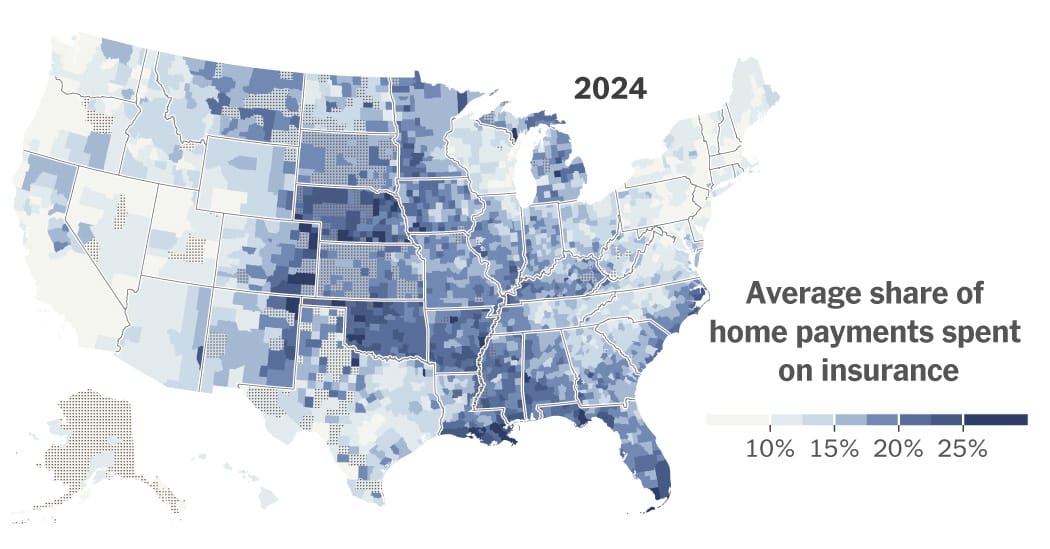
A surge in home insurance premiums is reshaping housing markets across the country, hitting disaster‑prone regions the hardest. From Louisiana to Colorado and California, deals are collapsing, buyers are backing out, and home values are dropping as insurance becomes a central affordability hurdle. New data shows climate‑driven risk repricing and soaring reinsurance costs are stripping tens of thousands of dollars from property values, forcing some homeowners to sell at a loss—or go uninsured altogether.
After years of sluggish activity, the National Association of REALTORS predicts 2026 could mark the long‑awaited rebound for the housing market. With a projected 14% jump in home sales, steadier rates near 6%, and rising buyer activity, NAR economists say momentum is already building. Early signs—like a 31% surge in mortgage applications, continued job growth, and stabilizing prices—suggest a stronger, more confident market ahead, creating fresh opportunities for both seasoned professionals and aspiring agents preparing to enter the field.
A surge of global capital is reshaping real estate heading into 2026, with investors shifting toward hands‑on strategies, cross‑border diversification, and high‑growth asset classes like data centers. Colliers’ 2026 Global Investor Outlook highlights rising confidence, improving liquidity, and a major pivot toward direct investing and value‑add opportunities. From office market rebounds to Asia Pacific’s rapid fundraising growth, the report outlines trends every real estate professional should understand as the industry enters a more dynamic, opportunity‑rich cycle.
Culver City just became the first place in California to legalize six‑story apartment buildings with only one staircase — a simple change that could reshape mid‑rise housing statewide. By freeing up as much as 7% more usable floor space, architects say single‑stair designs allow bigger units, more windows, and the kind of elegant layouts common in New York and Europe. If the city’s six‑year experiment succeeds, it may spark a broader rethinking of U.S. building codes and open the door to more flexible, affordable multifamily development across California.
Stratford homeowners are receiving their 2025 Notices of Assessment Change, marking the town’s first property revaluation since 2019. Officials emphasize that rising assessments do not equal higher tax bills, as a new mill rate won’t be set until spring 2026. Residents can challenge or review their updated valuations through informal hearings hosted by Vision Government Solutions, with appointments available for one week after receiving a notice.
New reporting reveals Florida homeowners now face an average insurance premium of $5,838 per year — nearly triple the national average. With skyrocketing rates, denied claims, and mounting non-renewals, residents are being pushed to tough financial decisions while lawmakers scramble to implement reforms. From retirees skipping coverage to families battling insurers for fair payouts, Florida’s insurance crisis is reshaping both the housing market and the daily lives of homeowners statewide.