“`html

Why Your College Degree Might Not Be Enough in Today’s Economy

Graduate walking on campus

For decades, a college degree has been viewed as the golden ticket to career success and financial security. However, in today’s rapidly evolving job market, a degree alone may not suffice. As employers increasingly seek candidates with a diverse skill set, academic qualifications are just one part of the equation. This sentiment is echoed in a recent Investopedia article that delves into why a college degree might not be enough to secure a high-paying job.

While a degree still holds value, it is the combination of relevant skills and experience that truly sets candidates apart. This shift in hiring practices highlights the growing importance of upskilling, reskilling, certifications, boot camps, and additional training.

Why Your College Degree Might Not Be Enough

As the job market becomes more competitive, employers are placing greater emphasis on experience over education. Christian Lovell, a certified career coach, points out that many employers are moving toward skills-based hiring, indicating that a degree might not be a requirement for many jobs. By 2031, nearly 70% of jobs will require some form of postsecondary education, but this doesn’t necessarily mean a four-year degree is the only path to success.

Skills and Training That Employers Are Looking for Beyond a College Degree

While a college degree provides foundational knowledge, many roles now demand a combination of hard skills, soft skills, and hands-on experience. According to a 2024 LinkedIn survey, the most desirable skills that employers are seeking include communication, customer service, leadership, project management, and problem solving.

Lovell mentions that many companies hiring for project managers don’t require a degree but look for specific skills and experience, such as stakeholder management and budget management. The average salary for a project manager is $90,942, with the potential to earn over $100,000.

What to Do If Your College Degree Isn’t Enough

For those who feel their degree might not be enough, there are several actionable steps to take:

  • Upskilling: Complete online courses, attend boot camps, and earn certifications to boost your resume.
  • Reskilling: Learn new skills to adapt to changes in the job market.
  • Internships, volunteering, and freelancing: Gain practical experience to build a strong portfolio.
  • Networking: Attend industry events and engage in online communities to increase your chances of landing your desired role.

Networking is crucial in today’s competitive market. Building relationships and letting your network know you are seeking a new role can be more beneficial than a cold application.

The Bottom Line

In today’s economy, a college degree is a valuable asset, but it is no longer the sole determinant of career success. To stand out as a candidate, it is essential to build a practical skill set that complements your degree. This approach not only enhances your employability but also ensures you are well-prepared for the demands of the modern workforce.

“`

More Articles

Getting licensed or staying ahead in your career can be a journey—but it doesn’t have to be overwhelming. Grab your favorite coffee or tea, take a moment to relax, and browse through our articles. Whether you’re just starting out or renewing your expertise, we’ve got tips, insights, and advice to keep you moving forward. Here’s to your success—one sip and one step at a time!

Proptech Promised a Revolution — So Why Does Real Estate Still Feel the Same?

Despite billions poured into proptech and a decade of flashy digital upgrades, the real estate experience remains largely unchanged. Apps made processes smoother, but not more transparent — because the industry’s core structures, data control and power dynamics stayed the same. True disruption will come from platforms that shift information and control to consumers, not just digitize outdated systems.

CRE Markets Wake Up in 2026: What Real Estate Professionals Need to Know

Early 2026 is delivering a clear message: commercial real estate is entering a recalibration phase. Construction is softening, pending home sales just saw a sharp drop, consumer sentiment is inching upward but remains fragile, and capital markets are tightening as major CRE sectors face rising distress. From data centers powering ahead to CMBS foreclosures climbing and office-to-residential conversions gaining momentum, professionals across real estate, mortgage, insurance, and finance need to stay sharp as the industry shifts.

Top 10 Highest-Paying Real Estate Careers of 2026

Discover the real estate roles earning the biggest paychecks in 2026. From investment consultants to commercial leasing managers, this breakdown highlights the salaries, responsibilities, and career paths offering the strongest financial potential in today’s evolving market—perfect for newcomers and seasoned professionals mapping their next big move.

Montana Launches Bold Licensing Reform Task Force to Boost Workforce Participation

Montana is taking major steps to remove outdated licensing barriers and strengthen its workforce. Governor Greg Gianforte has created a new Licensing Reform Task Force aimed at modernizing regulations, speeding up approvals, and helping more professionals enter high‑demand fields like construction and healthcare. With licensing numbers doubling over the past decade and rural communities facing critical shortages, the state is pushing for faster, more efficient pathways to work. The task force begins meeting in February and will deliver its full reform report by September 2026 — a move that could influence licensing modernization efforts nationwide.

AI Becomes Standard Gear for Real Estate Agents in 2026

Artificial intelligence has officially moved from novelty to necessity in the real estate world. According to new industry data, 97% of brokerage leaders say their agents now rely on AI tools for everything from listing descriptions to full-scale marketing campaigns. As adoption skyrockets, so do concerns over training, accuracy, and compliance — especially among smaller firms. The message is clear: for today’s real estate professionals, AI literacy isn’t optional anymore.

How the Biggest Players Shaped the 2025 Commercial Real Estate Comeback

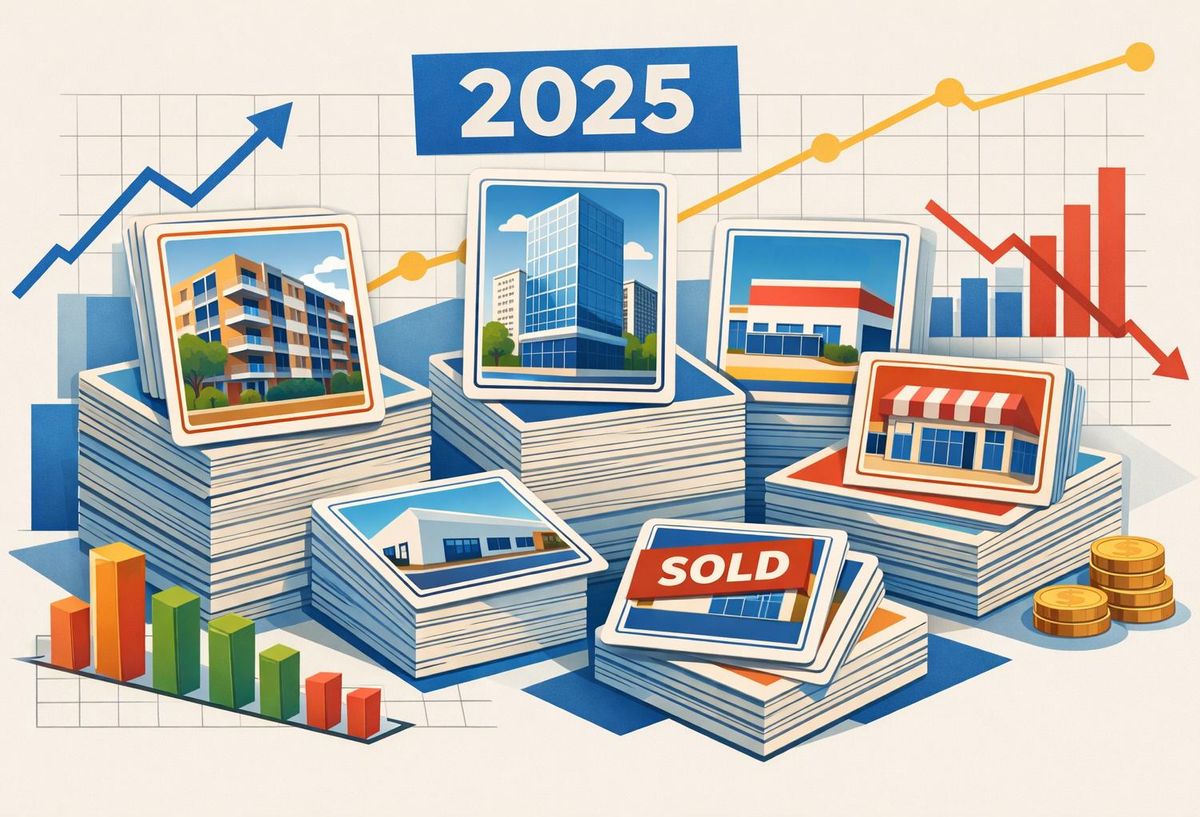
Commercial real estate roared back to life in 2025, with more than $255B pouring into multifamily, industrial, office and retail assets. Major investors moved fast on falling interest rates, improving bond yields and rising confidence across sectors. Multifamily dominated with over $115B in deals, industrial surged under private equity leadership, office saw renewed activity from owner-users and retail proved surprisingly resilient. For today’s real estate and finance professionals, the message is clear: opportunity favors those who stay informed and ready to act.