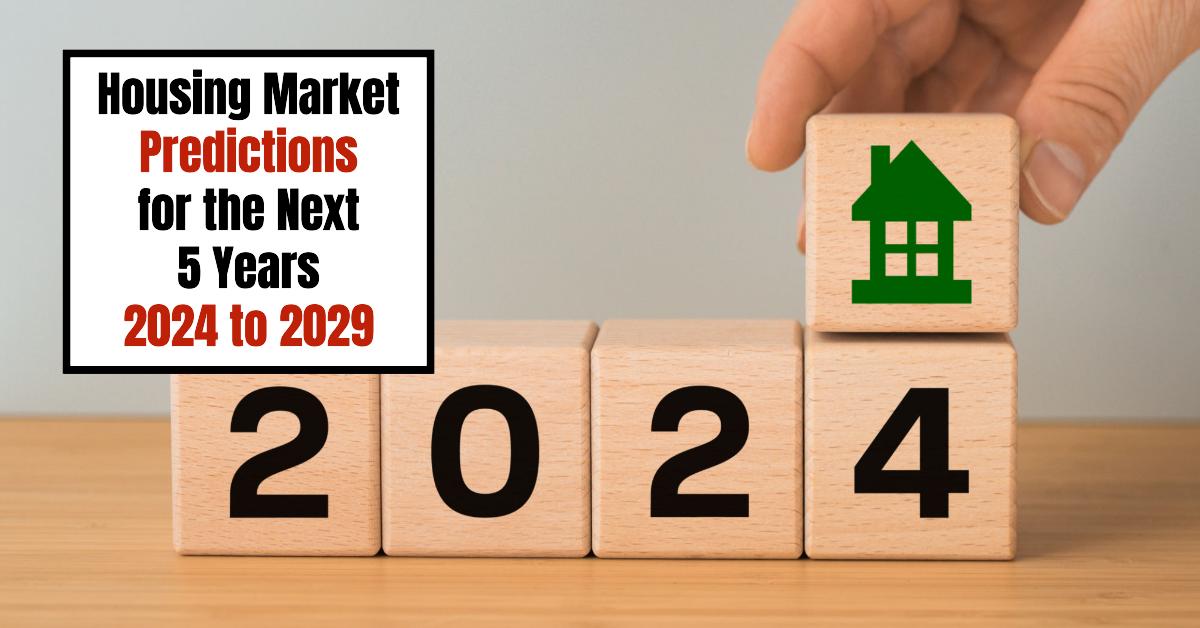
As the U.S. housing market braces for the next five years, experts are offering a range of predictions, from modest increases in home values to a potential shift towards a buyer’s market. Here’s a detailed look at the anticipated trends and changes.
2025 Forecast
The housing market in 2025 is expected to see a slight rise in home prices, projected to be between 1% and 2% above current inflation rates. This growth is anticipated due to increased real incomes and lower mortgage rates, which will enhance affordability. As millennials reach their prime home-buying age, demand is expected to rise, with new constructions attempting to mitigate the ongoing inventory shortage. Despite improvements, underbuilding will continue to affect market dynamics.
2026 Outlook
In 2026, more buyers are likely to collaborate with family and friends to manage high housing costs. Emerging technologies are set to revolutionize home construction, making it faster and more cost-efficient. Builders will be urged to consider the rising costs associated with climate change, focusing on sustainability and resilience in new developments.
2027 Expectations
Looking towards 2027, demographic trends such as urbanization and shifts in worker preferences due to remote work will influence market demand. Interest rates are expected to stabilize, potentially settling between 5.5% and 7%, impacting mortgage affordability. An increase in housing demand in suburban and rural areas is anticipated as people seek more space and community amenities.
2028 Projections
By 2028, the rise in housing inventory may return the market to a more balanced state, with supply meeting demand. This balance could ease competition in local markets, particularly in fast-growing Southern cities. However, housing affordability will continue to pose challenges, especially in densely populated urban centers.
2029 Vision
Approaching 2029, gradual changes in economic conditions, technological advances, and demographic shifts are expected to shape the housing landscape. As Millennials and Gen Z dominate the buying market, preferences will shift towards environmentally friendly, affordable housing solutions. Innovations like virtual tours and data analytics will streamline the home buying process and provide greater market transparency.
Despite the uncertainties posed by external factors and economic shifts, the housing market is expected to provide opportunities for both buyers and sellers. Monitoring these developments closely will be crucial for making informed investment and purchasing decisions.
For more in-depth analysis, refer to the original article from Norada Real Estate Investments.
More Articles
Getting licensed or staying ahead in your career can be a journey—but it doesn’t have to be overwhelming. Grab your favorite coffee or tea, take a moment to relax, and browse through our articles. Whether you’re just starting out or renewing your expertise, we’ve got tips, insights, and advice to keep you moving forward. Here’s to your success—one sip and one step at a time!
The Western U.S. commercial real estate sector is gearing up for a pivotal year in 2026, with new forecasts from Kidder Mathews showing steady economic growth, moderating inflation, and improving fundamentals across office, industrial, retail, and multifamily markets. From slow but stabilizing office recovery to strong retail performance and tightening industrial demand, the region is entering a period of rebalancing that presents fresh opportunities for real estate and related professionals.
A delayed federal jobs report has pushed ADP’s data into the spotlight, revealing that private employers added just 22,000 jobs in January — far below expectations. Revised December numbers and ongoing declines in key sectors like professional services and manufacturing point to a cooling labor market heading into 2025. While wage growth remains steady, uneven job creation across regions and industries is raising new questions about future interest‑rate cuts and what this shifting economy means for professionals in fields like real estate, mortgage, insurance, and finance.
Nashville’s booming tech-driven population is transforming luxury real estate, making smart technology and eco‑friendly design the new standard. From AI‑powered adaptive living and advanced security systems to high‑efficiency construction and green incentives, the city’s top communities—Brentwood, Franklin, and Nolensville—are leading a movement toward intelligent, energy‑saving homes that offer long‑term value and modern comfort.
Florida legislators have confirmed that no new insurance relief is coming in 2026, leaving homeowners to grapple with rising premiums and shrinking options. While Republican leaders argue that past reforms simply need more time to stabilize the market, Democrats are pushing for immediate action as families across the state feel the financial strain. With insurance changes off the table, lawmakers are shifting their focus to property tax relief—creating important ripple effects for real estate, mortgage, and insurance professionals watching the market closely.
A new CBRE survey reveals that 2026 is shaping up to be a bullish year for commercial real estate, with most investors planning to expand their portfolios. Dallas secures the top spot for the fifth year in a row, but Southeast metros like Atlanta, Miami, Tampa, and Charlotte are rapidly gaining ground thanks to population growth, strong job creation, and resilient demand in sectors like tech, logistics, and healthcare.
Washington State University’s Carson College of Business has introduced Carson Pro, a flexible online platform offering non‑credit certificates in finance, management, marketing, accounting, and specialty fields like the business of aging and wine business management. Designed for working professionals seeking practical, career-ready skills or a complete career reset, the program reflects a nationwide shift toward continuous learning as industries—from real estate to finance—evolve at a rapid pace.