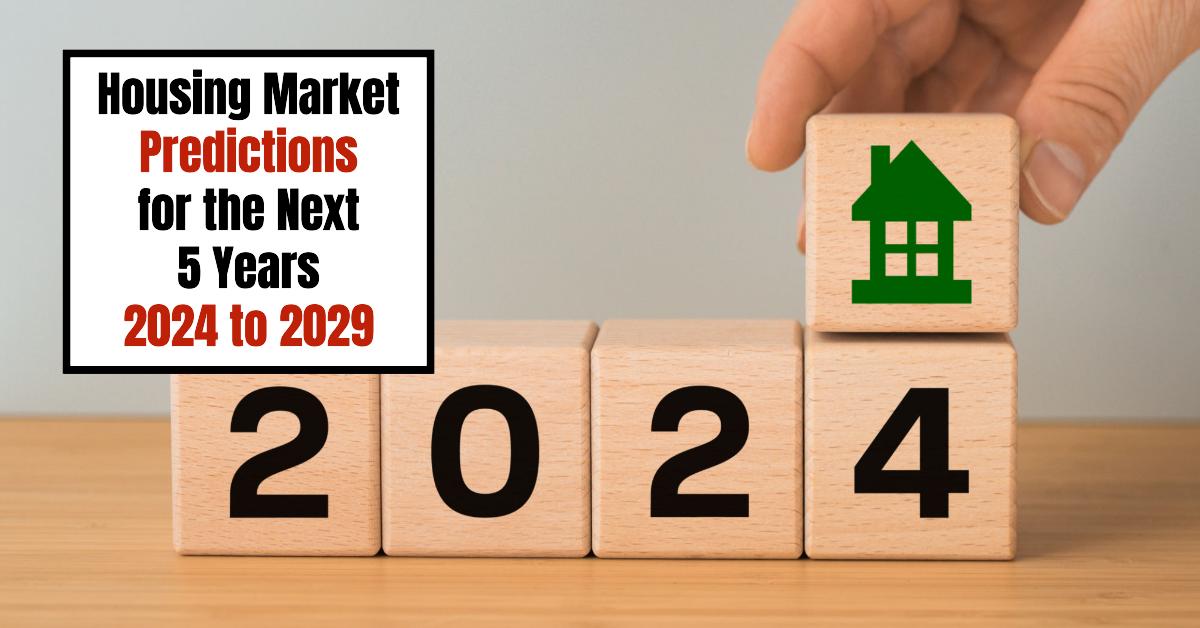
As the U.S. housing market braces for the next five years, experts are offering a range of predictions, from modest increases in home values to a potential shift towards a buyer’s market. Here’s a detailed look at the anticipated trends and changes.
2025 Forecast
The housing market in 2025 is expected to see a slight rise in home prices, projected to be between 1% and 2% above current inflation rates. This growth is anticipated due to increased real incomes and lower mortgage rates, which will enhance affordability. As millennials reach their prime home-buying age, demand is expected to rise, with new constructions attempting to mitigate the ongoing inventory shortage. Despite improvements, underbuilding will continue to affect market dynamics.
2026 Outlook
In 2026, more buyers are likely to collaborate with family and friends to manage high housing costs. Emerging technologies are set to revolutionize home construction, making it faster and more cost-efficient. Builders will be urged to consider the rising costs associated with climate change, focusing on sustainability and resilience in new developments.
2027 Expectations
Looking towards 2027, demographic trends such as urbanization and shifts in worker preferences due to remote work will influence market demand. Interest rates are expected to stabilize, potentially settling between 5.5% and 7%, impacting mortgage affordability. An increase in housing demand in suburban and rural areas is anticipated as people seek more space and community amenities.
2028 Projections
By 2028, the rise in housing inventory may return the market to a more balanced state, with supply meeting demand. This balance could ease competition in local markets, particularly in fast-growing Southern cities. However, housing affordability will continue to pose challenges, especially in densely populated urban centers.
2029 Vision
Approaching 2029, gradual changes in economic conditions, technological advances, and demographic shifts are expected to shape the housing landscape. As Millennials and Gen Z dominate the buying market, preferences will shift towards environmentally friendly, affordable housing solutions. Innovations like virtual tours and data analytics will streamline the home buying process and provide greater market transparency.
Despite the uncertainties posed by external factors and economic shifts, the housing market is expected to provide opportunities for both buyers and sellers. Monitoring these developments closely will be crucial for making informed investment and purchasing decisions.
For more in-depth analysis, refer to the original article from Norada Real Estate Investments.
More Articles
Getting licensed or staying ahead in your career can be a journey—but it doesn’t have to be overwhelming. Grab your favorite coffee or tea, take a moment to relax, and browse through our articles. Whether you’re just starting out or renewing your expertise, we’ve got tips, insights, and advice to keep you moving forward. Here’s to your success—one sip and one step at a time!
Imagine a morning where the commute is just a few steps from your bedroom to your home office. This is the reality for many in today's post-pandemic world, where remote work has become a staple of the modern workforce.
CRISPR technology has become the frontrunner in genome editing, surpassing earlier methods like zinc finger nucleases and transcription activator-like effector nucleases. The recent FDA approval of the CRISPR-Cas9 drug, exa-cel, marks a significant milestone particularly for treating sickle cell disease and transfusion-dependent beta thalassemia.
In recent years, artificial intelligence has emerged as a revolutionary tool in the field of oncology. AI's integration into healthcare transcends buzzwords, transforming cancer diagnosis, treatment personalization, and drug discovery.
The rapid advancements in artificial intelligence (AI) are transforming the landscape of radiology, promising to enhance diagnostic accuracy and support personalized medicine. However, as this technology becomes more integral to medical imaging, it brings with it a host of ethical and societal considerations that cannot be ignored.
AI's promise in healthcare is undeniable, with its ability to uncover hidden disease patterns and predict illnesses. However, the reliance on historical data can exacerbate existing biases, particularly affecting marginalized communities such as the LGBTQIA+ and certain ethnic and racial groups.
Telemedicine stands out as a transformative force, offering a lifeline to patients and providers alike. As we move beyond the pandemic, the challenge is to integrate this technology without escalating costs or overshadowing the indispensable role of in-person consultations.