Artificial intelligence has officially crossed the threshold from tech buzzword to indispensable business tool. In the mortgage world—where speed, accuracy and borrower trust rule every decision—AI is no longer a futuristic concept. It’s a present‑day performance multiplier that’s transforming how lenders work, communicate and compete.
Scotsman Guide recently explored this shift in their article “From Buzzword to Business Driver: AI in Mortgages,” a sharp and insightful breakdown of why forward‑thinking lenders are adopting AI at record speed. You can check out the original feature at ScotsmanGuide.com.
AI Has Quietly Slipped Into Everything
It’s already in inboxes, underwriting systems and marketing platforms. AI now powers tools that identify high‑intent leads, optimize email timing and predict borrower behavior. For real estate agents and loan officers, this means cleaner pipelines, smarter forecasting and far better conversations with clients.
But there’s a catch: these benefits only appear when AI is used correctly. Poorly trained tools or generic content generators can create compliance issues or messaging that feels robotic—something today’s borrowers immediately notice.
The New Competitive Line in the Sand
We’ve reached the tipping point. AI isn’t “nice to have” anymore—it’s the dividing line between lenders who scale efficiently and lenders who drown in manual tasks. The professionals integrating AI now are already pulling ahead in speed, clarity and borrower experience.
Why Smart Lenders Pair AI With Their CRM
One of the biggest takeaways from Scotsman Guide’s article is that AI performs best when linked to an industry‑trained CRM. AI alone cannot replace entire departments, but when paired with compliant, well‑tested messaging frameworks, it becomes a powerful co‑pilot.
This dynamic combo produces marketing that feels personal, controlled and compliant. Automation stops being robotic—and becomes reliable.
The Real Efficiency Boost: Keystroke Savings
Borrowers still want a trusted human guiding their mortgage decisions. They don’t want emojis from a loan officer who has never used one in their life. Top producers don’t want AI replacing their voice—they want it to remove repetitive tasks.
“Find all past customers who closed within the last 18 months with interest rates above 6.6% who could benefit from an FHA loan offer. Show me three email formats I can choose from that all include a message about avoiding PMI to lower their monthly payments.”
Within seconds, the CRM surfaces contacts and generates pre‑approved messaging. Automation then continues the work effortlessly.
What Lenders Should Be Doing Right Now
To stay competitive, Scotsman Guide emphasizes four core actions:
1. Educate your team. Help staff understand how to use AI responsibly—especially what NOT to feed into public AI tools.
2. Audit your content. Every AI‑generated message must be checked for compliance and tone. Consistency builds trust.
3. Integrate your systems. Your CRM, LOS and marketing tools must communicate. AI is only as effective as the ecosystem it supports.
4. Prioritize long‑term vision. AI isn’t a trend—it’s a tool that strengthens your people and enhances the borrower journey.
The Big Picture: AI Enhances People, Not Replaces Them
AI won’t replace loan officers. It will replace loan officers who refuse to use it.
Relationships will always anchor mortgage lending. AI simply helps professionals show up faster, smarter and with more consistency. And for anyone building a mortgage or real estate career, learning these tools isn’t optional—it’s the new standard.
For those growing in mortgage or real estate, education providers like Cameron Academy continue supporting professionals with courses that stay ahead of compliance, technology and best practices. Staying educated is staying competitive.
Getting licensed or staying ahead in your career can be a journey—but it doesn’t have to be overwhelming. Grab your favorite coffee or tea, take a moment to relax, and browse through our articles. Whether you’re just starting out or renewing your expertise, we’ve got tips, insights, and advice to keep you moving forward. Here’s to your success—one sip and one step at a time!
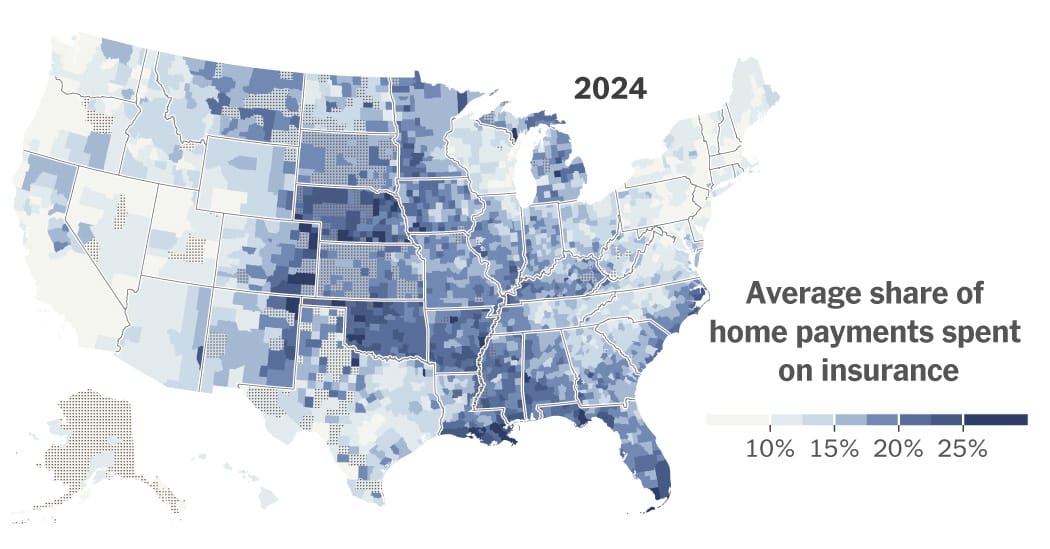
A surge in home insurance premiums is reshaping housing markets across the country, hitting disaster‑prone regions the hardest. From Louisiana to Colorado and California, deals are collapsing, buyers are backing out, and home values are dropping as insurance becomes a central affordability hurdle. New data shows climate‑driven risk repricing and soaring reinsurance costs are stripping tens of thousands of dollars from property values, forcing some homeowners to sell at a loss—or go uninsured altogether.
After years of sluggish activity, the National Association of REALTORS predicts 2026 could mark the long‑awaited rebound for the housing market. With a projected 14% jump in home sales, steadier rates near 6%, and rising buyer activity, NAR economists say momentum is already building. Early signs—like a 31% surge in mortgage applications, continued job growth, and stabilizing prices—suggest a stronger, more confident market ahead, creating fresh opportunities for both seasoned professionals and aspiring agents preparing to enter the field.
A surge of global capital is reshaping real estate heading into 2026, with investors shifting toward hands‑on strategies, cross‑border diversification, and high‑growth asset classes like data centers. Colliers’ 2026 Global Investor Outlook highlights rising confidence, improving liquidity, and a major pivot toward direct investing and value‑add opportunities. From office market rebounds to Asia Pacific’s rapid fundraising growth, the report outlines trends every real estate professional should understand as the industry enters a more dynamic, opportunity‑rich cycle.
Culver City just became the first place in California to legalize six‑story apartment buildings with only one staircase — a simple change that could reshape mid‑rise housing statewide. By freeing up as much as 7% more usable floor space, architects say single‑stair designs allow bigger units, more windows, and the kind of elegant layouts common in New York and Europe. If the city’s six‑year experiment succeeds, it may spark a broader rethinking of U.S. building codes and open the door to more flexible, affordable multifamily development across California.
Stratford homeowners are receiving their 2025 Notices of Assessment Change, marking the town’s first property revaluation since 2019. Officials emphasize that rising assessments do not equal higher tax bills, as a new mill rate won’t be set until spring 2026. Residents can challenge or review their updated valuations through informal hearings hosted by Vision Government Solutions, with appointments available for one week after receiving a notice.
New reporting reveals Florida homeowners now face an average insurance premium of $5,838 per year — nearly triple the national average. With skyrocketing rates, denied claims, and mounting non-renewals, residents are being pushed to tough financial decisions while lawmakers scramble to implement reforms. From retirees skipping coverage to families battling insurers for fair payouts, Florida’s insurance crisis is reshaping both the housing market and the daily lives of homeowners statewide.