AI Is Reshaping Mortgage Underwriting in 2026 — And Professionals Are Taking Notice
If you’ve been watching the mortgage industry evolve over the past few years, buckle up — 2026 is shaping up to be the year artificial intelligence finally steps into the underwriting spotlight. A new National Mortgage News survey reveals that 57% of mortgage professionals believe AI-powered underwriting will deliver the most transformative change across the industry this year.
And it’s not just hype. With breakthroughs in large language models and workflow automation, AI is now capable of tackling the “messy real world” of lending decisions — the odd file structures, inconsistent documentation, and human bottlenecks that have slowed innovation for decades.
Why Underwriting Is the Perfect AI Use Case
Theo Ellis, CEO of fintech platform Friday Harbor, highlights why underwriting is primed for transformation: it’s rule-heavy, data-packed, and historically vulnerable to bias. According to Ellis, the reason it has taken decades for AI to break through is simple — “the real world’s really messy.” But today’s AI systems finally process that complexity with consistency and speed.
Loan officers are already benefiting from early AI-powered file reading and workflow orchestration. John Brumund, senior vice president at Quontic Bank’s mortgage division, notes that loans passing through AI before reaching underwriting consistently produce more efficient outcomes.
The Ripple Effect: Credit, Verification, and Preapprovals
The survey shows widespread expectations for AI’s influence far beyond underwriting:
51% anticipate improved credit scoring and deeper analysis
49% expect real-time employment and income verification to accelerate significantly
Loan officers gain the power to build stronger, more accurate preapprovals earlier
This early clarity isn’t just good for borrowers — it’s a win for listing agents seeking reliable, confidence-boosting preapproval letters. As Ellis noted, “Underwriters can now focus on true risk management decisions,” thanks to AI offloading the administrative weight.
Policy Winds and Regulatory Influence
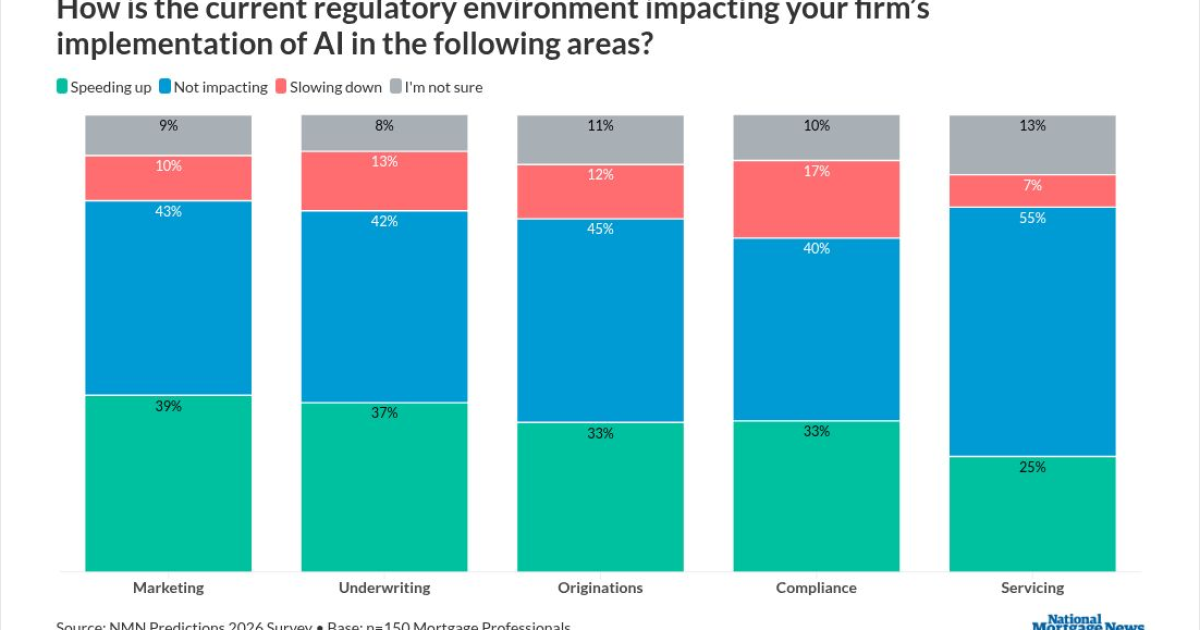
Policy direction is also fueling the rise of AI. With the second Trump administration signaling a looser federal mortgage regulatory environment, 41% of respondents expect overall policy softening. Another 37% say the current climate has encouraged increased AI use specifically in underwriting.
But states aren’t relaxing as quickly. Lenders remain cautious — data privacy and consumer protection still dominate conversations. Brumund emphasizes that mishandling data within AI systems is simply “not acceptable today.”
Resistance, Operational Overhaul, and the Path Forward
Despite momentum, large-scale adoption faces friction. Flyhomes CEO Tushar Garg cautions that redesigning underwriting processes carries real operational risk — and in the mortgage world, “things do not happen quickly or cleanly.”
Still, something powerful is happening: grassroots pressure from within the industry itself. Loan officers and processing teams are watching peers succeed and pushing leadership for the same AI tools. Faster cycle times, clearer paths to clear-to-close, and huge efficiency wins are too significant to ignore.
And when lenders see competitors scaling these benefits beyond small pilots, the rush toward AI becomes inevitable.
What This Means for Mortgage and Real Estate Professionals
For professionals in mortgage, real estate, and adjacent fields, AI’s rise in underwriting is more than a tech milestone — it’s a career-defining shift. Understanding how AI tools work, how they affect borrower experience, and how they influence regulatory expectations will be essential for the next generation of rising industry leaders.
That’s why institutions like Cameron Academy continue to develop forward-thinking education tailored to real estate, mortgage, insurance, finance, and other professional pathways. Staying ahead of AI-driven transformation is becoming a must-have advantage for long-term success.
To explore the original reporting and dive deeper, visit National Mortgage News at their full article here, written by Technology Reporter Spencer Lee.
More Articles
Getting licensed or staying ahead in your career can be a journey—but it doesn’t have to be overwhelming. Grab your favorite coffee or tea, take a moment to relax, and browse through our articles. Whether you’re just starting out or renewing your expertise, we’ve got tips, insights, and advice to keep you moving forward. Here’s to your success—one sip and one step at a time!
After years of sluggish commercial real estate performance, falling interest rates may finally set the stage for a market rebound. As the Federal Reserve signals further cuts, investors are eyeing REITs—and especially the Direxion Real Estate Bull 3X ETF (DRN), a leveraged fund designed to triple the daily movement of major commercial real estate stocks. DRN offers powerful upside potential during a rally, but its high‑risk, short‑term nature means it’s best suited for experienced traders who understand volatility and the mechanics of leverage.
A new proposal in Florida’s legislature could reshape the path to homeownership for working residents. House Bill 311, championed by State Rep. Jervonte Edmonds, would require certain private employers to contribute up to $5,000 toward their first-time homebuyer employees’ down payments or closing costs. Backed by bipartisan support, the bill ties employer tax write-offs directly to helping workers purchase homes, marking a unique approach to housing affordability. Now moving through committee, HB 311 could become one of the nation’s most innovative employer-assisted housing programs.
Artificial intelligence is pushing the real estate industry to confront a long‑standing problem: its data is fragmented, inconsistent, and nearly impossible for AI systems to interpret. From leases and rent rolls to county records and work orders, nothing is standardized, making AI adoption costly and inefficient. Industry leaders are now turning toward shared data standards and ontologies—like OSCRE’s “smart data highway”—to create cleaner, interoperable information systems. As real estate evolves, professionals who understand data and AI will have a major advantage, and schools like Cameron Academy are helping prepare them for this shift.
The U.S. housing market stumbled into 2026 as January home sales tumbled 8.4% from December, hitting their lowest pace in over a year. With inventory still tight, prices rising, and market activity stagnating, NAR’s chief economist warns that Americans—especially renters—are “stuck” in a new kind of housing crisis. Despite improving affordability on paper, sluggish movement and regional declines signal a market demanding sharper strategy and adaptability from today’s real estate professionals.
A fresh 2026 analysis reveals the top home insurance companies in the U.S., breaking down which carriers offer the best value, coverage options, and customer satisfaction. State Farm leads for customer experience, American Family shines for first-time buyers, and Allstate, Farmers, and Nationwide each earn top marks in specialized categories. With Florida’s premiums surging to more than double the national average, industry pros and homeowners alike gain a clear advantage by understanding which insurers remain strong—especially as weather risks, insurer withdrawals, and rising reconstruction costs reshape the market.
A new Perryman Group analysis shows Florida’s 2022–2023 insurance reforms are paying off, lowering property‑casualty costs by 14.5% and generating more than $4.2 billion in economic activity. With over 29,000 jobs created and premium increases nearly flat in 2025, the state’s long‑troubled insurance market is finally stabilizing as major carriers reduce rates and return to the market.