AI Medical Tools Revolutionize Healthcare Landscape

In a groundbreaking development, scientists at Wayne State University are pioneering artificial intelligence models to significantly reduce costs in complex drug design. This initiative focuses on creating new medications, particularly those involving complex drug types traditionally challenging to simulate.
Alice Walker, an assistant professor of chemistry at Wayne State, emphasized the potential of these AI models in a recent news release. “Most drug design is done with small organic molecules,” she explained, highlighting the difficulties with unusual drug scaffolds like sugars and fluorescent molecules. Her team aims to develop new computational techniques to address these challenges, potentially leading to breakthrough treatments with fewer side effects.

AI Outperforms Human Doctors in Diagnostics

A Stanford University study has revealed a remarkable achievement by ChatGPT-4, which scored a 92% accuracy rate in medical diagnostics, outperforming traditional physicians who scored 74%. This significant finding, published in JAMA Network Open, underscores the transformative potential of AI in healthcare.
Despite these advancements, the study noted that doctors with access to ChatGPT did not show substantial improvement in diagnostic reasoning, although they completed assessments more swiftly. Co-lead author Ethan Goh, a postdoctoral scholar at Stanford, remarked in a blog post that while AI won’t replace doctors, it could greatly enhance their capabilities.

Health Tech Sector Experiences Robust Growth

The health tech sector has witnessed a 12% rise in stocks in 2024, buoyed by substantial investments in AI, according to Bessemer Venture Partners’ annual report. The report highlights that AI-focused companies now attract 38% of venture capital in healthcare, with valuations soaring up to five times higher than their non-AI counterparts.
Despite this growth, early-stage funding challenges persist, with Series A companies taking 50% longer to secure capital compared to previous years. Bessemer partners Sofia Guerra and Steve Kraus noted the sector’s “remarkable adaptability and strength in the face of ongoing market challenges.”
For more insights on AI advancements, subscribe to the PYMNTS AI Newsletter.

More Articles

Getting licensed or staying ahead in your career can be a journey—but it doesn’t have to be overwhelming. Grab your favorite coffee or tea, take a moment to relax, and browse through our articles. Whether you’re just starting out or renewing your expertise, we’ve got tips, insights, and advice to keep you moving forward. Here’s to your success—one sip and one step at a time!

Artificial Intelligence in Diagnostics: A Revolution in Healthcare

The global market for artificial intelligence in diagnostics is poised for remarkable growth, with projections estimating it to reach USD 7.3 billion by 2032.

By |December 10, 2024|Categories: Article, Artificial Intelligence, Healthcare|Tags: , |0 Comments

Revolutionizing Medical Education with Extended Reality

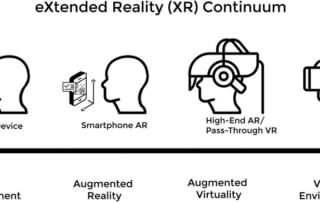
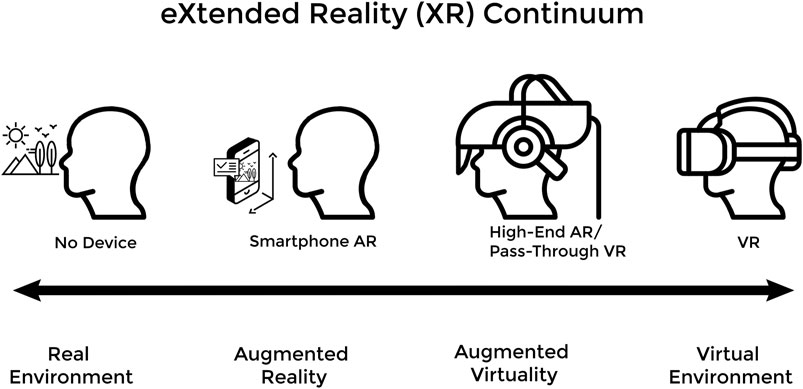
In the ever-evolving landscape of medical education, a new player has emerged, promising to revolutionize the way future doctors are trained. The integration of eXtended Reality (XR) technologies is reshaping the educational landscape by addressing the limitations of traditional methods.

Genetic Testing: A New Dawn in Healthcare

Genetic testing represents more than just a scientific advancement; it signifies a fundamental shift in how we approach health and wellness.

Sustainable Architecture: Blending Innovation with Ecological Responsibility

The journey toward sustainable architecture is ongoing, with each project serving as a beacon of what's achievable when creativity meets ecological awareness.

By |December 9, 2024|Categories: Architecture, Article, Sustainability|Tags: |0 Comments

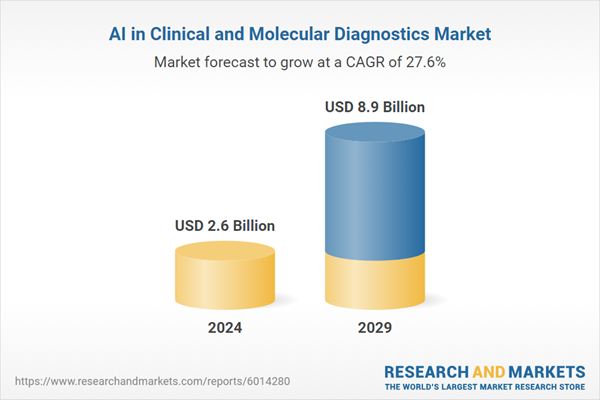
AI in Clinical and Molecular Diagnostics: A Market on the Rise

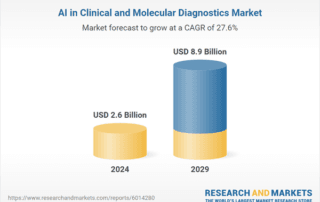
AI in Clinical and Molecular Diagnostics Market is set to experience remarkable growth, projected to surge from USD 2.6 billion in 2024 to USD 8.9 billion by 2029. This growth is driven by the integration of advanced AI technologies such as machine learning and deep learning into traditional diagnostic methodologies like imaging, genomics, and laboratory testing.

AI: A Revolution in Healthcare’s Future

AI is not a distant dream but a present reality, already integrated into everyday life through virtual assistants like Alexa and Siri. AI shows promise in enhancing medical accuracy, such as in predicting mesothelioma survival and improving colonoscopy accuracy, it is not intended to replace healthcare professionals.