In a groundbreaking development, artificial intelligence (AI) is revolutionizing the way doctors diagnose and treat cancer, providing a clearer and more precise picture of potential malignancies. As reported by the AAMC, AI tools are now being leveraged to analyze images and tissue samples, offering insights that surpass traditional methods.

The AI Advantage in Oncology


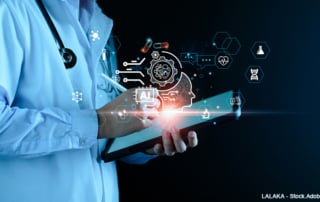
AI’s integration into healthcare, particularly in oncology, marks a significant shift towards precision medicine. By analyzing vast datasets, AI can detect cancerous cells with greater accuracy, aiding doctors in diagnosing potential cancers, predicting developments, and planning personalized treatments. This technological advancement is not only enhancing imaging processes but also helping reduce unnecessary biopsies and false positives.

A Patient’s Journey


Consider the case of a woman who discovered a worrying lump in her thyroid. Initially, her doctor ordered an ultrasound and subsequent biopsy due to concerning results. However, seeking a second opinion from a radiologist utilizing AI-driven ultrasound exams revealed that the tissue was benign. This revelation, supported by her biopsy results, highlights AI’s potential to prevent invasive procedures and alleviate patient anxiety.

FDA-Approved AI Tools


The FDA has approved AI-assisted tools for detecting various cancer types, including brain, breast, lung, prostate, skin, and thyroid cancers. These tools are trained on enormous amounts of data, providing a deeper analysis of images such as mammograms, sonograms, x-rays, and MRIs. AI’s ability to highlight lesions with precision and differentiate levels of abnormalities is akin to consulting a brilliant colleague, as described by experts in the field.

Benefits and Challenges


  • AI-assisted imaging offers several benefits, such as accelerating diagnosis and treatment, reducing false positives, and enabling earlier intervention.
  • However, challenges remain, including the potential for false readings and inherent biases within AI algorithms.
Despite these hurdles, doctors are optimistic about AI’s role in ushering proactive approaches in medicine, improving early detection, and enhancing treatment planning.

In conclusion, as AI continues to evolve, it promises to transform cancer diagnostics, offering hope for better health outcomes and a more proactive approach to patient care.


More Articles

Getting licensed or staying ahead in your career can be a journey—but it doesn’t have to be overwhelming. Grab your favorite coffee or tea, take a moment to relax, and browse through our articles. Whether you’re just starting out or renewing your expertise, we’ve got tips, insights, and advice to keep you moving forward. Here’s to your success—one sip and one step at a time!

The Remote Work Revolution: Redefining Real Estate

Imagine a morning where the commute is just a few steps from your bedroom to your home office. This is the reality for many in today's post-pandemic world, where remote work has become a staple of the modern workforce.

By |December 2, 2024|Categories: Article, Real Estate, Remote Work|Tags: , |0 Comments

CRISPR: The Future of Gene Editing and Its Clinical Implications

CRISPR technology has become the frontrunner in genome editing, surpassing earlier methods like zinc finger nucleases and transcription activator-like effector nucleases. The recent FDA approval of the CRISPR-Cas9 drug, exa-cel, marks a significant milestone particularly for treating sickle cell disease and transfusion-dependent beta thalassemia.

By |December 1, 2024|Categories: Article, Biotechnology, Medicine|Tags: , |0 Comments

AI Revolution in Oncology: Transformative Potential or Overhyped?

In recent years, artificial intelligence has emerged as a revolutionary tool in the field of oncology. AI's integration into healthcare transcends buzzwords, transforming cancer diagnosis, treatment personalization, and drug discovery.

AI in Radiology: A Double-Edged Sword

The rapid advancements in artificial intelligence (AI) are transforming the landscape of radiology, promising to enhance diagnostic accuracy and support personalized medicine. However, as this technology becomes more integral to medical imaging, it brings with it a host of ethical and societal considerations that cannot be ignored.

Humanity at the Crossroads: Ethical Implications of AI in Medicine

AI's promise in healthcare is undeniable, with its ability to uncover hidden disease patterns and predict illnesses. However, the reliance on historical data can exacerbate existing biases, particularly affecting marginalized communities such as the LGBTQIA+ and certain ethnic and racial groups.

The Future of Telemedicine: Challenges and Opportunities Beyond the Pandemic

Telemedicine stands out as a transformative force, offering a lifeline to patients and providers alike. As we move beyond the pandemic, the challenge is to integrate this technology without escalating costs or overshadowing the indispensable role of in-person consultations.

By |November 30, 2024|Categories: Article, Healthcare, Technology|Tags: , |0 Comments