In the ever-evolving world of healthcare, Artificial Intelligence (AI) is no longer a futuristic dream but a burgeoning reality, especially in the realm of cancer diagnosis and treatment. Dr. Peter Yu, the physician-in-chief at the Hartford HealthCare Cancer Institute, sheds light on how AI is transforming the landscape of medical care.
AI: The New Frontier in Cancer Care
AI’s potential in healthcare is vast, with its most promising applications in computer vision. As Dr. Yu explains, this technology, widely used in facial recognition and autonomous driving, can significantly enhance cancer diagnosis. By analyzing digital radiology and pathology images, AI can identify patterns typical of cancer, thus improving diagnostic accuracy and treatment precision.
Furthermore, AI’s role extends to guiding radiation treatment. By using enhanced precision, AI can help protect healthy tissue while targeting cancerous cells, minimizing side effects. Radiation oncologists are exploring AI’s capabilities to better identify cancer margins and program radiation machines for more accurate treatment delivery.
Bridging the Gap: AI as a Medical Translator
AI’s influence is not limited to diagnosis and treatment. Large Language Models, such as those powering ChatGPT, offer a new way to demystify medical jargon. These tools can simplify complex medical documents, making them more accessible to patients. Dr. Yu notes that AI can address common patient queries with speed and accuracy, transforming how patients interact with their medical records.
Ethical Considerations in AI Healthcare
While AI’s potential is exciting, it is not without ethical concerns. Dr. Yu emphasizes the importance of addressing issues such as patient privacy, data sharing, and the accuracy of AI-generated information. There is also the risk of perpetuating systemic biases through AI databases, a challenge that must be navigated carefully.
Prevention: A Human Responsibility
Despite AI’s advancements in cancer care, Dr. Yu reminds us that prevention is a human responsibility. Cancer prevention involves lifestyle choices like HPV and Hepatitis B vaccinations, avoiding tobacco, and maintaining a healthy diet. These steps are crucial in reducing cancer risk, underscoring that while AI can aid in detection and treatment, prevention starts with personal choices.
For more insights on healthcare innovations, visit the original article on Hartford Hospital’s news center.
More Articles
Getting licensed or staying ahead in your career can be a journey—but it doesn’t have to be overwhelming. Grab your favorite coffee or tea, take a moment to relax, and browse through our articles. Whether you’re just starting out or renewing your expertise, we’ve got tips, insights, and advice to keep you moving forward. Here’s to your success—one sip and one step at a time!
With increasing governmental and private investments, the demand for precision medicine is expected to rise steadily. The commitment to addressing chronic conditions, coupled with strategic industry collaborations and advanced diagnostic tools, will sustain market growth.
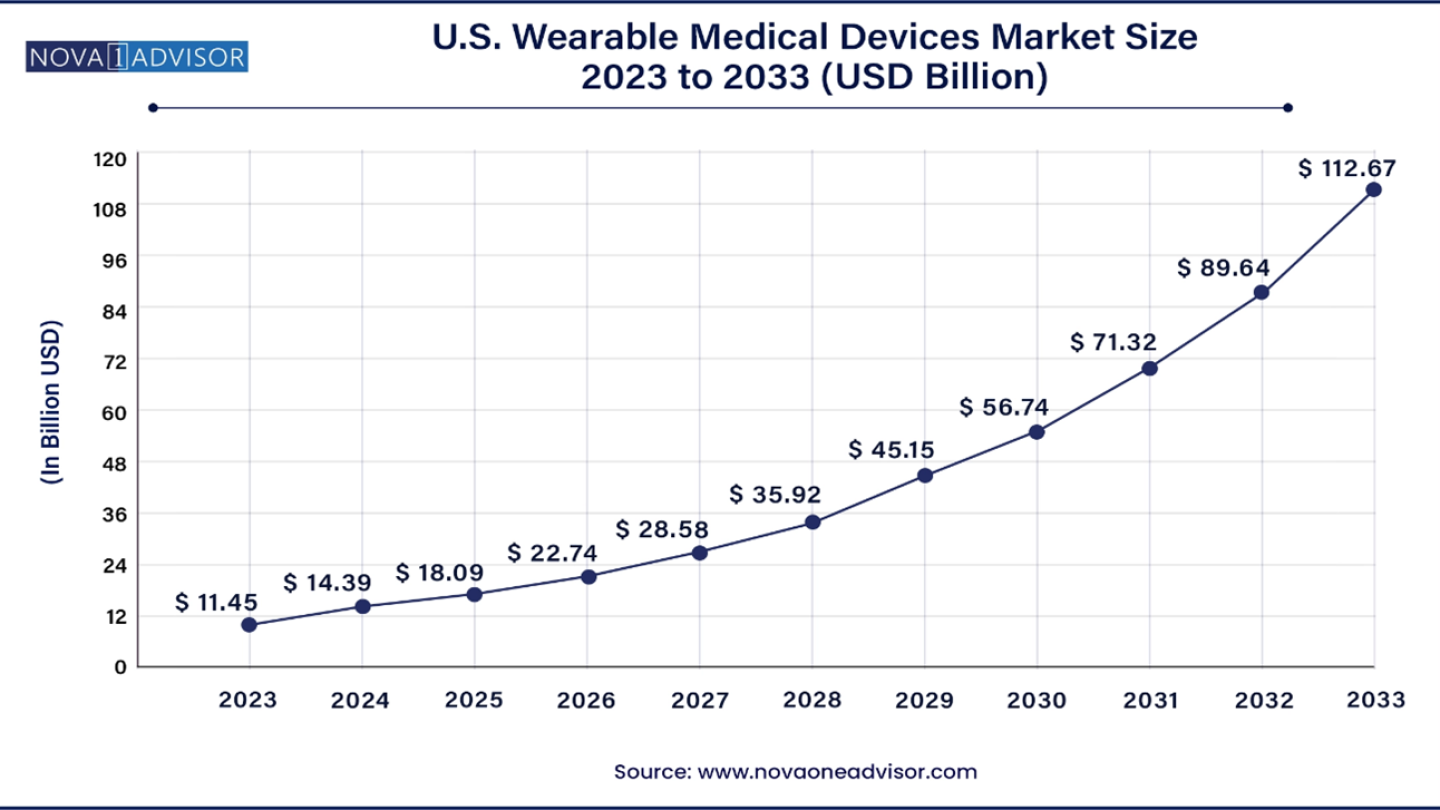
The U.S. wearable medical devices market, currently valued at an estimated $11.45 billion in 2023, is set to experience an astronomical rise to approximately $112.67 billion by 2033.
The real estate market is on the brink of transformation, captivating the attention of buyers, sellers, investors, and industry professionals. As we look toward the end of 2024, experts predict a shift in the landscape, particularly with home prices expected to decline due to increased inventory levels.
According to the World Health Organization (WHO), nearly two billion people in rural and remote areas worldwide lack access to essential healthcare solutions. This staggering statistic highlights a critical issue: the digital divide that limits telehealth services, primarily due to inadequate broadband access.
As AI becomes a staple in medical practice, it carries the risk of reinforcing existing biases entrenched in historical data. These biases can lead to skewed outcomes, particularly affecting marginalized communities such as the LGBTQIA+ and certain ethnic groups.
A groundbreaking study published in Volume 15 of Oncotarget on October 11, 2024, titled 'Relationship between the expressions of DLL3, ASC1, TTF-1 and Ki-67: First steps of precision medicine at SCLC' showcases pivotal advancements in the fight against small cell lung cancer (SCLC).