AI Revolutionizing Clinical and Molecular Diagnostics
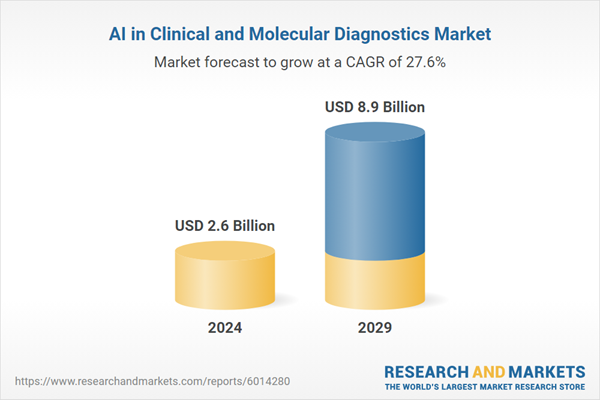
In a groundbreaking development, the market for AI in clinical and molecular diagnostics is set to experience a phenomenal growth trajectory. According to the recent report by ResearchAndMarkets.com, the market, valued at USD 2.6 billion in 2024, is projected to skyrocket to USD 8.9 billion by 2029. This represents a robust compound annual growth rate (CAGR) of 27.6%.
Driving Forces Behind Market Growth
The surge in demand for accurate and efficient diagnostic solutions is a key driver of this growth. Advances in AI technologies, notably machine learning and deep learning, are enhancing traditional diagnostic methods in imaging, genomics, and laboratory testing. This technological evolution is paving the way for more precise and personalized medicine.
Moreover, the integration of AI into healthcare systems is becoming increasingly critical. As noted in the full report, major regions such as North America, Europe, and Asia-Pacific are at the forefront of this digital health revolution, investing heavily in innovative diagnostic solutions.
Strategic Initiatives and Challenges
The report highlights the strategic initiatives of leading companies like Siemens Healthineers AG, F. Hoffmann-La Roche Ltd., and Koninklijke Philips N.V. These firms are expanding their R&D efforts, forming strategic partnerships, and diversifying their product portfolios to capitalize on emerging opportunities.
However, the path to widespread AI adoption is not without hurdles. Regulatory challenges and data security concerns pose significant obstacles. Yet, the report identifies untapped opportunities in developing markets and across various AI technologies, presenting a promising outlook for stakeholders.
Implications for Healthcare
In an era of rapid technological advancements, the integration of AI in clinical and molecular diagnostics promises to revolutionize healthcare. It is expected to significantly improve patient outcomes and healthcare efficiency. Stakeholders, including healthcare providers, technology developers, and policymakers, are encouraged to leverage these insights for strategic planning and innovation.
For a comprehensive analysis and detailed insights, refer to the full report on ResearchAndMarkets.com.
“`
More Articles
Getting licensed or staying ahead in your career can be a journey—but it doesn’t have to be overwhelming. Grab your favorite coffee or tea, take a moment to relax, and browse through our articles. Whether you’re just starting out or renewing your expertise, we’ve got tips, insights, and advice to keep you moving forward. Here’s to your success—one sip and one step at a time!
The Western U.S. commercial real estate sector is gearing up for a pivotal year in 2026, with new forecasts from Kidder Mathews showing steady economic growth, moderating inflation, and improving fundamentals across office, industrial, retail, and multifamily markets. From slow but stabilizing office recovery to strong retail performance and tightening industrial demand, the region is entering a period of rebalancing that presents fresh opportunities for real estate and related professionals.
A delayed federal jobs report has pushed ADP’s data into the spotlight, revealing that private employers added just 22,000 jobs in January — far below expectations. Revised December numbers and ongoing declines in key sectors like professional services and manufacturing point to a cooling labor market heading into 2025. While wage growth remains steady, uneven job creation across regions and industries is raising new questions about future interest‑rate cuts and what this shifting economy means for professionals in fields like real estate, mortgage, insurance, and finance.
Nashville’s booming tech-driven population is transforming luxury real estate, making smart technology and eco‑friendly design the new standard. From AI‑powered adaptive living and advanced security systems to high‑efficiency construction and green incentives, the city’s top communities—Brentwood, Franklin, and Nolensville—are leading a movement toward intelligent, energy‑saving homes that offer long‑term value and modern comfort.
Florida legislators have confirmed that no new insurance relief is coming in 2026, leaving homeowners to grapple with rising premiums and shrinking options. While Republican leaders argue that past reforms simply need more time to stabilize the market, Democrats are pushing for immediate action as families across the state feel the financial strain. With insurance changes off the table, lawmakers are shifting their focus to property tax relief—creating important ripple effects for real estate, mortgage, and insurance professionals watching the market closely.
A new CBRE survey reveals that 2026 is shaping up to be a bullish year for commercial real estate, with most investors planning to expand their portfolios. Dallas secures the top spot for the fifth year in a row, but Southeast metros like Atlanta, Miami, Tampa, and Charlotte are rapidly gaining ground thanks to population growth, strong job creation, and resilient demand in sectors like tech, logistics, and healthcare.
Washington State University’s Carson College of Business has introduced Carson Pro, a flexible online platform offering non‑credit certificates in finance, management, marketing, accounting, and specialty fields like the business of aging and wine business management. Designed for working professionals seeking practical, career-ready skills or a complete career reset, the program reflects a nationwide shift toward continuous learning as industries—from real estate to finance—evolve at a rapid pace.