In a world where technology is rapidly reshaping industries, artificial intelligence (AI) stands at the forefront of revolutionizing healthcare. The concept of AI in medicine might have once seemed like a futuristic fantasy, reminiscent of the “tricorder” from Star Trek, but today, it’s becoming an integral part of medical practice.

Dr. Thomas M. Maddox, a leading expert in digital products and innovation at BJC HealthCare, predicts that AI will soon be embedded in almost every aspect of healthcare. This year, tech budgets for AI in healthcare companies are expected to grow significantly, reflecting its increasing importance.
A robotic hand touching a clear screen

AI’s impact on clinical diagnostics is profound. It enhances the ability to interpret medical images such as X-rays and MRIs, often surpassing human accuracy. By identifying patterns that even seasoned professionals might miss, AI complements human expertise, improving diagnostic precision.

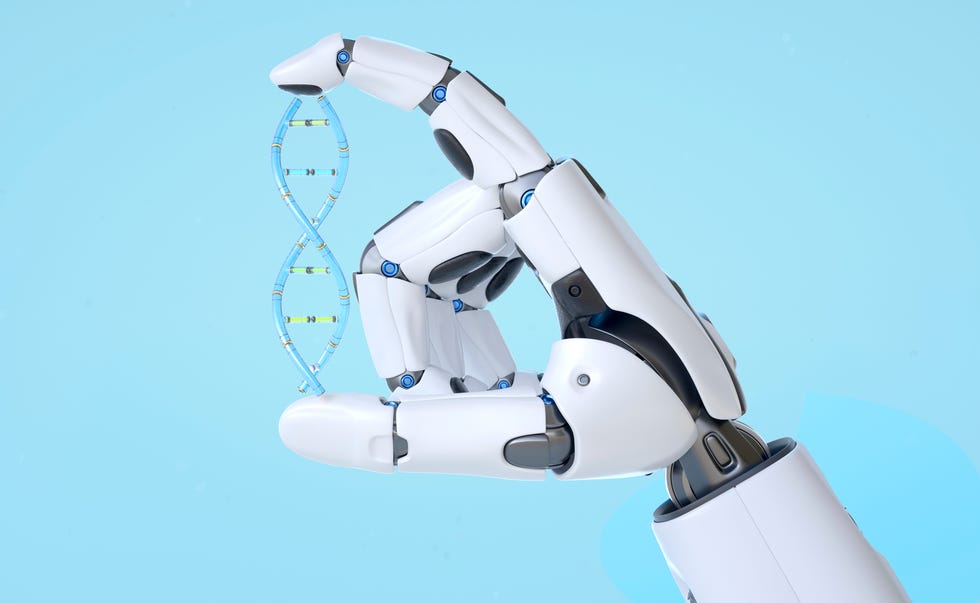
Moreover, AI is driving breakthroughs in research. Dr. Lee Schwamm from Yale School of Medicine highlights how AI has enabled the visualization of proteins within DNA, paving the way for targeted treatments that were once beyond reach.

Beyond diagnostics, AI’s potential extends to predicting future pandemics. According to a Medical Science Monitor editorial, AI systems had already flagged unusual pneumonia cases before the COVID-19 outbreak, demonstrating its capacity to detect early signs of infectious diseases.

However, the proliferation of AI in healthcare raises ethical concerns. Ensuring that AI systems are free from biases and privacy risks is crucial. Regulatory bodies like the FDA, alongside the American Medical Association, are working to establish ethical guidelines for AI use in healthcare.

Despite these challenges, AI promises to enhance healthcare efficiency and patient experience. By automating documentation, physicians can focus more on patient interaction. AI-powered scheduling systems can also adapt to various factors, potentially reducing waiting times.

As AI continues to integrate into healthcare, it will undoubtedly transform the landscape. While AI-equipped physicians may outperform those without such tools, the technology is seen as an augmentation of the human touch, not a replacement.

More Articles

Getting licensed or staying ahead in your career can be a journey—but it doesn’t have to be overwhelming. Grab your favorite coffee or tea, take a moment to relax, and browse through our articles. Whether you’re just starting out or renewing your expertise, we’ve got tips, insights, and advice to keep you moving forward. Here’s to your success—one sip and one step at a time!

SEC Unveils 2025 Priorities: Examining Private Fund Advisers, Reg BI, and Cybersecurity

The Securities and Exchange Commission (SEC), through its Division of Examinations, has unveiled its 2025 examination priorities, reflecting a comprehensive focus on areas such as private fund advisers, Regulation Best Interest (Reg BI) compliance, and cybersecurity.

By |October 7, 2025|Categories: Article, Finance, Regulatory Compliance|Tags: , |0 Comments

Empowering Realtors: A Toolkit for Fair Housing Advocacy

Realtor.com has taken a proactive stance by providing a comprehensive toolkit designed to empower agents with the knowledge and resources necessary to navigate fair housing practices effectively.

UNC-Chapel Hill Graduate Programs Shine in National Rankings

The University of North Carolina at Chapel Hill continues to solidify its reputation for excellence in graduate education, as evidenced by the recent U.S. News & World Report's 2025 "Best Graduate Schools" list.

Evolving Shopping Trends: The Dynamic Interplay Between Online and In-Store Experiences

As we venture further into 2025, the landscape of shopping continues to evolve with a fascinating dynamic between online and in-store experiences. According to a recent article from Business.com, the retail sector is witnessing a significant shift in consumer preferences, with approximately 59% of consumers favoring online shopping while 41% still prefer traditional in-store purchases.

By |September 10, 2025|Categories: Article, E-commerce, Retail|Tags: , |0 Comments

CMS Implements First Major Updates to Lab Personnel Requirements in Over 30 Years

On December 28, 2024, the Centers for Medicare & Medicaid Services (CMS) enacted a long-anticipated final rule that significantly revises laboratory personnel requirements under Subpart M of the Clinical Laboratory Improvement Amendments (CLIA). This marks the first major overhaul since 1992, impacting all clinical laboratory personnel engaged in moderate- or high-complexity laboratory tests.