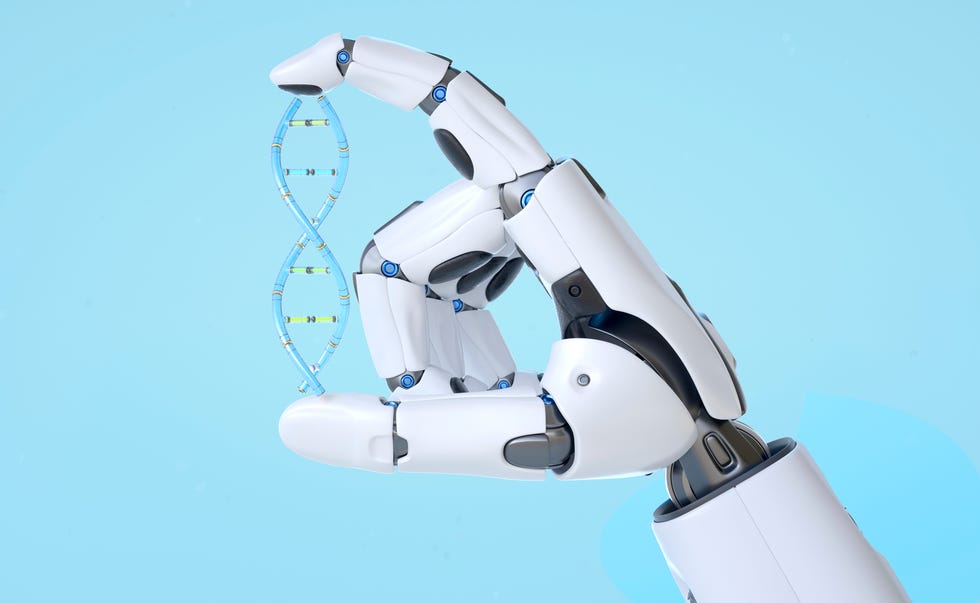
In a world where technology is rapidly reshaping industries, artificial intelligence (AI) stands at the forefront of revolutionizing healthcare. The concept of AI in medicine might have once seemed like a futuristic fantasy, reminiscent of the “tricorder” from Star Trek, but today, it’s becoming an integral part of medical practice.

Dr. Thomas M. Maddox, a leading expert in digital products and innovation at BJC HealthCare, predicts that AI will soon be embedded in almost every aspect of healthcare. This year, tech budgets for AI in healthcare companies are expected to grow significantly, reflecting its increasing importance.

A robotic hand touching a clear screen

AI’s impact on clinical diagnostics is profound. It enhances the ability to interpret medical images such as X-rays and MRIs, often surpassing human accuracy. By identifying patterns that even seasoned professionals might miss, AI complements human expertise, improving diagnostic precision.

Moreover, AI is driving breakthroughs in research. Dr. Lee Schwamm from Yale School of Medicine highlights how AI has enabled the visualization of proteins within DNA, paving the way for targeted treatments that were once beyond reach.

Beyond diagnostics, AI’s potential extends to predicting future pandemics. According to a Medical Science Monitor editorial, AI systems had already flagged unusual pneumonia cases before the COVID-19 outbreak, demonstrating its capacity to detect early signs of infectious diseases.

However, the proliferation of AI in healthcare raises ethical concerns. Ensuring that AI systems are free from biases and privacy risks is crucial. Regulatory bodies like the FDA, alongside the American Medical Association, are working to establish ethical guidelines for AI use in healthcare.

Despite these challenges, AI promises to enhance healthcare efficiency and patient experience. By automating documentation, physicians can focus more on patient interaction. AI-powered scheduling systems can also adapt to various factors, potentially reducing waiting times.

As AI continues to integrate into healthcare, it will undoubtedly transform the landscape. While AI-equipped physicians may outperform those without such tools, the technology is seen as an augmentation of the human touch, not a replacement.

More Articles

Getting licensed or staying ahead in your career can be a journey—but it doesn’t have to be overwhelming. Grab your favorite coffee or tea, take a moment to relax, and browse through our articles. Whether you’re just starting out or renewing your expertise, we’ve got tips, insights, and advice to keep you moving forward. Here’s to your success—one sip and one step at a time!

5 Free Resources to Excel in the Digital SAT Era

As the SAT exam transitions into a fully digital format, the need for accessible and effective study tools has become paramount for students.

By |September 3, 2025|Categories: Article, Education, Test Preparation|Tags: , |0 Comments

4 Best Online Real Estate Classes in Connecticut for 2025

For aspiring real estate agents in Connecticut, the path to success begins with the right education. HousingWire's recent article offers a comprehensive guide to the top online courses available. To become a licensed real estate agent in Connecticut, candidates must complete 60 hours of pre-licensing education, but the journey doesn't stop there.

By |September 3, 2025|Categories: Article, Education, Real Estate|Tags: , |0 Comments

Top 5 Arizona Real Estate Schools for 2025: Tailored for Success

For those ready to embark on a real estate career in Arizona, these schools offer the education and support needed to succeed. Each institution provides a unique approach, ensuring that there is a perfect fit for every aspiring agent.

Top 10 Business Schools Leading the Future of Education in 2025

Ten business schools are making significant strides in 2025 by integrating cutting-edge technologies, focusing on sustainability, and expanding their global footprints.