In the ever-evolving landscape of health care, artificial intelligence (AI) is emerging as a transformative force, bridging the gap between academic institutions and clinical practice. As reported by Oncology Nurse Advisor, AI is revolutionizing diagnostics, treatment, and patient care, with significant advancements particularly noted in fields like radiology and oncology.


AI’s potential to enhance diagnostic accuracy has been a focal point, as its integration with physician diagnoses is believed to improve confidence and system performance. The original article highlights how AI is being utilized to develop automated cancer detection software, which is crucial for early diagnosis and personalized treatment regimens.


AI in Academic vs Clinical Settings

While academic institutions are at the forefront of AI research, focusing on developing and validating digital therapeutic tools, clinical practices are leveraging AI primarily to improve workflow efficiency. Dr. Ravi B Parikh from the University of Pennsylvania emphasizes that AI tools approved by the FDA are often more accessible to larger academic health systems, leaving smaller clinics at a disadvantage due to cost and data limitations.


Despite these challenges, the potential for AI to reduce the administrative burden in clinical settings is promising. AI can streamline tasks such as billing and claims processing, which could significantly enhance patient satisfaction and management.


Remote Monitoring and Telemedicine

The COVID-19 pandemic has accelerated investment in remote monitoring technologies, with AI-powered wearables and virtual nursing assistants emerging as key tools for patient care. These innovations are particularly beneficial for underserved areas, where AI-driven diagnostic tools can aid health care professionals in making accurate diagnoses based on patient-reported symptoms.


However, device literacy remains a barrier, as noted by Dr. Parikh, who calls for solutions that enhance the ability to process patient visits and improve documentation without necessarily requiring FDA approval.


The Future of AI in Health Care

AI and machine learning hold the promise of more precise immune therapies, improved clinical decision-making, and ultimately, better patient outcomes. Dr. Parikh predicts that within the next 5 to 10 years, AI will become as integrated into health care as electronic health records once were.


As AI continues to evolve, the focus must remain on making these technologies accessible to all health care providers, ensuring that the benefits of AI are felt across both large academic systems and community-based health facilities.


More Articles

Getting licensed or staying ahead in your career can be a journey—but it doesn’t have to be overwhelming. Grab your favorite coffee or tea, take a moment to relax, and browse through our articles. Whether you’re just starting out or renewing your expertise, we’ve got tips, insights, and advice to keep you moving forward. Here’s to your success—one sip and one step at a time!

Artificial Intelligence in Diagnostics: A Revolution in Healthcare

The global market for artificial intelligence in diagnostics is poised for remarkable growth, with projections estimating it to reach USD 7.3 billion by 2032.

By |December 10, 2024|Categories: Article, Artificial Intelligence, Healthcare|Tags: , |0 Comments

Revolutionizing Medical Education with Extended Reality

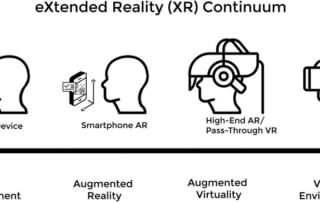
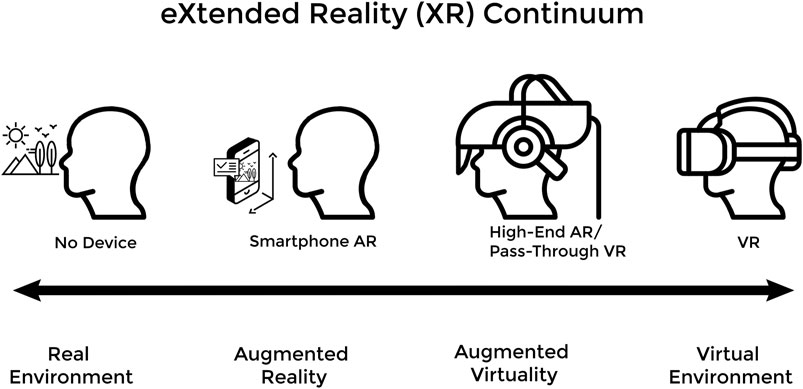
In the ever-evolving landscape of medical education, a new player has emerged, promising to revolutionize the way future doctors are trained. The integration of eXtended Reality (XR) technologies is reshaping the educational landscape by addressing the limitations of traditional methods.

Genetic Testing: A New Dawn in Healthcare

Genetic testing represents more than just a scientific advancement; it signifies a fundamental shift in how we approach health and wellness.

Sustainable Architecture: Blending Innovation with Ecological Responsibility

The journey toward sustainable architecture is ongoing, with each project serving as a beacon of what's achievable when creativity meets ecological awareness.

By |December 9, 2024|Categories: Architecture, Article, Sustainability|Tags: |0 Comments

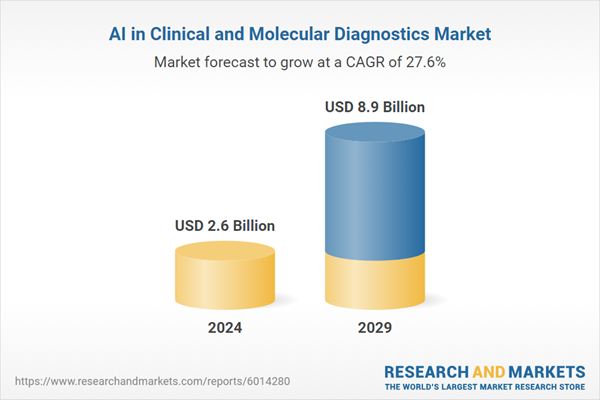
AI in Clinical and Molecular Diagnostics: A Market on the Rise

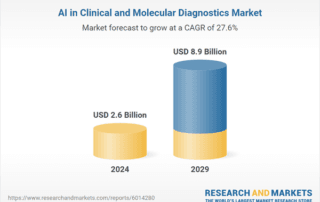
AI in Clinical and Molecular Diagnostics Market is set to experience remarkable growth, projected to surge from USD 2.6 billion in 2024 to USD 8.9 billion by 2029. This growth is driven by the integration of advanced AI technologies such as machine learning and deep learning into traditional diagnostic methodologies like imaging, genomics, and laboratory testing.

AI: A Revolution in Healthcare’s Future

AI is not a distant dream but a present reality, already integrated into everyday life through virtual assistants like Alexa and Siri. AI shows promise in enhancing medical accuracy, such as in predicting mesothelioma survival and improving colonoscopy accuracy, it is not intended to replace healthcare professionals.