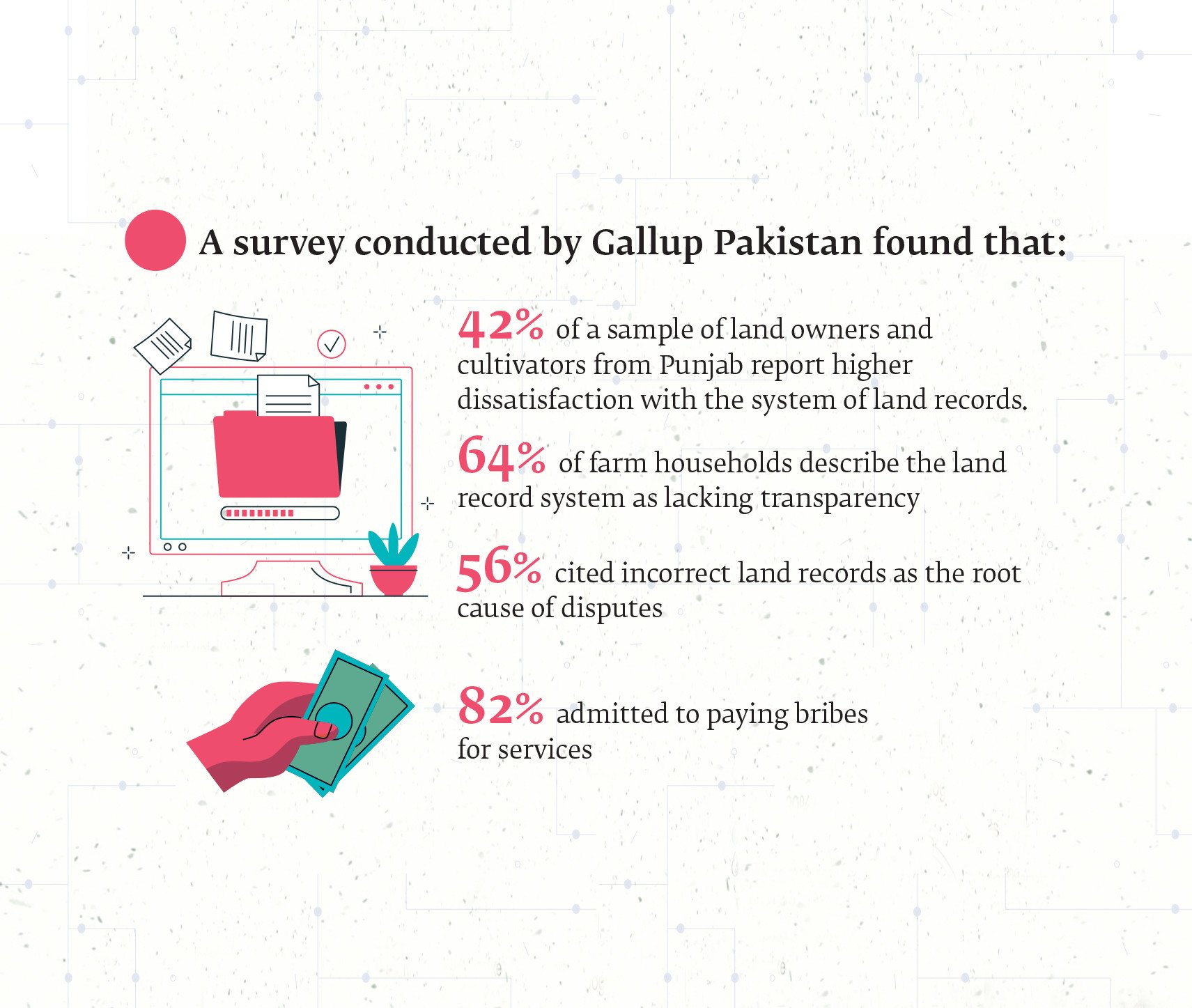
In the heart of Pakistan’s bustling cities and sprawling rural landscapes lies a persistent challenge that has long stifled economic growth and social stability: land management. For decades, the system has been mired in inefficiencies, corruption, and outdated colonial-era practices, leaving millions frustrated and the nation’s economic potential untapped.
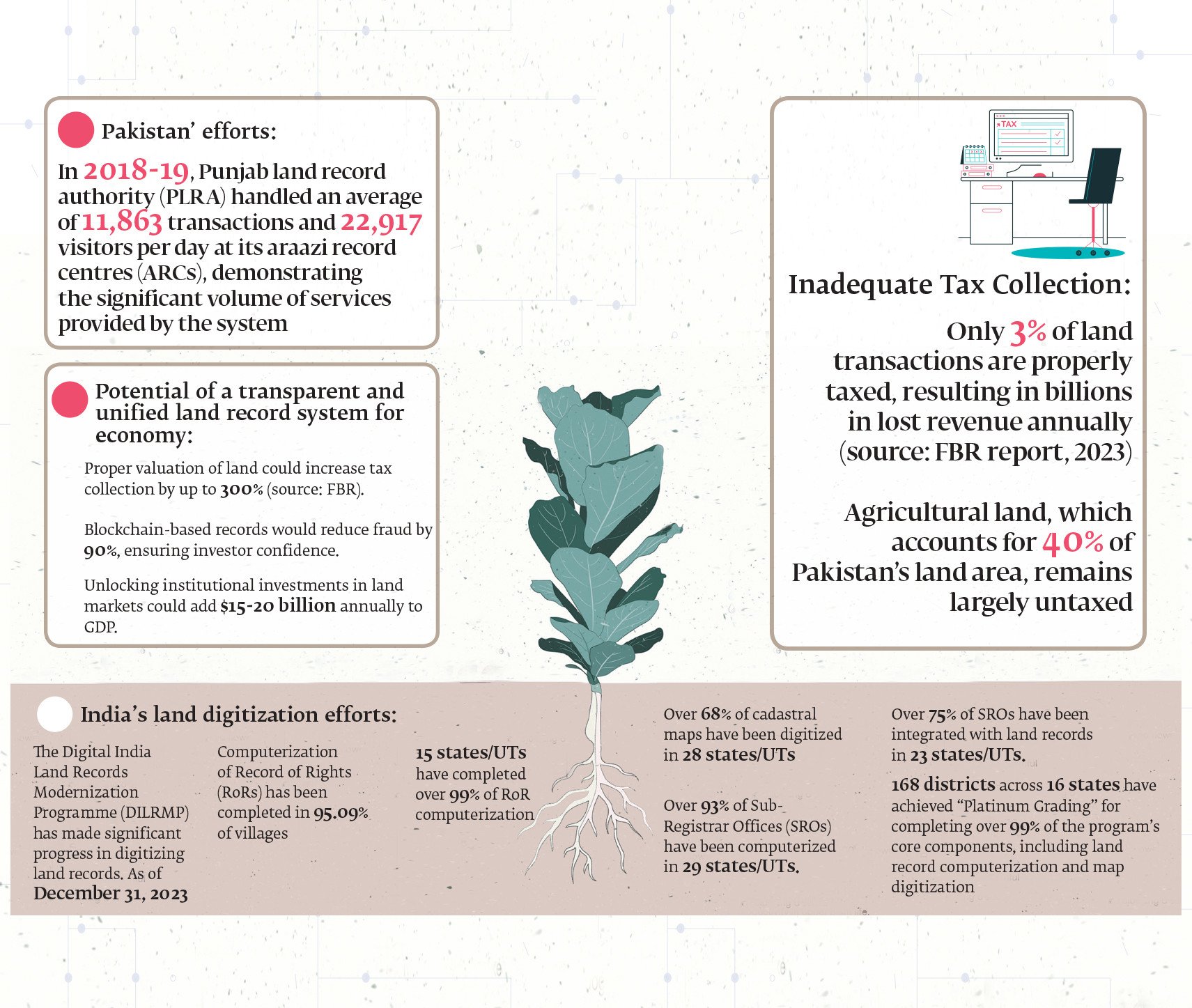
Efforts to modernize this convoluted system have been made, notably through initiatives like Punjab’s Land Record Management Information System (LRMIS). However, these efforts remain fragmented and limited in scope. The slow pace of digitization and the continued reliance on manual records mean that the full benefits of these initiatives are yet to be realized. According to a recent article in The Express Tribune, the ongoing challenges in land ownership and management are a significant hurdle to Pakistan’s progress.
Blockchain: A Beacon of Hope
Amidst these challenges, blockchain technology emerges as a promising solution. Known for its secure and transparent nature, blockchain could revolutionize land management in Pakistan by ensuring clear and immutable land titles. This technology has the potential to reduce corruption and fraudulent transactions, offering a path towards a more efficient and equitable system.
International examples provide a blueprint for success. Georgia’s blockchain land registry, for instance, has been hailed as a triumph in transparency and fraud prevention. By storing land records on an immutable digital ledger, Georgia has effectively eliminated disputes arising from document manipulation. This model offers valuable lessons for Pakistan, highlighting the transformative potential of blockchain in governance.
Challenges and the Road Ahead
Despite its promise, implementing blockchain in Pakistan is not without challenges. Political resistance, bureaucratic inertia, and a lack of technical expertise pose significant hurdles. Moreover, vested interests benefiting from the current system’s opacity are likely to oppose such reforms. Overcoming these obstacles will require strong political will and collaboration across federal and provincial levels.
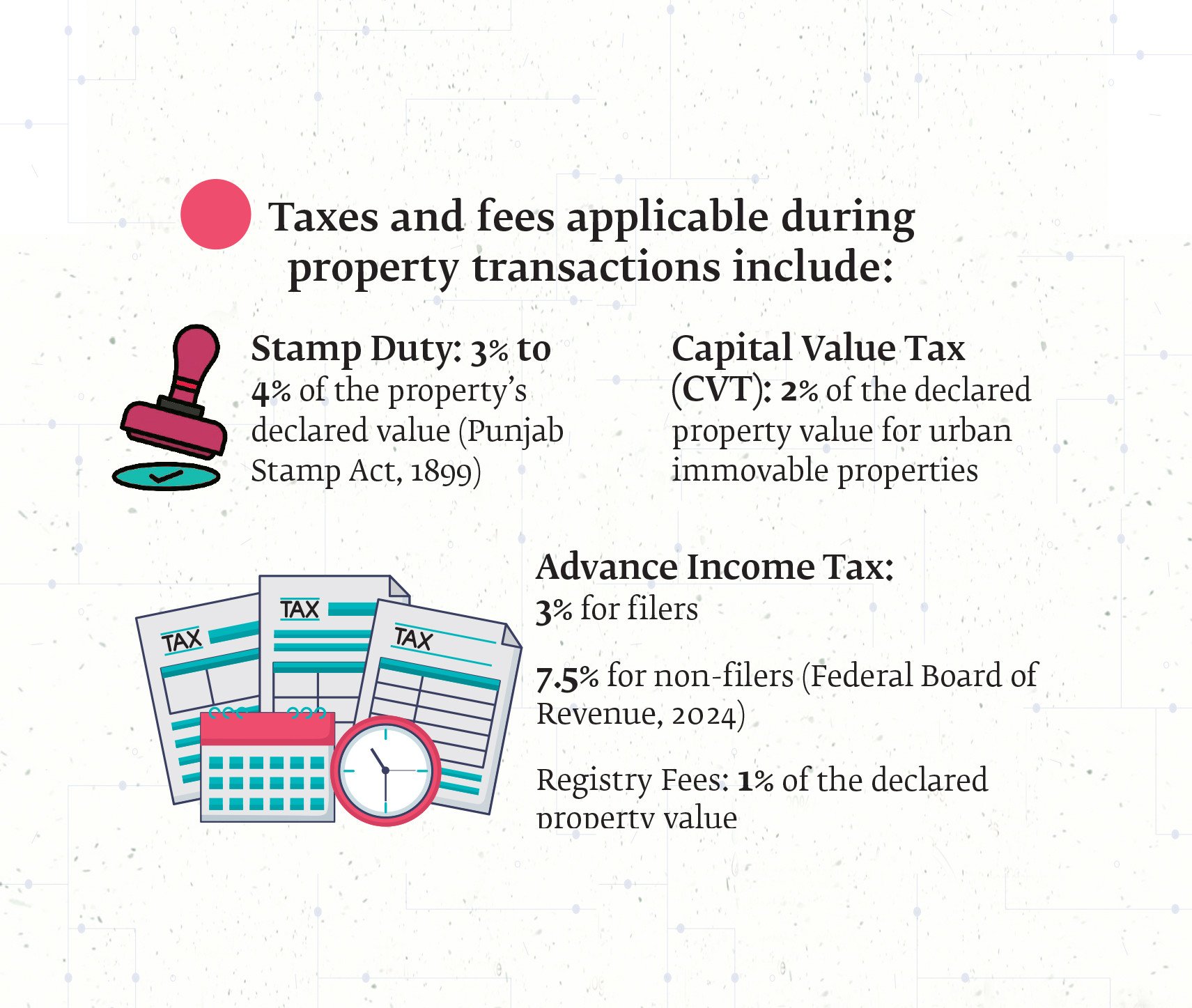
To pave the way for blockchain adoption, Pakistan must first consolidate existing digitization efforts, integrating provincial databases into a unified national platform. Legislation should standardize land valuation methods, eliminating disparities and closing loopholes that allow tax evasion. Public awareness campaigns will also be crucial in ensuring widespread adoption and trust in the new system.
Conclusion: A Call for Urgent Reform
The inefficiencies in Pakistan’s land management system have persisted for too long, hindering economic growth and legal transparency. However, with the right reforms and the adoption of cutting-edge technology, Pakistan has the potential to revolutionize its land administration. By learning from global examples and embracing blockchain’s capabilities, the country can unlock billions in economic value, boost investor confidence, and strengthen tax revenues.
The need for reform is urgent — Pakistan cannot afford to let its land management crisis continue unchecked. As highlighted in The Express Tribune, the time for action is now.
More Articles
Getting licensed or staying ahead in your career can be a journey—but it doesn’t have to be overwhelming. Grab your favorite coffee or tea, take a moment to relax, and browse through our articles. Whether you’re just starting out or renewing your expertise, we’ve got tips, insights, and advice to keep you moving forward. Here’s to your success—one sip and one step at a time!
The commercial real estate industry is finally confronting years of delayed financial reality as banks begin calling in billions in troubled loans, pushing office loan delinquencies to record highs. With more than 12 percent of office loans now delinquent and nearly a trillion dollars in commercial and multifamily debt maturing this year, lenders are tightening standards and forcing borrowers to present real data, stronger strategies, and actionable plans. Regional banks face the most risk, while real estate professionals who master data literacy and investment analysis will be best positioned to thrive in this new era.
CFP professionals are in higher demand than ever, and new data from SmartAsset and the CFP Board shows that some states are becoming hotspots for this booming field. California leads the nation, now home to nearly one in every ten Certified Financial Planners. As Americans seek deeper financial guidance, states with strong economies and growing populations are seeing the fastest rise in licensed advisors—signaling major opportunity for both new and seasoned professionals.
After years of market disruption, commercial real estate is finally showing strong signs of a comeback, with major investment firms projecting 2026 as the year the sector fully stabilizes. New reports from Hines, CBRE, and Colliers point to rising leasing activity, renewed buyer appetite, and a rebound toward pre‑pandemic investment levels. Manhattan is leading the recovery, premium office spaces are dominating demand, and suburban markets are gaining traction—setting the stage for significant opportunities for real estate professionals, investors, and brokers preparing for the next market cycle.
The 2026 labor market is entering a “low‑hire, low‑fire” freeze—job openings remain above pre‑pandemic levels, yet companies are delaying hiring decisions as they navigate economic uncertainty, tariffs, and shifting immigration policies. Despite the slowdown, major pockets of growth remain, especially in healthcare, construction, civil engineering, and Sunbelt regions. AI is reshaping some industries but replacing very few jobs, with less than 1% of skills at high risk of automation. For professionals willing to adapt, upskill, or shift industries, 2026 offers strategic opportunities—particularly in licensed fields like real estate, mortgage, insurance, and finance, where education and credentials can unlock stability and upward mobility.
Mortgage rates slipped to 6.09% this week, marking their lowest point in three years and surprising analysts after strong job numbers. The drop improves affordability for many families and signals a pivotal moment for buyers, investors, and real estate professionals as market conditions cool and stabilization continues into 2026.
Artificial intelligence is now the driving force behind the fastest‑growing proptech companies, with AI-native startups claiming the majority of the $16.7 billion invested in real estate technology last year. From tenant communication automation to self‑navigating construction vehicles and AI-powered investor management systems, four new unicorns—EliseAI, Bedrock Robotics, Juniper Square, and Vantaca—are leading a sweeping shift across commercial real estate. Their rise signals a new era where professionals must embrace automation, data skills, and continuous education to stay competitive in an industry evolving at record speed.