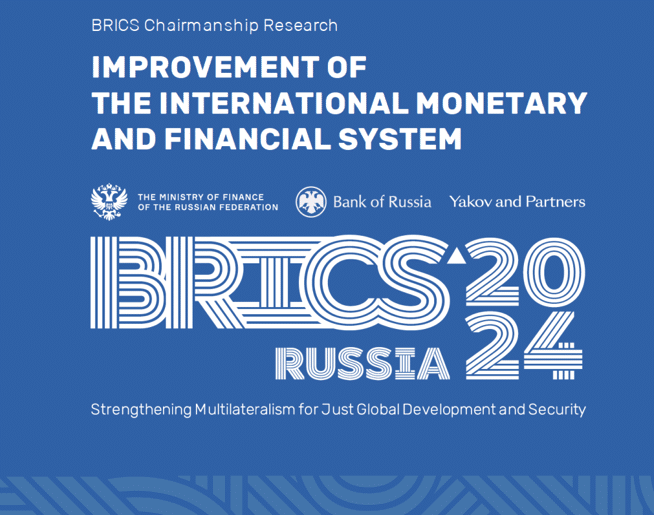
BRICS Unveils Ambitious Plan to Reshape Global Financial Landscape
In a bold move to challenge the dominance of the U.S. dollar, the BRICS organization has announced a comprehensive strategy aimed at transforming the international monetary and financial system. This initiative, spearheaded by Russia as the 2024 BRICS chair, seeks to establish a multi-currency system that could redefine global trade dynamics.
At the heart of this plan is the proposed BRICS Cross-Border Payment Initiative (BCBPI), which will enable member countries to conduct trade using their national currencies. This initiative is designed to bypass the traditional SWIFT system, often seen as a tool of Western economic influence, and to mitigate the impact of unilateral sanctions.
Moreover, BRICS intends to explore the potential of central bank digital currencies (CBDCs) and distributed ledger technology. These innovations could allow nations to settle trade imbalances directly, enhancing financial autonomy and reducing dependency on third-party banks.
Building a New Financial Infrastructure
The BRICS framework includes the establishment of a BRICS Clear platform and a new system of securities accounting and settlement. These mechanisms aim to facilitate investment within BRICS nations and other emerging markets, while promoting the use of financial instruments denominated in national currencies.
In addition, a BRICS Grain Exchange is on the horizon, set to revolutionize commodity trading in grains, oil, natural gas, and gold. This exchange will not only support trade but also serve as a tool for settling trade imbalances.
Challenging Existing Financial Powers
The Russian report, co-authored by the Ministry of Finance and the Bank of Russia, critiques the current international monetary and financial system (IMFS) as unjust and inefficient. It highlights the excessive reliance on a single currency and centralized financial infrastructure, which predominantly serves the interests of advanced economies.
The report underscores the need for reform, citing the geo-economic fragmentation caused by the misuse of trade and financial restrictions. This sentiment echoes the broader call for a New International Economic Order (NIEO), a vision long advocated by the Group of 77 and supported by BRICS members.
Looking Ahead: The Role of SDRs
While the creation of a new international reserve currency remains a topic of debate, the report suggests that Special Drawing Rights (SDRs) could play a more significant role. Although currently limited in use, SDRs have the potential to act as a super-sovereign reserve currency, addressing the Triffin Dilemma and managing global liquidity.
However, the SDR’s reliance on a basket of major currencies, including the U.S. dollar, presents challenges. The document calls for efforts to enhance the utilization of SDRs in the real economy, despite the inherent exchange-rate risks associated with borrowing in SDRs.
De-Dollarization: A Gradual Shift
The path to de-dollarization is complex, particularly in the realm of savings and investment. While trade de-dollarization is more feasible, shifting reserves and savings away from dominant currencies like the U.S. dollar will require strategic initiatives and time.
BRICS proposes the creation of a BRICS Digital Investment Asset (DIA), backed by assets from member countries. This initiative, along with increased investment in gold, reflects a strategic pivot towards alternative reserve assets.
As the global economic landscape evolves, BRICS’ ambitious plan represents a significant step towards a more equitable financial system. While challenges remain, the ongoing efforts to establish alternative payment systems and financial messaging mechanisms signal a transformative shift in international economic relations.
More Articles
Getting licensed or staying ahead in your career can be a journey—but it doesn’t have to be overwhelming. Grab your favorite coffee or tea, take a moment to relax, and browse through our articles. Whether you’re just starting out or renewing your expertise, we’ve got tips, insights, and advice to keep you moving forward. Here’s to your success—one sip and one step at a time!
The recent settlement agreements between Anywhere Real Estate and RE/MAX have brought significant changes to the real estate industry. These agreements mark a turning point in buyer broker compensation and have far-reaching implications for agents and brokers alike. With the removal of the National Association of Realtors (NAR) membership requirement and the Code of Ethics, agents now have more flexibility in conducting their business. This shift has sparked both optimism and concerns within the industry. Join us as we navigate through the changes brought about by these settlement agreements and uncover their potential effects on professionalism, competition, and the overall landscape of the real estate market.
The mortgage market is currently facing significant challenges, with mortgage rates nearing 8%, low housing inventory, and rising home prices. In this article, we explore the strategies employed by wholesale lenders and brokers to navigate these conditions and adapt to the changing market landscape. One key strategy is the implementation of down-payment assistance programs, providing financial support to potential homebuyers. Another is the option to buy down mortgage rates, offering more affordable monthly payments. With limited housing inventory, many potential homebuyers are turning to fixer-upper properties, and lenders are capitalizing on this trend by offering renovation loans. Brokerage firm owners are also diligently managing their cost structures to remain profitable. Looking ahead, industry professionals are closely monitoring the potential impact of the Federal Reserve's tightening monetary policy and political instability on the mortgage market.
Two innovative startups in Texas, Hive3D and Icon, are leveraging 3D printing technology to combat housing inventory shortages and climate change. They're constructing eco-friendly homes, offering a groundbreaking approach to sustainable housing. Houston-based Hive3D uses "green cement," reducing waste and contributing positively to the environment. Icon's efficient construction methods enable them to construct an entire subdivision of homes in less time, meeting the growing demand for housing and reducing resource consumption. These 3D-printed homes are more cost-effective due to reduced labor costs and minimized material waste, offering more affordable housing options.
In the midst of the continued climb of 30-year fixed mortgage rates, the Mortgage Bankers Association (MBA) has issued a call to the Federal Reserve (Fed) to bring much-needed certainty to the financial markets. The MBA believes that the Fed must make clear statements regarding the end of its rate hikes and its intentions with its mortgage-backed securities (MBS) holdings. The MBA, represented by its president and CEO, Bob Broeksmit, has emphasized the urgency of the Fed's communication. Broeksmit asserts that the Fed needs to clearly state that it has reached the end of its rate hikes and that it will refrain from selling its MBS holdings until the housing finance market stabilizes and mortgage-to-Treasury spreads normalize.
Despite a decline in mortgage application fraud, New York and Florida continue to face the highest mortgage fraud risks in the nation. The primary drivers of fraud risk in these states are fraudulent income misrepresentation and undisclosed real estate liabilities. High-risk metropolitan areas include New York City, Miami, Tampa, and Orlando. To combat mortgage fraud risks, it is crucial to maintain vigilance and take proactive actions. Stay ahead of the game and protect yourself from mortgage fraud risks in New York and Florida. Sign up for our mortgage fraud prevention course today.
Significant changes may be on the horizon for the United States housing market if new legislation is passed. Bills introduced in both the U.S. Senate and the House of Representatives propose the requirement of title insurance on mortgages purchased by government-sponsored enterprises (GSEs). Known collectively as The Protecting America's Property Rights Act, these bills are currently under consideration and have not yet been voted on. If passed, the proposed amendments to the charters of Fannie Mae and Freddie Mac would make primary-lien title insurance mandatory for conventional mortgages on one- to four-unit properties. Title insurance plays a critical role in the mortgage industry by protecting lenders and homeowners. It offers financial loss protection in the event of property title defects, ensuring that property ownership is free from any legal disputes or claims. Lawmakers aim to enhance the integrity of the mortgage market and provide additional safeguards for lenders and borrowers by requiring title insurance on GSE-backed loans.