Cyprus Pushes Bold Housing Reforms as Leaders Target Faster Development and Greater Affordability
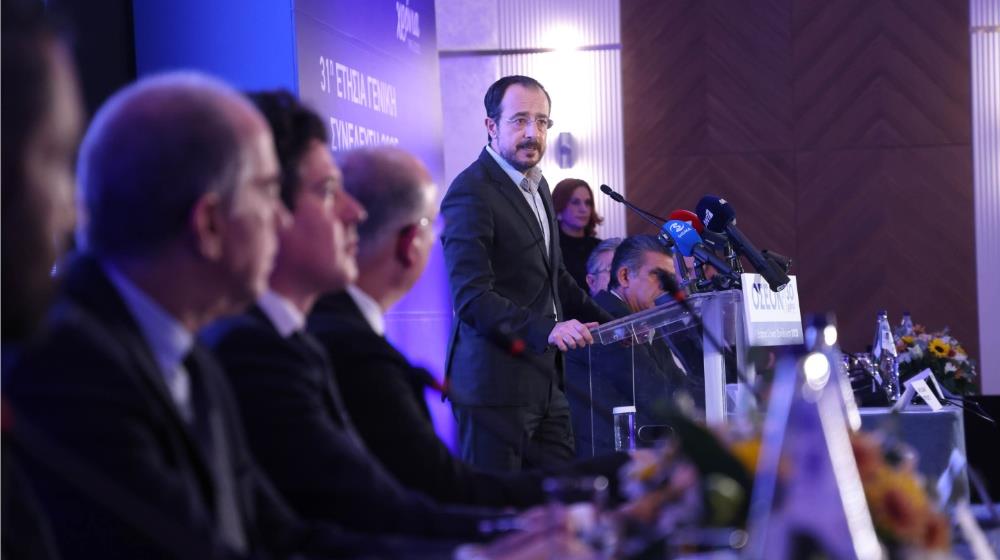
During the 31st General Assembly of the Cyprus Federation of Building Contractors Associations (OSEOK), President Nikos Christodoulides delivered a message that resonated well beyond Cyprus’ borders. His call was clear: the future of construction, licensing, and housing accessibility must become faster, smarter, and more affordable.
For professionals in real estate, construction, finance, and development—even here in the U.S.—the reforms introduced in Cyprus provide a compelling example of how governments are adapting to modern housing pressures. Streamlined permits, affordability initiatives, and responses to workforce shortages aren’t unique to Cyprus—they’re global challenges.
Fast-Track Development Licensing: A New Era
President Christodoulides outlined transformative changes to development licensing, including a fast‑track approval system for low‑ and medium‑risk projects, which make up nearly half of all applications. Under this new structure, single‑family and two‑family homes are slated for approval within 40 working days, while apartment buildings of up to 20 units should see decisions within 80 days.
Already, more than 1,400 home applications and around 260 apartment-building applications have been processed through this accelerated pathway—an encouraging signal for any nation grappling with permitting delays, including the U.S.
Addressing Delays and Unlocking Housing Supply
District-level permit delays have long posed challenges, but the President emphasized meaningful improvements. Initiatives such as new urban planning incentives and the Build to Rent scheme offer developers expanded building coefficients—up to 45%—in exchange for committing portions of their projects to affordable pricing.
This strategy is expected to generate approximately 1,500 new residential units within two years, including 250 affordable homes. This mirrors similar affordability pushes in major U.S. markets and highlights how global leaders are recalibrating the housing equation.
European Strategy and a Unified Housing Vision
On the European stage, the President announced that an updated EU-wide strategy for affordable housing is expected to roll out this December. With Cyprus preparing to assume the Presidency of the Council of the EU, the nation intends to help steer a cohesive housing policy across member states.
The Construction Sector Speaks
Industry leaders added their voices as well. OSEOK President Stelios Gavriel noted that construction contributes roughly 12% of Cyprus’ GDP and supports more than 43,000 jobs. Still, he underscored the need for long-term labor strategies, recruitment channels, and international workforce agreements.
ETEK President Constantinos Constanti further emphasized modernization, advocating for transparent and efficient processes in public projects. Meanwhile, the Cyprus Employers & Industrialists Federation recognized construction as the nation’s economic “steam engine.”
For professionals in Florida or across the U.S., these reforms offer not only global perspective but also practical insight. Staying informed on how other countries accelerate development can inspire new approaches within your own markets.
If you’re advancing your career, enhancing your credentials, or entering a new professional field, Cameron Academy remains committed to guiding you with high‑quality licensing education that evolves with today’s industry demands.
Getting licensed or staying ahead in your career can be a journey—but it doesn’t have to be overwhelming. Grab your favorite coffee or tea, take a moment to relax, and browse through our articles. Whether you’re just starting out or renewing your expertise, we’ve got tips, insights, and advice to keep you moving forward. Here’s to your success—one sip and one step at a time!
Imagine a morning where the commute is just a few steps from your bedroom to your home office. This is the reality for many in today's post-pandemic world, where remote work has become a staple of the modern workforce.
CRISPR technology has become the frontrunner in genome editing, surpassing earlier methods like zinc finger nucleases and transcription activator-like effector nucleases. The recent FDA approval of the CRISPR-Cas9 drug, exa-cel, marks a significant milestone particularly for treating sickle cell disease and transfusion-dependent beta thalassemia.
In recent years, artificial intelligence has emerged as a revolutionary tool in the field of oncology. AI's integration into healthcare transcends buzzwords, transforming cancer diagnosis, treatment personalization, and drug discovery.
The rapid advancements in artificial intelligence (AI) are transforming the landscape of radiology, promising to enhance diagnostic accuracy and support personalized medicine. However, as this technology becomes more integral to medical imaging, it brings with it a host of ethical and societal considerations that cannot be ignored.
AI's promise in healthcare is undeniable, with its ability to uncover hidden disease patterns and predict illnesses. However, the reliance on historical data can exacerbate existing biases, particularly affecting marginalized communities such as the LGBTQIA+ and certain ethnic and racial groups.
Telemedicine stands out as a transformative force, offering a lifeline to patients and providers alike. As we move beyond the pandemic, the challenge is to integrate this technology without escalating costs or overshadowing the indispensable role of in-person consultations.