Driverless Shuttles: A New Era of Mobility in Rural France
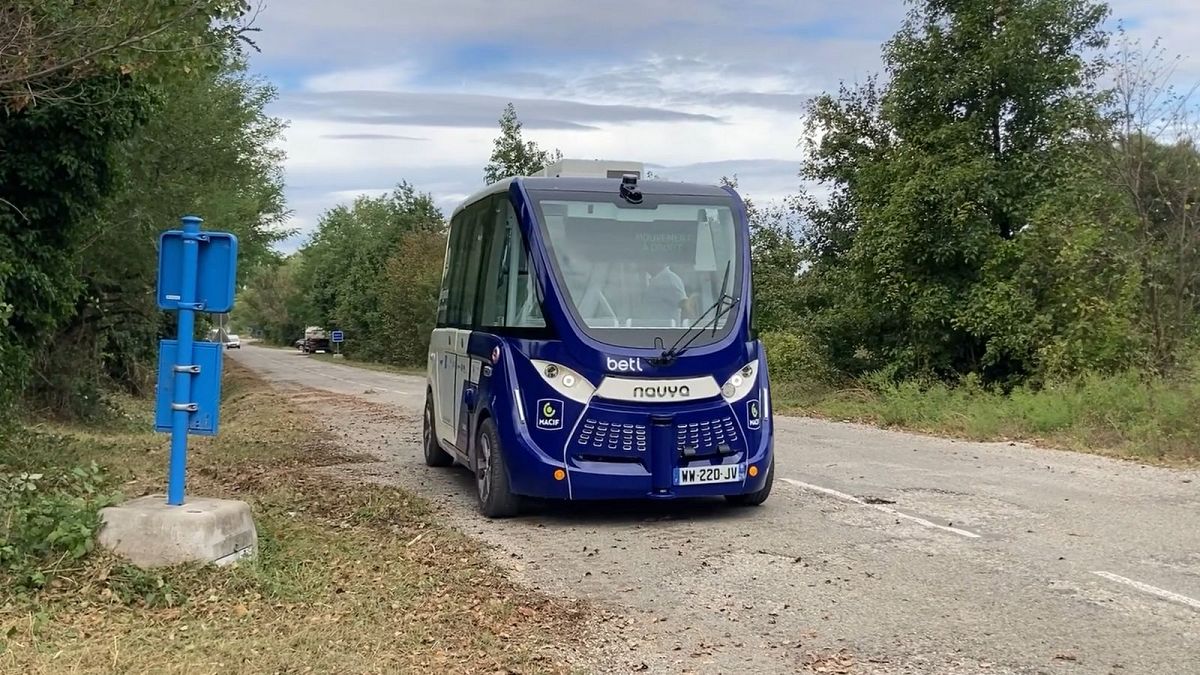
In the picturesque yet sparsely populated region of Val de Drôme – Crest in southeastern France, a quiet revolution is underway. The deployment of self-driving shuttles is transforming the way residents navigate their rural surroundings. This initiative, launched in 2020, is part of a broader European effort to harness automated electric vehicles (EVs) as a viable public transport solution in areas where traditional services are often lacking.
Yann Arnaud, director of responses to customer needs and innovation at the French insurance company MACIF, emphasized the potential of these shuttles during a conversation with Euronews. “We are trying to ensure that this is a new means of travel and mobility for people living in suburban or rural areas,” he stated, highlighting the project’s aim to reduce isolation and improve accessibility.
Technology and Safety
The shuttles operate on a predefined 5 km route, making seven stops over a 20-minute journey. A control operator oversees the operation to ensure safety. Benjamin Beaudet, general director at Beti, the operator of the automated shuttles, explained that the technology aligns with the European vision for automated vehicles. The shuttles “learn” their routes and compare real-time observations with pre-learned data to navigate safely.
In contrast to American and Chinese companies like Waymo, Uber, and Tesla, which focus on self-driving taxis with flexible routes, the European approach prioritizes defined paths, enhancing safety and predictability.
Addressing Rural Needs
The introduction of these shuttles in Val de Drôme – Crest, where the population density is significantly lower than the national average, has been met with positive feedback. Residents appreciate the newfound mobility options, especially in areas where alternatives are limited. Arnaud noted, “The question of acceptability arises when you have the luxury of having other options. When you don’t have a choice, you’re very happy to have [the shuttle].”
This sentiment underscores the potential of driverless vehicles to address mobility challenges in rural areas, particularly for the elderly and those without access to personal transportation.
Challenges and Future Prospects
Despite the promising start, scaling these projects to permanent services remains a challenge. High costs, logistical hurdles, and technological requirements, as outlined in an Open Research Europe article, pose significant barriers. The EU has invested €159 million in research and innovation related to automated mobility since 2021, yet achieving commercial viability continues to be elusive.
The success of initiatives like AVENUE and SHOW, which have conducted pilot projects across Europe, including in Crest, offers hope. However, transitioning from pilot programs to sustainable, everyday solutions requires overcoming substantial obstacles.
As Europe continues to explore the potential of automated vehicles, the experiences in rural France provide valuable insights into the future of mobility. With continued innovation and investment, driverless shuttles could become a cornerstone of public transport in remote areas, offering a greener, more accessible alternative to traditional car use.
More Articles
Getting licensed or staying ahead in your career can be a journey—but it doesn’t have to be overwhelming. Grab your favorite coffee or tea, take a moment to relax, and browse through our articles. Whether you’re just starting out or renewing your expertise, we’ve got tips, insights, and advice to keep you moving forward. Here’s to your success—one sip and one step at a time!
The Florida Treasure Coast started the new year with a surge of 1,905 new home listings—up 22 percent from last January—signaling one of the strongest inventory jumps in years. While Martin County saw its median home price drop by nearly $100,000, nearby St. Lucie and Indian River counties continued to rise, creating a uniquely mixed market. With sales climbing and inventory levels shifting toward a more buyer-friendly landscape, 2026 is shaping up to be an active and opportunity-rich year for both seasoned agents and those entering the real estate field.
A unanimously passed House bill, HB 767, aims to require insurers to publicly disclose rate and premium data—giving Floridians long‑awaited clarity on rising costs. If approved by the Senate, the measure could significantly impact homeowners, real estate agents, mortgage professionals, and insurance specialists by increasing consumer trust and revealing how insurers calculate premiums.
U.S. mortgage rates have dipped to 5.98 percent, breaking below the 6 percent mark for the first time since 2022 and giving the spring home-buying season a fresh boost. With rates falling for the third straight week and buyer interest rising, experts say this shift could encourage more market activity—though many homeowners with ultra‑low pandemic-era rates may still hesitate to sell.
Artificial intelligence is rapidly transforming real estate, from listing creation to MLS infrastructure, forcing the industry to rethink how data is used, altered and protected. With AI tools making it easier than ever to modify photos, automate marketing and process sensitive documents, MLSs and state regulators are racing to establish new guardrails that ensure accuracy, privacy and consumer protection without slowing innovation.
Today’s real estate pros juggle nonstop client demands, constant marketing, and mountains of paperwork—but AI is stepping in as the ultimate assistant. From instant lead responses and personalized follow-up messages to predictive pricing tools and automated transaction support, agents are using AI to save hours, boost production, and stay competitive. The future of real estate belongs to professionals who combine their human touch with smart technology, and the shift is already happening.
A landmark US Supreme Court decision striking down the use of emergency powers to impose broad tariffs has upended global trade expectations, lifted equity markets, and sent businesses scrambling to understand what comes next. While GDP slowed and inflation rose, markets reacted positively as the ruling removed a major source of uncertainty for importers, exporters, and investors. With the old tariff framework dismantled and new targeted measures on the horizon, industries from real estate to finance are bracing for shifting economic conditions that could influence everything from consumer spending to investment strategy.