Driverless Shuttles: A New Era of Mobility in Rural France
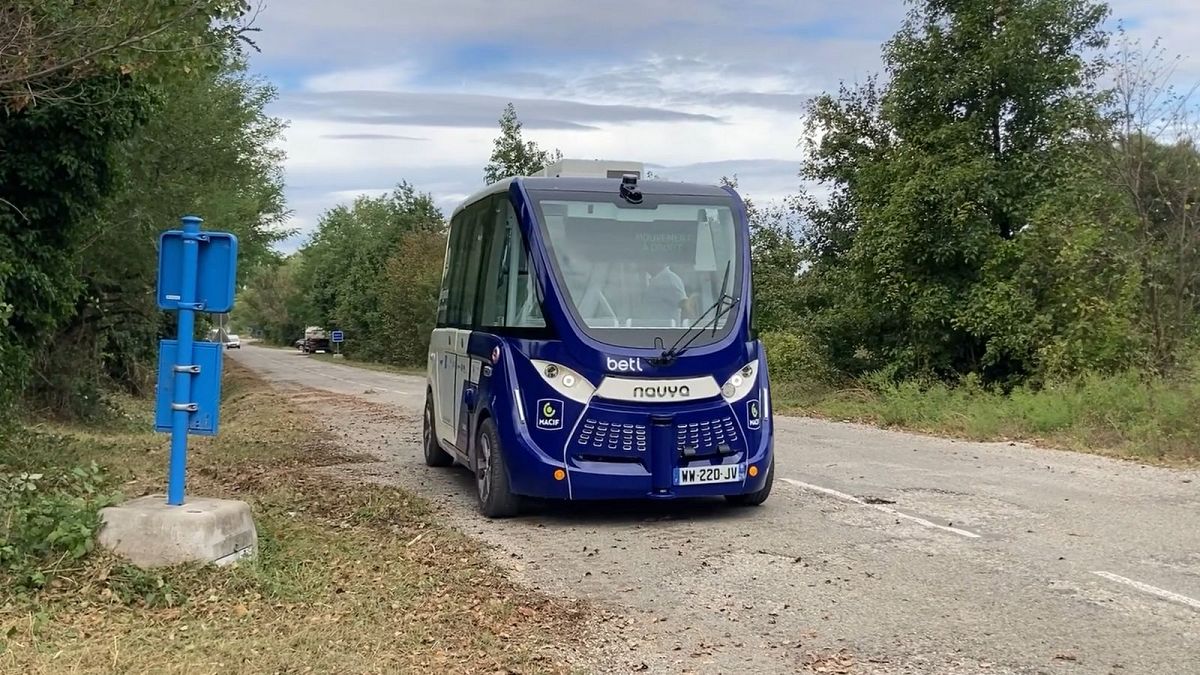
In the picturesque yet sparsely populated region of Val de Drôme – Crest in southeastern France, a quiet revolution is underway. The deployment of self-driving shuttles is transforming the way residents navigate their rural surroundings. This initiative, launched in 2020, is part of a broader European effort to harness automated electric vehicles (EVs) as a viable public transport solution in areas where traditional services are often lacking.
Yann Arnaud, director of responses to customer needs and innovation at the French insurance company MACIF, emphasized the potential of these shuttles during a conversation with Euronews. “We are trying to ensure that this is a new means of travel and mobility for people living in suburban or rural areas,” he stated, highlighting the project’s aim to reduce isolation and improve accessibility.
Technology and Safety
The shuttles operate on a predefined 5 km route, making seven stops over a 20-minute journey. A control operator oversees the operation to ensure safety. Benjamin Beaudet, general director at Beti, the operator of the automated shuttles, explained that the technology aligns with the European vision for automated vehicles. The shuttles “learn” their routes and compare real-time observations with pre-learned data to navigate safely.
In contrast to American and Chinese companies like Waymo, Uber, and Tesla, which focus on self-driving taxis with flexible routes, the European approach prioritizes defined paths, enhancing safety and predictability.
Addressing Rural Needs
The introduction of these shuttles in Val de Drôme – Crest, where the population density is significantly lower than the national average, has been met with positive feedback. Residents appreciate the newfound mobility options, especially in areas where alternatives are limited. Arnaud noted, “The question of acceptability arises when you have the luxury of having other options. When you don’t have a choice, you’re very happy to have [the shuttle].”
This sentiment underscores the potential of driverless vehicles to address mobility challenges in rural areas, particularly for the elderly and those without access to personal transportation.
Challenges and Future Prospects
Despite the promising start, scaling these projects to permanent services remains a challenge. High costs, logistical hurdles, and technological requirements, as outlined in an Open Research Europe article, pose significant barriers. The EU has invested €159 million in research and innovation related to automated mobility since 2021, yet achieving commercial viability continues to be elusive.
The success of initiatives like AVENUE and SHOW, which have conducted pilot projects across Europe, including in Crest, offers hope. However, transitioning from pilot programs to sustainable, everyday solutions requires overcoming substantial obstacles.
As Europe continues to explore the potential of automated vehicles, the experiences in rural France provide valuable insights into the future of mobility. With continued innovation and investment, driverless shuttles could become a cornerstone of public transport in remote areas, offering a greener, more accessible alternative to traditional car use.
More Articles
Getting licensed or staying ahead in your career can be a journey—but it doesn’t have to be overwhelming. Grab your favorite coffee or tea, take a moment to relax, and browse through our articles. Whether you’re just starting out or renewing your expertise, we’ve got tips, insights, and advice to keep you moving forward. Here’s to your success—one sip and one step at a time!
AI-powered sentiment analysis is giving real estate investors a major edge by scanning millions of online conversations to detect market shifts long before traditional data responds. From predicting neighborhood momentum to spotting declining tenant satisfaction, this technology captures real-time public emotion across office, retail, and multifamily sectors. As trends in sentiment become as important as demographics and NOI, professionals who understand these tools will stay ahead of the next market move.
Florida lawmakers are racing toward a high-stakes finish to the legislative session as a sweeping property tax overhaul triggers fierce debate. The House is pushing to eliminate most non-school property taxes on primary homes, while the Senate urges caution and Gov. Ron DeSantis floats even bigger changes. With Democrats warning of budget crises and only weeks left to strike a deal, the future of Florida’s tax structure—and its real estate market—hangs in the balance.
Florida homeowners are getting rare financial relief as the emergency insurance assessment—added after multiple insurers collapsed post‑Hurricane Ian—has been paid off two years early. The early payoff wipes out the charge of about $30 per household per year and delivers more than $650 million in statewide savings. With the insurance market stabilizing faster than expected, real estate and insurance professionals can expect a slightly more favorable environment for buyers and policyholders alike.
After years of pandemic‑driven disruption, rising vacancies, and interest‑rate volatility, confidence is finally returning to commercial real estate. Major analysts report that leasing activity is accelerating, investor appetite is rising, and high‑quality properties are leading the rebound. With investment volumes expected to jump and vacancies beginning to fall, 2026 is shaping up to be the long‑awaited turning point for the industry.
Sioux Falls enters 2026 with a commercial real estate market outperforming nearly every regional competitor. Fueled by strong fundamentals, major private investment, and confidence across all sectors, the city is positioned for what experts call “white‑hot economic activity.” From booming land sales and rising retail absorption to stabilizing office and industrial sectors, the metro’s momentum is undeniable—making it a prime environment for real estate professionals and investors looking for opportunity.
Florida lawmakers have advanced HB 767, a major insurance transparency bill that would create a statewide online rate database, boost consumer education, and prevent insurers from using land value to inflate premiums. The proposal promises clearer insurance data and stronger accountability—bringing much‑needed relief and insight to homeowners, real estate agents, mortgage professionals, and insurance producers across the state.