Driverless Shuttles: A New Era of Mobility in Rural France
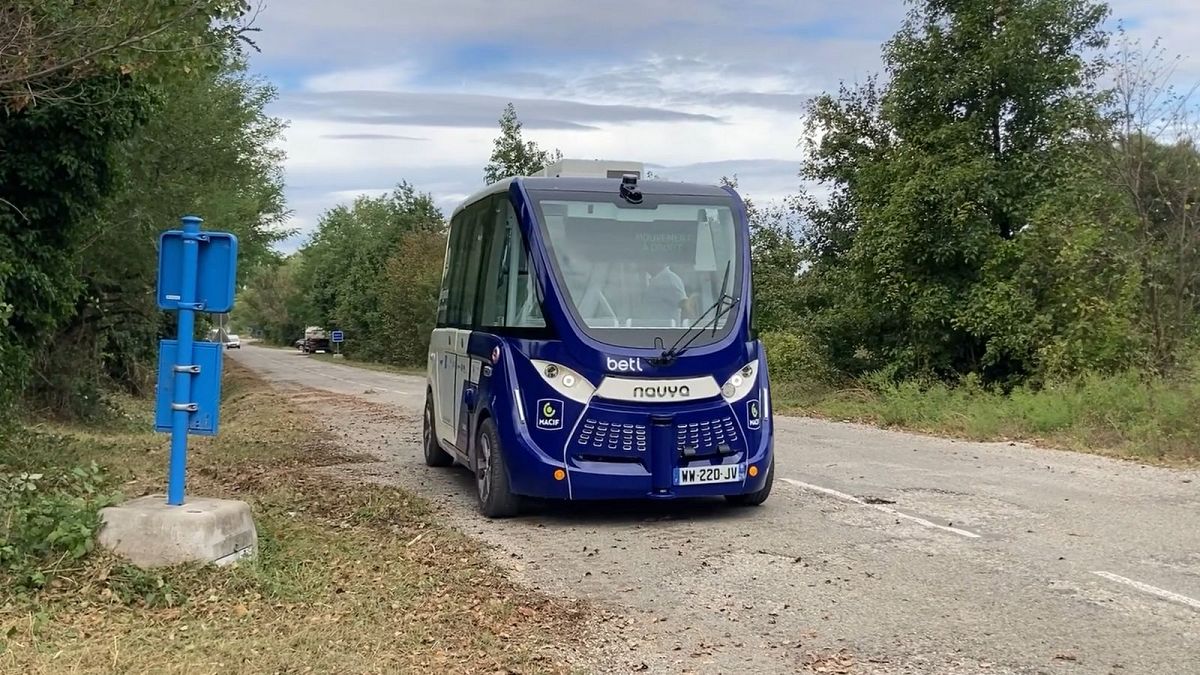
In the picturesque yet sparsely populated region of Val de Drôme – Crest in southeastern France, a quiet revolution is underway. The deployment of self-driving shuttles is transforming the way residents navigate their rural surroundings. This initiative, launched in 2020, is part of a broader European effort to harness automated electric vehicles (EVs) as a viable public transport solution in areas where traditional services are often lacking.
Yann Arnaud, director of responses to customer needs and innovation at the French insurance company MACIF, emphasized the potential of these shuttles during a conversation with Euronews. “We are trying to ensure that this is a new means of travel and mobility for people living in suburban or rural areas,” he stated, highlighting the project’s aim to reduce isolation and improve accessibility.
Technology and Safety
The shuttles operate on a predefined 5 km route, making seven stops over a 20-minute journey. A control operator oversees the operation to ensure safety. Benjamin Beaudet, general director at Beti, the operator of the automated shuttles, explained that the technology aligns with the European vision for automated vehicles. The shuttles “learn” their routes and compare real-time observations with pre-learned data to navigate safely.
In contrast to American and Chinese companies like Waymo, Uber, and Tesla, which focus on self-driving taxis with flexible routes, the European approach prioritizes defined paths, enhancing safety and predictability.
Addressing Rural Needs
The introduction of these shuttles in Val de Drôme – Crest, where the population density is significantly lower than the national average, has been met with positive feedback. Residents appreciate the newfound mobility options, especially in areas where alternatives are limited. Arnaud noted, “The question of acceptability arises when you have the luxury of having other options. When you don’t have a choice, you’re very happy to have [the shuttle].”
This sentiment underscores the potential of driverless vehicles to address mobility challenges in rural areas, particularly for the elderly and those without access to personal transportation.
Challenges and Future Prospects
Despite the promising start, scaling these projects to permanent services remains a challenge. High costs, logistical hurdles, and technological requirements, as outlined in an Open Research Europe article, pose significant barriers. The EU has invested €159 million in research and innovation related to automated mobility since 2021, yet achieving commercial viability continues to be elusive.
The success of initiatives like AVENUE and SHOW, which have conducted pilot projects across Europe, including in Crest, offers hope. However, transitioning from pilot programs to sustainable, everyday solutions requires overcoming substantial obstacles.
As Europe continues to explore the potential of automated vehicles, the experiences in rural France provide valuable insights into the future of mobility. With continued innovation and investment, driverless shuttles could become a cornerstone of public transport in remote areas, offering a greener, more accessible alternative to traditional car use.
More Articles
Getting licensed or staying ahead in your career can be a journey—but it doesn’t have to be overwhelming. Grab your favorite coffee or tea, take a moment to relax, and browse through our articles. Whether you’re just starting out or renewing your expertise, we’ve got tips, insights, and advice to keep you moving forward. Here’s to your success—one sip and one step at a time!
The 2026 housing market is off to a powerful start, with rising buyer activity, expanding inventory, and steady pricing creating one of the most balanced environments in years. Pending home sales and mortgage applications are climbing, inventory has reached 2.6 months of supply, and new listings continue to grow—all signaling renewed confidence and fresh opportunity for real estate professionals nationwide.
A wave of optimism is returning to U.S. commercial real estate heading into 2026, with 95% of investors planning to buy the same or more property than last year. Capital allocations are rising, Sun Belt cities continue to shine, and multifamily remains the top asset class. As pricing stabilizes and debt pressures ease, professionals across real estate and finance are entering a year defined by strategic growth and renewed opportunity.
Floridians were told insurance relief was on the way, but many homeowners are seeing the opposite as premiums continue to rise. Despite state leaders insisting the market is improving and insurers filing rate decreases, homeowners like Lisa Riggi say the real‑world impact tells a different story. Higher property valuations, inflation, and updated replacement‑cost calculations are driving premiums upward, leaving some families questioning whether they can afford to remain in Florida.
Florida once promised retirees sunshine, low costs, and a $20,000 condo by the pool. But in 2026, soaring insurance rates, rising taxes, shrinking affordable housing, and an influx of wealthier newcomers have transformed the state into a far more expensive version of the paradise our parents knew. From corporate buyouts of mobile home parks to multimillion‑dollar estates redefining the market, today’s Florida is a place of widening gaps, disappearing middle‑range homes, and a future that demands deeper pockets—and smarter market insight.
Mortgage rates continue easing into the low 6% range, giving buyers and real estate professionals a welcome boost in early February 2026. Softer labor market data and slipping Treasury yields are helping keep rates stable, with 30‑year fixed loans averaging around 6.26% and refinance rates also trending lower. While affordability remains tight, today’s calmer rate environment is opening doors for more buyers—and offers agents a clearer outlook as they guide clients through a still‑shifting market.
A new CBRE survey reveals that U.S. commercial real estate investors are preparing to ramp up acquisitions in 2026, signaling renewed confidence across the sector. Dallas leads the nation for the fifth straight year as the top investment market, followed by Atlanta and San Francisco. Florida markets like Miami and Tampa continue to rise, while cities such as Charlotte, Nashville, Seattle, and New York also attract strong investor attention. With activity heating up nationwide, 2026 is shaping into a powerful year for commercial real estate professionals.