Exploring the Future: AI Projects for All Levels

In a world where technology is rapidly evolving, Artificial Intelligence (AI) is at the forefront, reshaping industries and altering our everyday lives. Recently, Simplilearn published an insightful article detailing the top 30 AI project ideas for 2025, offering a comprehensive guide for enthusiasts from beginners to advanced practitioners.
Impact of AI Across Industries
AI’s transformative power is evident across multiple sectors. In healthcare, AI-driven diagnostics and personalized medicine are revolutionizing patient care. The financial industry benefits from enhanced fraud detection and risk assessment capabilities. Manufacturing sees improvements through predictive maintenance and optimized production processes, while transportation is becoming safer with autonomous vehicles and intelligent traffic systems. Education is also being personalized, making learning more accessible.
However, AI’s influence extends beyond industry-specific applications. It is reshaping the job market, demanding new skills and creating innovative opportunities. This technological shift brings with it ethical and social concerns, such as privacy and job displacement, necessitating careful management and regulation.
Beginner to Advanced AI Projects
For those eager to dive into AI, the article outlines a series of projects that cater to different skill levels. Beginners can start with projects like a Spam Email Detector or Sentiment Analysis of Product Reviews. These projects introduce fundamental AI concepts using machine learning algorithms like Naive Bayes.
Intermediate projects such as a Chatbot for Customer Service or an Image Classification System allow developers to delve deeper into natural language processing and computer vision. Meanwhile, advanced projects like an Autonomous Driving System or AI-Based Medical Diagnosis System require a sophisticated understanding of AI and machine learning algorithms.
Building a Career in AI
Embarking on a career in AI involves a blend of education, practical experience, and continuous learning. The article suggests starting with a strong foundation in mathematics and computer science, followed by engaging in practical projects and participating in competitions on platforms like GitHub. Specializing in areas like robotics or natural language processing can further enhance one’s career prospects.
For those looking to formalize their education, Simplilearn offers a Professional Certificate Program in AI and ML in collaboration with Purdue University, designed to equip learners with the necessary skills to thrive in this dynamic field.
Conclusion
Delving into AI projects is a thrilling journey of creativity and development. For those seeking to deepen their understanding and mastery of AI, Simplilearn’s Post Graduate Program in AI and Machine Learning offers a comprehensive curriculum, real-world projects, and practical learning experiences.
FAQs: Navigating the AI Landscape

What is the difference between machine learning and deep learning?

Machine learning, a subset of AI, enables computers to learn from data. Deep learning, a further specialization, uses multi-layered neural networks for more complex pattern recognition.

Can AI replace human jobs, or will it create new opportunities?

While AI can automate tasks, potentially displacing jobs, it also creates roles in development, maintenance, and oversight, emphasizing the need for skills adaptation.

How to learn AI for free?

Simplilearn’s SkillUp resources offer free learning opportunities for those seeking to enhance their AI knowledge.


More Articles

Getting licensed or staying ahead in your career can be a journey—but it doesn’t have to be overwhelming. Grab your favorite coffee or tea, take a moment to relax, and browse through our articles. Whether you’re just starting out or renewing your expertise, we’ve got tips, insights, and advice to keep you moving forward. Here’s to your success—one sip and one step at a time!

How Post‑Election Power Shifts Are Setting Up a New Real Estate Landscape for 2026

Local elections across major U.S. cities have kicked off a wave of policy changes that could reshape development costs, rental income, and investment strategies heading into 2026. From NYC’s aggressive tenant‑protection agenda to Chicago’s sustainability push, Miami’s political uncertainty, and Boston’s steady zoning overhaul, the post‑election environment is redefining how real estate professionals, investors, and lenders should prepare for the year ahead.

The Surge of AI Insurance Exclusions Reshaping Professional Liability in 2025

Insurance carriers are rapidly rolling out AI-related exclusions that strip coverage from claims involving AI tools, automated decision‑making, or generative platforms like ChatGPT and Midjourney. With firms like Berkley and Hamilton introducing sweeping “absolute” and generative‑AI‑specific exclusions, professionals in real estate, mortgage, insurance, and finance now face new liability gaps. As AI becomes unavoidable in everyday work, understanding these exclusions is essential for protecting your career and staying compliant in a fast‑changing risk environment.

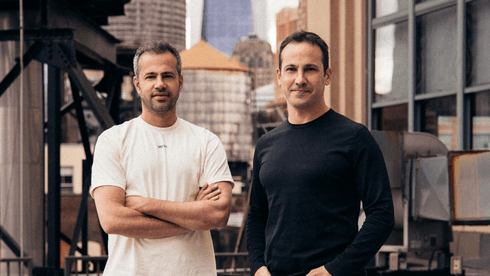
Venn Lands $52M to Rebuild the Renting Experience — A Shift Real Estate Pros Can’t Ignore

Proptech startup Venn has raised a $52 million Series B to unify the entire renting lifecycle into one intelligent platform, replacing over a dozen traditional systems and serving more than half a million tenants. As AI‑powered tools like Venn rapidly reshape property operations, real estate professionals — especially in fast‑moving markets like Florida — will need stronger education and tech‑savvy skills to stay competitive.

Rising Insurance Costs Push Florida’s Middle Class to the Brink

Florida’s Gulf Coast is undergoing a dramatic transformation as soaring insurance premiums, costly construction requirements, and the long shadow of Hurricane Ian force middle‑class families, workers, and longtime residents out of communities they once anchored. With premiums topping $5,700 a year — and many paying far more — Realtors warn of looming foreclosures, renters face steep increases, and entire neighborhoods are being rebuilt for wealthier newcomers. This mounting crisis is reshaping the state’s real estate landscape and leaving professionals scrambling to adapt.

Top Commercial Real Estate Issues to Watch in 2026

Economic uncertainty, rapid tech advances and shifting population patterns are setting the stage for a pivotal year in commercial real estate. New findings from the Counselors of Real Estate, presented at NAR NXT, outline ten major forces reshaping strategy, investment and opportunity in 2026—from policy impacts and portfolio risk to AI adoption, capital flow changes, housing attainability and demographic shifts. This outlook offers clarity and caution for professionals across real estate, mortgage, finance and related fields.

New Reforms, Familiar Risks: Why Florida’s Home Insurance Market Still Isn’t Stabilizing

Florida’s home insurance crisis is back in the spotlight as new reforms appear to be repeating decades‑old mistakes. Despite efforts to depopulate Citizens and attract private insurers, many of the companies taking over policies have ties to past insolvencies. Critics say weak oversight, generous ratings, and political influence are allowing unstable insurers to thrive while homeowners pay more for less protection. Experts warn that without transparent ratings, real accountability, and unified regulation, Florida’s insurance market will remain vulnerable—putting property values, lending, and the broader real estate industry at risk.