Florida’s Insurance Crisis Is Reshaping Communities — And The Middle Class Is Feeling the Squeeze
Southwest Florida is no stranger to storms, but the aftermath of Hurricane Ian has revealed a new kind of disaster: an affordability crisis that’s pushing long-time residents, small businesses, and middle-class families to the brink. With rising insurance premiums, soaring construction prices, and a changing climate, communities like Fort Myers Beach are transforming faster than many can keep up.
The New Reality: Rebuilding Costs That Outpace Local Incomes
Three years after Hurricane Ian, construction crews still dominate the landscape of Fort Myers Beach. Entire blocks remain a mosaic of new foundations beside empty lots and storm-scarred buildings. But behind the noise of reconstruction lies an uncomfortable truth: many of the families who once lived here can no longer afford to return.
Insurance premiums continue to skyrocket. Homeowners across the region are now facing average yearly costs above $5,700—more than in nearly every other state. For some, premiums have doubled since Ian. Add flood insurance, stricter building codes, and elevated construction costs, and the math simply doesn’t work for middle-class households.
“Only well‑heeled players can play now,” says Rob Fowler, a longtime builder in the region. And he isn’t wrong. The quaint beach cottages and mom‑and‑pop inns that once gave Fort Myers Beach its charm are being replaced with stronger—but far more expensive—structures.
Gentrification Accelerated by Disaster
Gentrification was already creeping across coastal Florida, but Hurricane Ian fast‑tracked it. Wealthier newcomers continue to pour in, driving up land values and pushing out families who had lived and worked in the area for generations.
Local business owners report that many of their workers can no longer live anywhere near the island. Restaurant staff, retail clerks, and hospitality workers—the backbone of a tourist economy—are being priced out entirely as rents rise and insurance costs cascade down from landlords.
Even inland neighborhoods are feeling the pressure. Realtors say clients who once dreamed of coastal living are now selling their homes simply because they can’t afford insurance anymore—some facing annual premiums close to $10,000.
A Market Showing Signs of Strain
Home values in Lee County have dropped more than 10% in the past year, with homes sitting on the market much longer than before. Rising insurance premiums are a major driver of this shift, according to analysts and local Realtors.
Many homeowners are “pinching every penny” just to keep up with mortgages and insurance, warns Fort Myers Realtor Jessica Gatewood. If economic conditions continue, she fears a wave of foreclosures may hit the region.
For real estate professionals: Understanding insurance trends, flood zones, and rebuilding codes is essential for today’s Florida market. Cameron Academy’s Florida real estate courses help professionals stay ahead with relevant, real‑world knowledge. Visit CameronAcademy.com to grow or maintain your license.
Renters Feel the Pressure Too
The insurance crisis isn’t just affecting homeowners. Renters across Southwest Florida are seeing rents double—in some cases within just two years. Workers who once sought refuge from expensive cities like Miami are now looking to leave Florida altogether, seeking stability in states with lower housing costs.
Nearly 511,000 people moved out of Florida in 2023—the highest number ever recorded. High housing costs were the leading reason.
Rebuilding, Hoping, and Racing Against Time
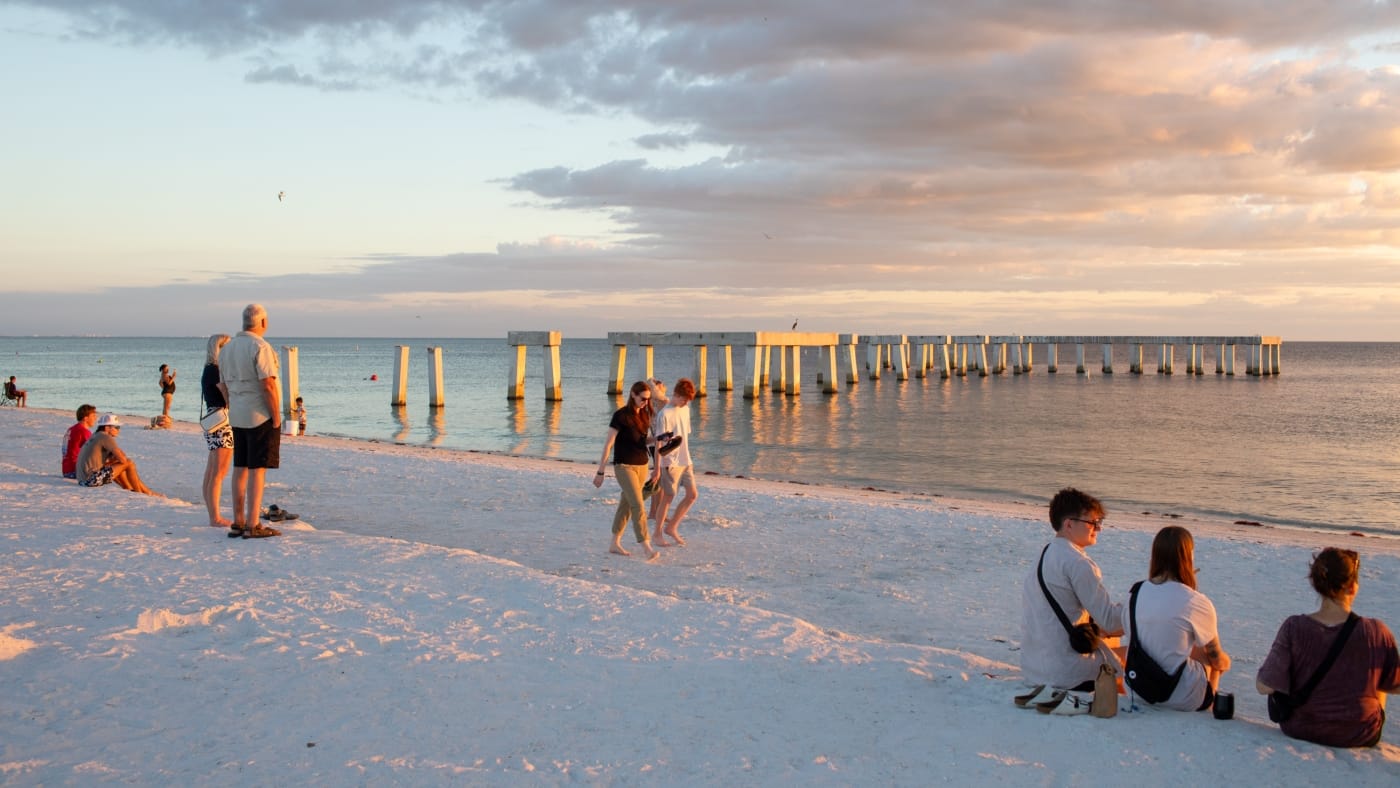
Despite the challenges, many residents still believe in the resilience of Fort Myers Beach. Restaurants are reopening, construction is booming, and sunsets still draw crowds to the shore. Some investors see opportunity, believing the island will come back stronger than ever.
But optimism is tempered by fear. One more major storm could halt progress, scare away investors, and set the community back another decade.
“People will come here, and they will build, and they will stay,” says Chamber of Commerce leader Jacki Liszak. Yet even she admits: another disaster could change everything.
Considering a career in Florida real estate, insurance, mortgage, or other licensed fields? From pre‑licensing to continuing education, Cameron Academy offers flexible, high‑quality training to help professionals thrive in changing markets.
More Articles
Getting licensed or staying ahead in your career can be a journey—but it doesn’t have to be overwhelming. Grab your favorite coffee or tea, take a moment to relax, and browse through our articles. Whether you’re just starting out or renewing your expertise, we’ve got tips, insights, and advice to keep you moving forward. Here’s to your success—one sip and one step at a time!
After years of sluggish commercial real estate performance, falling interest rates may finally set the stage for a market rebound. As the Federal Reserve signals further cuts, investors are eyeing REITs—and especially the Direxion Real Estate Bull 3X ETF (DRN), a leveraged fund designed to triple the daily movement of major commercial real estate stocks. DRN offers powerful upside potential during a rally, but its high‑risk, short‑term nature means it’s best suited for experienced traders who understand volatility and the mechanics of leverage.
A new proposal in Florida’s legislature could reshape the path to homeownership for working residents. House Bill 311, championed by State Rep. Jervonte Edmonds, would require certain private employers to contribute up to $5,000 toward their first-time homebuyer employees’ down payments or closing costs. Backed by bipartisan support, the bill ties employer tax write-offs directly to helping workers purchase homes, marking a unique approach to housing affordability. Now moving through committee, HB 311 could become one of the nation’s most innovative employer-assisted housing programs.
Artificial intelligence is pushing the real estate industry to confront a long‑standing problem: its data is fragmented, inconsistent, and nearly impossible for AI systems to interpret. From leases and rent rolls to county records and work orders, nothing is standardized, making AI adoption costly and inefficient. Industry leaders are now turning toward shared data standards and ontologies—like OSCRE’s “smart data highway”—to create cleaner, interoperable information systems. As real estate evolves, professionals who understand data and AI will have a major advantage, and schools like Cameron Academy are helping prepare them for this shift.
The U.S. housing market stumbled into 2026 as January home sales tumbled 8.4% from December, hitting their lowest pace in over a year. With inventory still tight, prices rising, and market activity stagnating, NAR’s chief economist warns that Americans—especially renters—are “stuck” in a new kind of housing crisis. Despite improving affordability on paper, sluggish movement and regional declines signal a market demanding sharper strategy and adaptability from today’s real estate professionals.
A fresh 2026 analysis reveals the top home insurance companies in the U.S., breaking down which carriers offer the best value, coverage options, and customer satisfaction. State Farm leads for customer experience, American Family shines for first-time buyers, and Allstate, Farmers, and Nationwide each earn top marks in specialized categories. With Florida’s premiums surging to more than double the national average, industry pros and homeowners alike gain a clear advantage by understanding which insurers remain strong—especially as weather risks, insurer withdrawals, and rising reconstruction costs reshape the market.
A new Perryman Group analysis shows Florida’s 2022–2023 insurance reforms are paying off, lowering property‑casualty costs by 14.5% and generating more than $4.2 billion in economic activity. With over 29,000 jobs created and premium increases nearly flat in 2025, the state’s long‑troubled insurance market is finally stabilizing as major carriers reduce rates and return to the market.