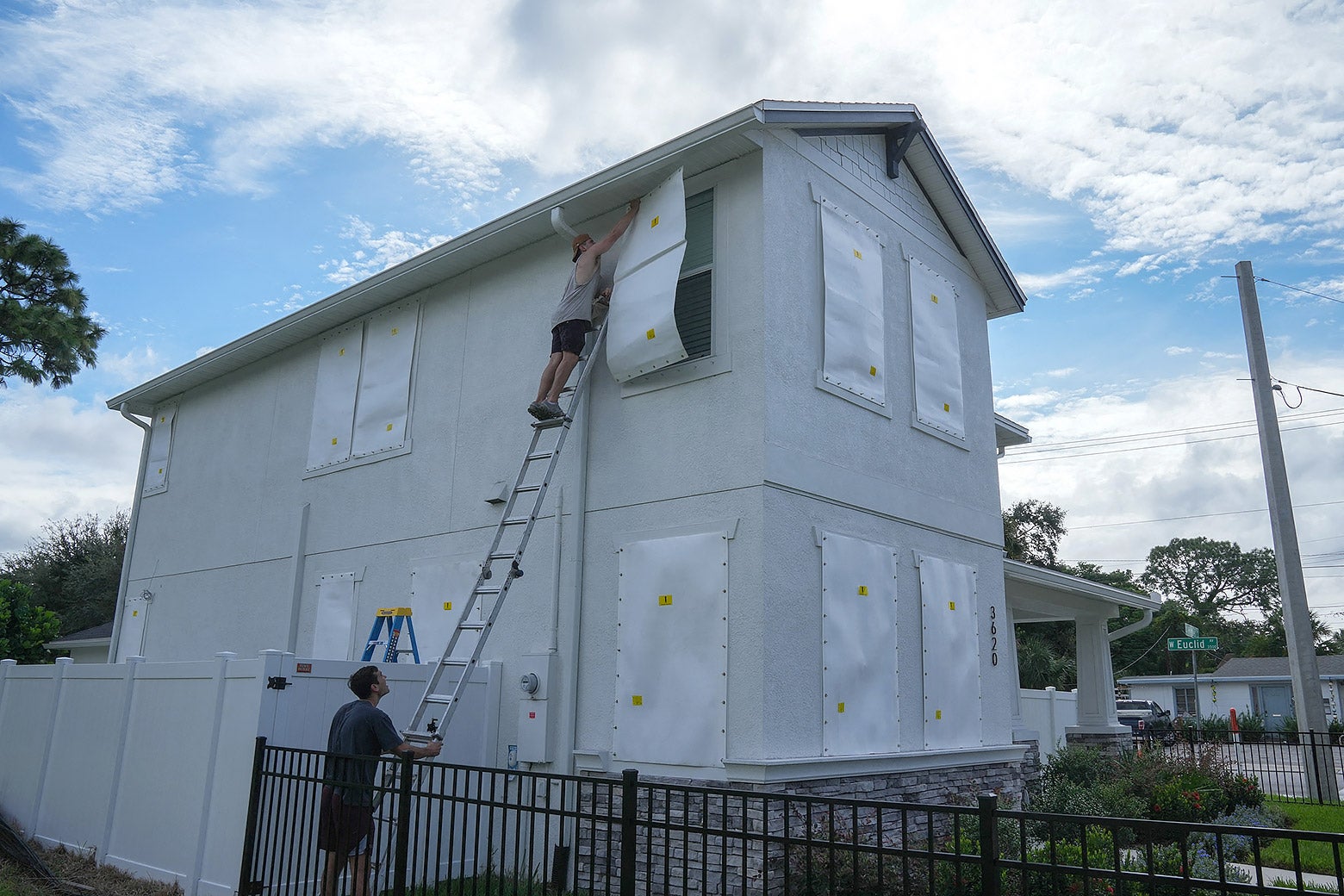
As Hurricane Milton looms over Florida’s Gulf Coast, residents brace for yet another bout of extreme weather. Despite the increasing frequency and intensity of hurricanes, wealthy homeowners in Florida seem unfazed. In fact, the impact of these natural disasters on the housing market is reshaping the demographic landscape, but not in the way one might expect.
A recent Slate article delves into the phenomenon of climate migration, revealing that it’s not leading to an exodus of affluent individuals from Florida. Instead, the hurricanes are driving up housing prices and attracting higher-income groups, while lower-income residents face displacement. This trend, often referred to as “climate gentrification,” contradicts the popular notion that wealthier households would relocate to safer areas.
Florida’s post-pandemic growth has been remarkable, with the state surpassing New York as the third-most populous in the U.S. Four of the nation’s five fastest-growing metro areas are in Florida, including Cape Coral–Fort Myers, which was severely impacted by Hurricane Ian in 2022. Yet, the Wall Street Journal warns of a potential unraveling of the state’s growth due to climate challenges.
However, the data suggests otherwise. Research by Joshua Graff Zivin highlights how hurricanes constrain housing supply, leading to increased demand and higher prices. Economic instability often results in evictions, as landlords replace long-standing tenants with higher-income newcomers. The costs of recovery, such as emergency reconstruction and higher insurance premiums, are more manageable for affluent households.
Moreover, hurricanes not only drive up housing prices but also lead to demographic changes. A study by the National Low Income Housing Coalition found that affluent communities tend to lose their low-income housing stock during recovery, as landlords are incentivized to redevelop existing low-cost rentals into higher-cost housing.
In response to these challenges, some regions are taking legislative action. For instance, Sonoma County in Northern California recently passed an ordinance to pause evictions during disaster declarations. This measure aims to counter the trend of rising evictions post-disasters, but Florida has yet to implement similar rules.
Despite the insurance crisis following Hurricane Helene, the Reforming Disaster Recovery Act proposes long-term federal funding for low-income housing after disasters. Yet, the design of federal disaster assistance can sometimes lead to price gouging. For instance, in Hawai’i, rental assistance after the Lahaina fire resulted in landlords raising prices and evicting tenants.
Ultimately, the allure of Florida’s coastal properties remains strong. Even as insurance premiums rise and maintenance costs increase, people continue to pay a premium to live in these risky areas. No disaster has yet altered this calculus.
Styling and Design
More Articles
Getting licensed or staying ahead in your career can be a journey—but it doesn’t have to be overwhelming. Grab your favorite coffee or tea, take a moment to relax, and browse through our articles. Whether you’re just starting out or renewing your expertise, we’ve got tips, insights, and advice to keep you moving forward. Here’s to your success—one sip and one step at a time!
In the rapidly evolving world of technology, one question often surfaces: Will AI replace real estate agents? Our comprehensive exploration into this topic reveals the intricate interplay between technology and the real estate industry, and how this relationship is shaping the future of property transactions. While some view the rise of AI with apprehension, others see it as a tool for enhancement. Take Cameron Academy, for instance. They've seamlessly integrated AI into their educational platform, offering an AI tutor to assist students. It's an intriguing paradox. On one hand, we have concerns about AI replacing jobs, and on the other, we witness how AI can enrich our learning experiences.
Are you planning to buy a house? Understanding your financial capacity and determining whether you can afford the monthly payments is crucial. This guide explores the various factors that come into play when determining the affordability of a $200,000 house. We break down the key elements that contribute to overall affordability, from income to down payment and mortgage interest rates. By the end of this article, you will have a clear understanding of what it takes to make your dream of homeownership a reality. Discover the benefits of having a real estate license and mortgage license with Cameron Academy's comprehensive courses. Ready to take the next step? Explore our online career education courses and unlock your potential today. Sign up for our real estate license or mortgage license course now!
Considering a career as a real estate agent in Florida? Let's break down the costs involved. The first step is completing the state-required pre-license courses, which can range from $100 to $500. Once you've completed your education, you'll need to submit an application to the Florida Department of Business and Professional Regulation (DBPR) with an $83.75 fee. The state exam fee is $36.75 per attempt. All applicants must undergo a fingerprinting check, which ranges from $50 to $80. Other costs include brokerage desk fees, REALTOR® dues, marketing materials, and living expenses during the initial months of building your client base. Despite the upfront costs, the potential rewards make it a worthwhile investment. Ready to start? Enroll in Cameron Academy's Florida pre-licensing course today!
Welcome to our comprehensive guide on real estate farming. This marketing strategy targets a specific neighborhood or area, establishing you as a local expert. One of the most effective ways to engage with potential clients is through handwritten notes, creating a lasting impression and helping you stand out in a competitive market. Handwritten cards build trust, foster relationships, and increase your chances of converting leads into clients. By incorporating these personalized techniques, you can differentiate yourself from the competition and increase your chances of success. Ready to take your real estate farming to the next level? Visit Cameron Academy to learn more about our real estate farming course.
The current state of the U.S. housing market is characterized by high prices and a lack of inventory. However, recent developments in the short-term rental industry, particularly with Airbnb, have sparked discussions about the potential impact on the broader housing market. This article explores the connection between Airbnb's decline and the housing market, analyzing the implications and providing a balanced perspective on the situation. Short-term rentals, such as Airbnb, have played a significant role in the housing market, affecting housing prices and inventory. These platforms have provided homeowners with the opportunity to monetize their properties by renting them out for short periods. This has resulted in increased competition for available housing and, in some cases, contributed to rising home prices.
Starting a career in real estate can be an exciting and rewarding journey. Whether you are just entering the field or looking to strengthen your existing career, there are valuable tips and insights that can help you navigate the competitive landscape of the real estate industry. The real estate industry is a dynamic and ever-evolving field, with countless opportunities for those willing to put in the effort. With dedication and a strategic approach, you can carve out your own niche and thrive in this competitive market. Don't let the challenges and competition intimidate you. With the right mindset, dedication, and a commitment to continuous learning, you can thrive in the world of real estate. Embrace the journey, leverage your strengths, and build meaningful relationships with clients and industry experts. Start your real estate career or take it to the next level today.