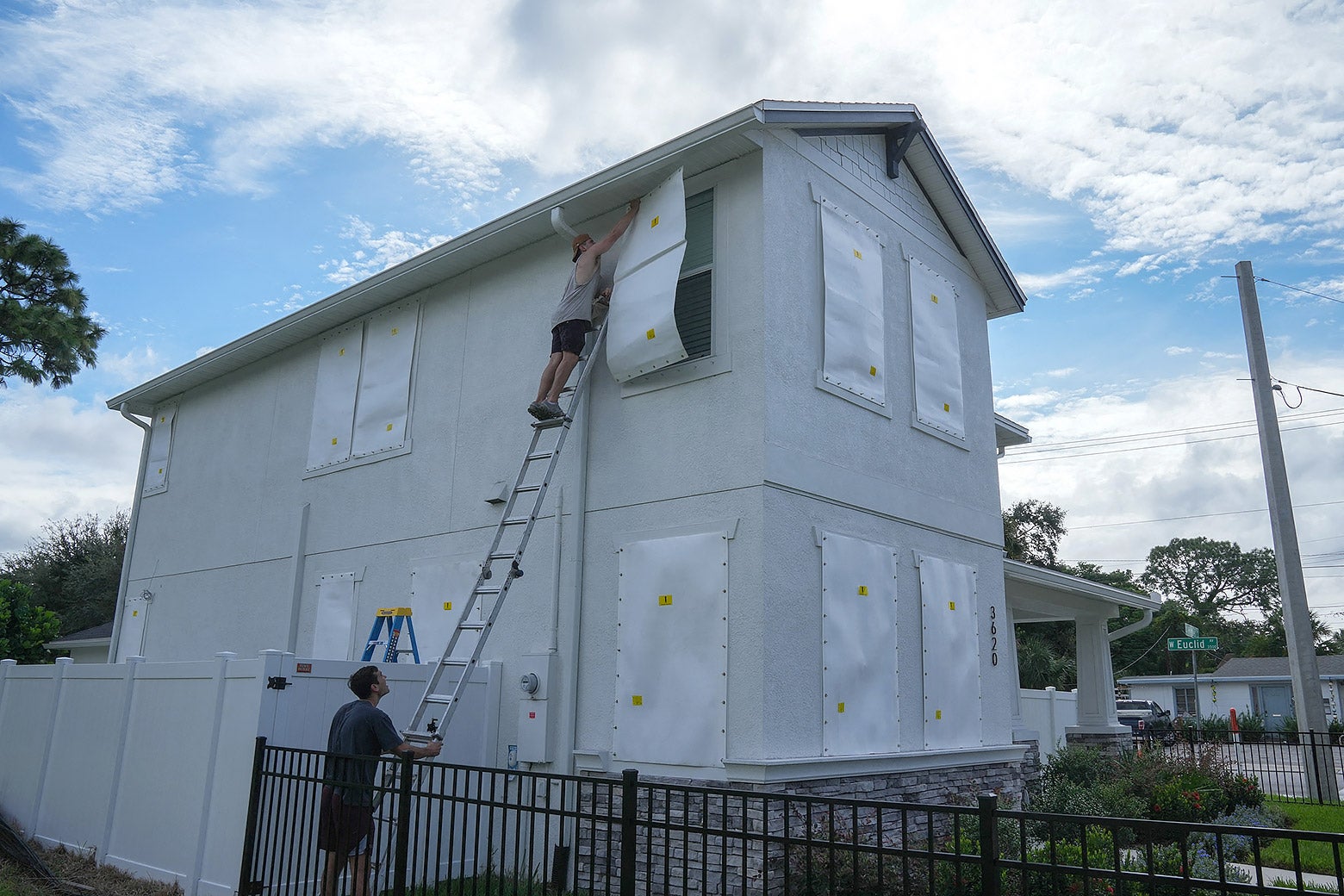
As Hurricane Milton looms over Florida’s Gulf Coast, residents brace for yet another bout of extreme weather. Despite the increasing frequency and intensity of hurricanes, wealthy homeowners in Florida seem unfazed. In fact, the impact of these natural disasters on the housing market is reshaping the demographic landscape, but not in the way one might expect.
A recent Slate article delves into the phenomenon of climate migration, revealing that it’s not leading to an exodus of affluent individuals from Florida. Instead, the hurricanes are driving up housing prices and attracting higher-income groups, while lower-income residents face displacement. This trend, often referred to as “climate gentrification,” contradicts the popular notion that wealthier households would relocate to safer areas.
Florida’s post-pandemic growth has been remarkable, with the state surpassing New York as the third-most populous in the U.S. Four of the nation’s five fastest-growing metro areas are in Florida, including Cape Coral–Fort Myers, which was severely impacted by Hurricane Ian in 2022. Yet, the Wall Street Journal warns of a potential unraveling of the state’s growth due to climate challenges.
However, the data suggests otherwise. Research by Joshua Graff Zivin highlights how hurricanes constrain housing supply, leading to increased demand and higher prices. Economic instability often results in evictions, as landlords replace long-standing tenants with higher-income newcomers. The costs of recovery, such as emergency reconstruction and higher insurance premiums, are more manageable for affluent households.
Moreover, hurricanes not only drive up housing prices but also lead to demographic changes. A study by the National Low Income Housing Coalition found that affluent communities tend to lose their low-income housing stock during recovery, as landlords are incentivized to redevelop existing low-cost rentals into higher-cost housing.
In response to these challenges, some regions are taking legislative action. For instance, Sonoma County in Northern California recently passed an ordinance to pause evictions during disaster declarations. This measure aims to counter the trend of rising evictions post-disasters, but Florida has yet to implement similar rules.
Despite the insurance crisis following Hurricane Helene, the Reforming Disaster Recovery Act proposes long-term federal funding for low-income housing after disasters. Yet, the design of federal disaster assistance can sometimes lead to price gouging. For instance, in Hawai’i, rental assistance after the Lahaina fire resulted in landlords raising prices and evicting tenants.
Ultimately, the allure of Florida’s coastal properties remains strong. Even as insurance premiums rise and maintenance costs increase, people continue to pay a premium to live in these risky areas. No disaster has yet altered this calculus.
Styling and Design
More Articles
Getting licensed or staying ahead in your career can be a journey—but it doesn’t have to be overwhelming. Grab your favorite coffee or tea, take a moment to relax, and browse through our articles. Whether you’re just starting out or renewing your expertise, we’ve got tips, insights, and advice to keep you moving forward. Here’s to your success—one sip and one step at a time!
"Dive deep into the mortgage rates forecast and 2023 bond yields predictions. Understand housing inventory reports and market direction, and tap into economic data impacting mortgage rates. Cameron Academy equips you with comprehensive real estate industry knowledge."
"Delve into the essential realm of Home Insurance for Rental Properties in real estate investing. Harness the power of Tax Deductible Home Insurance and take a strategic approach to landlord policies to maximize returns. Navigate complicated insurance policy elements with Cameron Academy for success."
Learn how understanding "HOA Fees Tax Deduction" and "Claiming tax deductions on homeowners association fees" can help investors reduce tax liability. Explore online courses to navigate complex tax laws and make informed decisions on HOA dues as a business expense.
Zillow's recent survey elucidates how interest rates play a pivotal role in homeowners' selling decisions. The study uncovers key trends like homeowners with rates under 5% being less likely to sell and how the market scarcity is further fuelled by homeowners holding onto low-rate mortgages.
"Unpacking 'Rent Control on GSE-Backed Multifamily Properties,' this analysis addresses the concerns of housing providers, outlines potential drawbacks of rent control, and explores the Lincoln Institute of Land Policy's recommendations. The goal? To ensure a balance in moderating rental prices while fostering affordable housing."
With property prices on the rise, understanding this trend is crucial for those involved in the real estate sector. Cameron Academy offers courses that provide valuable insights into the "Luxury Homes Market Trends" and the "East Coast vs West Coast Property Prices".