Florida’s Tort Reforms: A Surprising Economic Boost Reshaping Insurance and Business Costs
Florida’s recent tort reform changes are doing more than streamlining legal processes—they’re radically reshaping the state’s insurance landscape and delivering a measurable economic boost. A February analysis by The Perryman Group reveals that these reforms have driven down property and casualty insurance expenses while injecting billions into Florida’s wider economic engine.
The reforms have lowered insurance costs by an average of 14.5% compared to projected rates without the legislative shift. For Florida homeowners, professionals, and business owners, this is more than a discount—it’s a meaningful increase in financial breathing room and a stronger, more competitive insurance marketplace.
A Multi‑Billion Dollar Ripple Effect
Lower insurance expenses boost consumer and business spending power, triggering economic benefits statewide. According to the study, Florida is experiencing more than $4.2 billion in additional annual gross product resulting from these savings—supporting an estimated 29,370 jobs when multiplier effects are included.
Government coffers are benefiting as well. Increased economic activity is expected to generate $206.6 million in annual tax revenue for the state and another $155.3 million for local governments—critical fuel for Florida’s rapidly growing infrastructure needs.
How Reforms Reshaped Florida’s Legal Landscape
Recent legislative updates were designed to rebalance Florida’s historically litigious civil environment. Key changes included adjustments to negligence standards, a shortened statute of limitations, revisions to attorney fee structures, and the elimination of several one‑way attorney fee provisions. Importantly, lawmakers also reduced the ability to exploit assignments of benefits—once blamed for ballooning insurance litigation.
The impact is apparent. Insurers are re‑entering the Florida market, hundreds of thousands of policies are shifting back to private carriers, and property insurance lawsuits dropped by 25% in early 2025 compared to the prior year.
A More Competitive Market, A Stronger Florida
Researchers note that these reforms help limit excessive litigation costs while preserving fair compensation for injured parties. A more balanced system fosters healthier business growth, reduces market volatility, and ultimately lowers consumer expenses. The result: a more resilient, economically agile Florida.
To dive deeper into the analysis, explore the original reporting from Gulfshore Business and the full Perryman Group study provided by APCI.
Professionals across real estate, insurance, finance, and other sectors—especially those trained through Cameron Academy—gain an advantage by understanding how Florida’s evolving legal and insurance environments influence market stability and long‑term opportunity. Staying informed helps experts provide stronger guidance, smarter strategies, and more confident decision‑making.
More Articles
Getting licensed or staying ahead in your career can be a journey—but it doesn’t have to be overwhelming. Grab your favorite coffee or tea, take a moment to relax, and browse through our articles. Whether you’re just starting out or renewing your expertise, we’ve got tips, insights, and advice to keep you moving forward. Here’s to your success—one sip and one step at a time!
The real estate industry is on the brink of a transformation, driven by the integration of the Internet of Things (IoT). This technological advancement is reshaping how buildings operate and enhancing tenant experiences across the globe.
"This framework postulates New Orleans as already living in the future," said Patterson during the exhibition's opening. Lash added, "We want to show New Orleans as a gift and as a scout." The exhibition, featuring 51 artists across 21 venues, highlights how contemporary art can serve as an engine of coping, rather than mere recovery.
As the dust settles on the recent Republican victory in the U.S. presidential election, the tax landscape is poised for significant changes with President-elect Donald Trump set to return to the White House.
As we step into 2025, the multifamily housing sector is projected to experience modest growth. Yardi Matrix anticipates a 1.5% increase in rents, driven by positive economic conditions and stable industry fundamentals, particularly in the Northeast and Midwest regions. However, the rent growth forecasts vary across different markets.
Recent surveys have shed light on the preferences and priorities of renters in 2024, emphasizing the dominance of digital marketing and the importance of community inclusiveness.
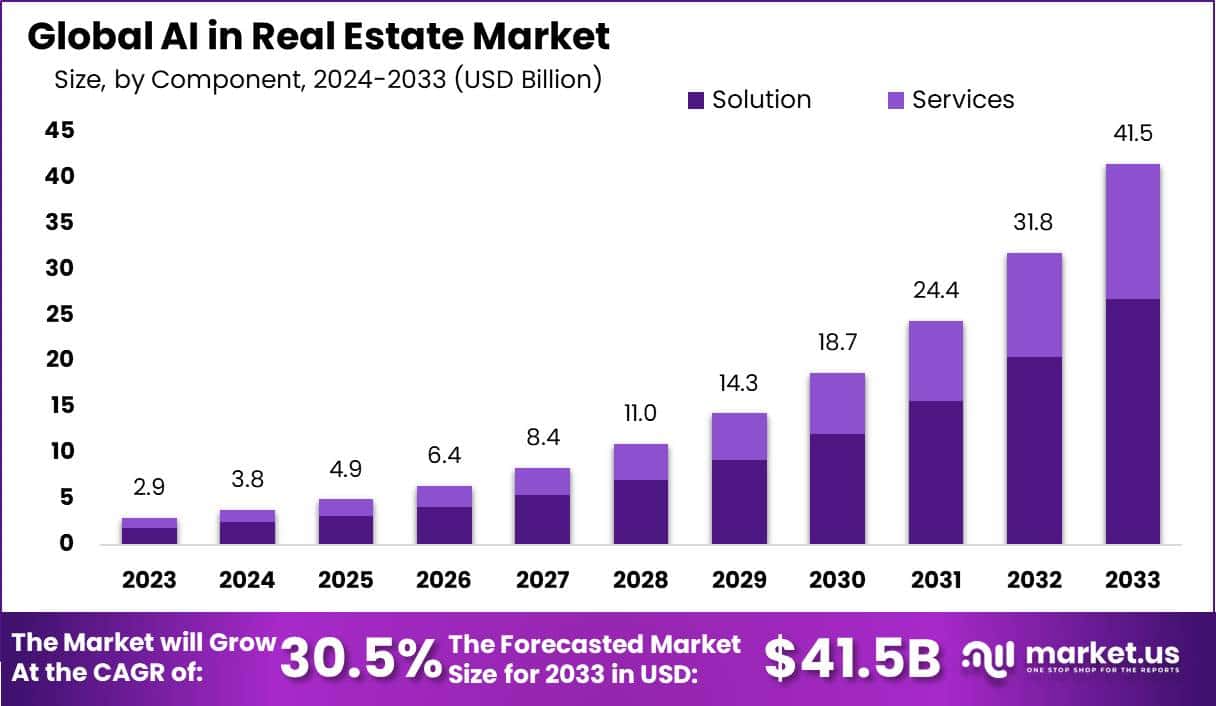
The real estate industry is on the brink of a technological transformation, with Artificial Intelligence (AI) playing a pivotal role. According to a recent report by Market.us, the AI in real estate market is projected to surge from USD 2.9 Billion in 2023 to a staggering USD 41.5 Billion by 2033, growing at an impressive CAGR of 30.5%.