Florida’s Tort Reforms: A Surprising Economic Boost Reshaping Insurance and Business Costs
Florida’s recent tort reform changes are doing more than streamlining legal processes—they’re radically reshaping the state’s insurance landscape and delivering a measurable economic boost. A February analysis by The Perryman Group reveals that these reforms have driven down property and casualty insurance expenses while injecting billions into Florida’s wider economic engine.
The reforms have lowered insurance costs by an average of 14.5% compared to projected rates without the legislative shift. For Florida homeowners, professionals, and business owners, this is more than a discount—it’s a meaningful increase in financial breathing room and a stronger, more competitive insurance marketplace.
A Multi‑Billion Dollar Ripple Effect
Lower insurance expenses boost consumer and business spending power, triggering economic benefits statewide. According to the study, Florida is experiencing more than $4.2 billion in additional annual gross product resulting from these savings—supporting an estimated 29,370 jobs when multiplier effects are included.
Government coffers are benefiting as well. Increased economic activity is expected to generate $206.6 million in annual tax revenue for the state and another $155.3 million for local governments—critical fuel for Florida’s rapidly growing infrastructure needs.
How Reforms Reshaped Florida’s Legal Landscape
Recent legislative updates were designed to rebalance Florida’s historically litigious civil environment. Key changes included adjustments to negligence standards, a shortened statute of limitations, revisions to attorney fee structures, and the elimination of several one‑way attorney fee provisions. Importantly, lawmakers also reduced the ability to exploit assignments of benefits—once blamed for ballooning insurance litigation.
The impact is apparent. Insurers are re‑entering the Florida market, hundreds of thousands of policies are shifting back to private carriers, and property insurance lawsuits dropped by 25% in early 2025 compared to the prior year.
A More Competitive Market, A Stronger Florida
Researchers note that these reforms help limit excessive litigation costs while preserving fair compensation for injured parties. A more balanced system fosters healthier business growth, reduces market volatility, and ultimately lowers consumer expenses. The result: a more resilient, economically agile Florida.
To dive deeper into the analysis, explore the original reporting from Gulfshore Business and the full Perryman Group study provided by APCI.
Professionals across real estate, insurance, finance, and other sectors—especially those trained through Cameron Academy—gain an advantage by understanding how Florida’s evolving legal and insurance environments influence market stability and long‑term opportunity. Staying informed helps experts provide stronger guidance, smarter strategies, and more confident decision‑making.
More Articles
Getting licensed or staying ahead in your career can be a journey—but it doesn’t have to be overwhelming. Grab your favorite coffee or tea, take a moment to relax, and browse through our articles. Whether you’re just starting out or renewing your expertise, we’ve got tips, insights, and advice to keep you moving forward. Here’s to your success—one sip and one step at a time!
Newman Properties, a Massachusetts-based investment firm, has expanded its footprint into Connecticut with the $3.65 million acquisition of a 6,350‑square‑foot retail building in Enfield. Anchored by national restaurant chain Red Robin, the property offers the type of stable tenancy investors seek when entering new markets. The deal underscores growing confidence in anchored retail assets and provides a valuable real-world example for real estate professionals studying market analysis, investment strategy, and portfolio expansion.
JPMorgan now expects national home prices to flatten in 2026, but the Sunbelt is telling a very different story. Florida home values are down 5.1%, Texas is down 2.4%, and analysts warn that years of rapid building are finally catching up to the region. As demand stabilizes and inventory swells, real estate professionals — especially in Florida — face a market full of challenges, opportunities, and critical timing decisions.
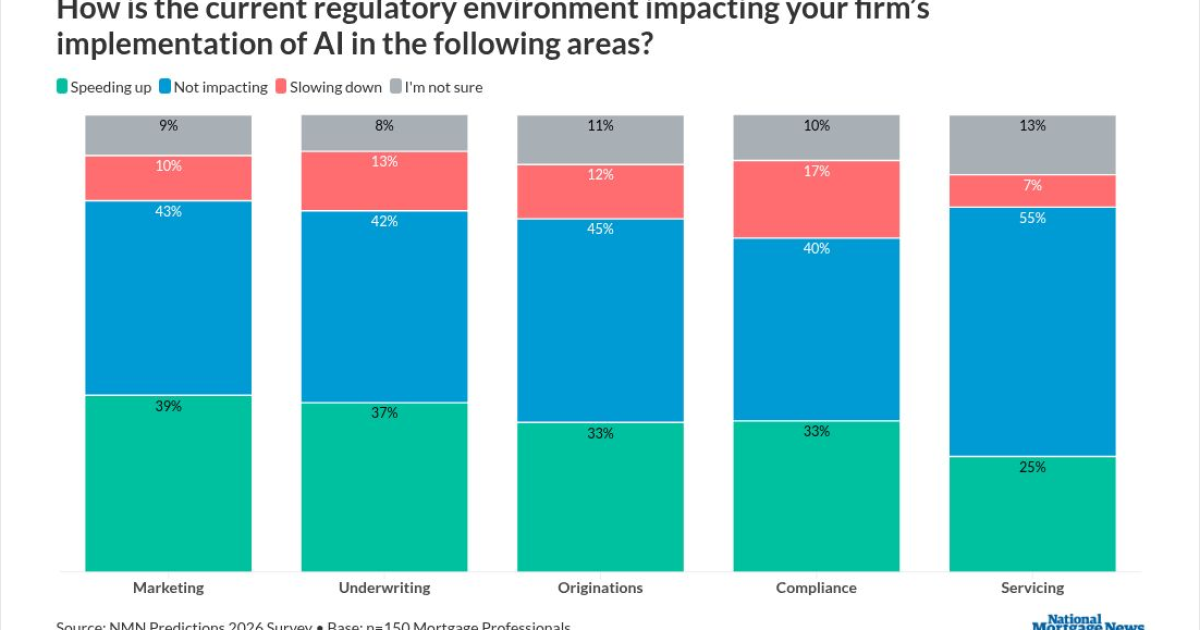
Artificial intelligence is finally stepping into the mortgage underwriting spotlight, with 57% of mortgage professionals predicting it will drive the most transformative industry shift in 2026. Thanks to major advancements in language models and workflow automation, AI is now capable of navigating the messy, document-heavy realities that have long slowed underwriting. From faster preapprovals to improved credit analysis and real‑time income verification, AI is streamlining processes while allowing underwriters to focus on true risk management. As regulatory winds shift and grassroots pressure builds within lending teams, the industry is entering a pivotal era where AI‑powered underwriting becomes not just an advantage — but an expectation.
Portland’s top 20 office towers have lost an unprecedented 70% of their value since 2019—plunging from $3 billion to under $1 billion—triggering tax revenue shortfalls, budget crises, and a surge in appeals as the city grapples with its biggest commercial real estate reset in modern history.
South Florida’s luxury real estate market just raised the bar again — this time with a $1 million virtual reality system that lets buyers walk through Dolce & Gabbana’s upcoming Miami tower long before construction wraps. Real estate master’s students were given an immersive look inside the project, discovering how VR is transforming high‑end development, influencing buyer psychology, and shaping the future skills today’s professionals need.
Long Island’s commercial real estate scene is kicking off 2026 with a surge of activity—industrial leases in Medford, neighborhood retail trades in Bohemia, Pizza Hut’s new DELCO expansion in Centereach, mixed‑use acquisitions in Melville, and major investor interest in bank‑leased and franchise-backed properties. From warehouses to restaurant rebrands, these deals highlight a region evolving fast and offering fresh opportunities for agents, investors, and professionals looking to stay ahead in the market.