Forecasting the Future: Housing Market Insights for 2025 to 2028
As we look to the horizon of the U.S. housing market, Fannie Mae’s Home Price Expectations Survey offers a crucial glimpse into the coming years. Compiled from the insights of over 100 housing experts, this survey predicts notable changes in home prices from 2025 to 2028. The analysis, originally detailed by Norada Real Estate Investments, suggests a shift in market dynamics that could impact homeowners and investors alike.
Slowing Growth in Home Prices
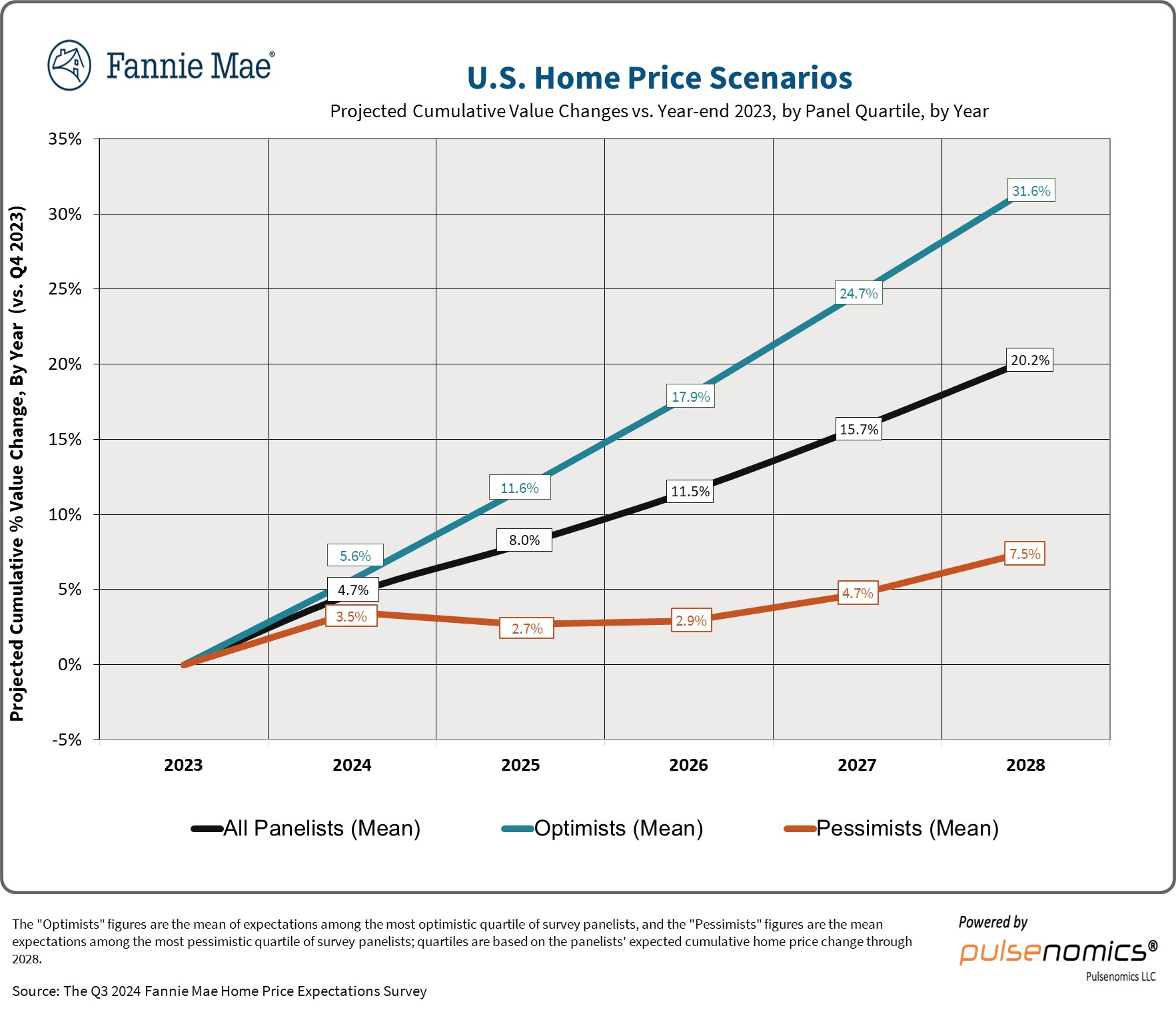
The survey anticipates a slower pace of home price growth in the coming years compared to the robust 6% increase seen in 2023. For 2024, experts forecast a 4.7% growth, with a further decline to 3.1% in 2025. This trend reflects a potential cooling of the market, influenced by policy changes and ongoing supply constraints.
Diverging Predictions and Market Uncertainty
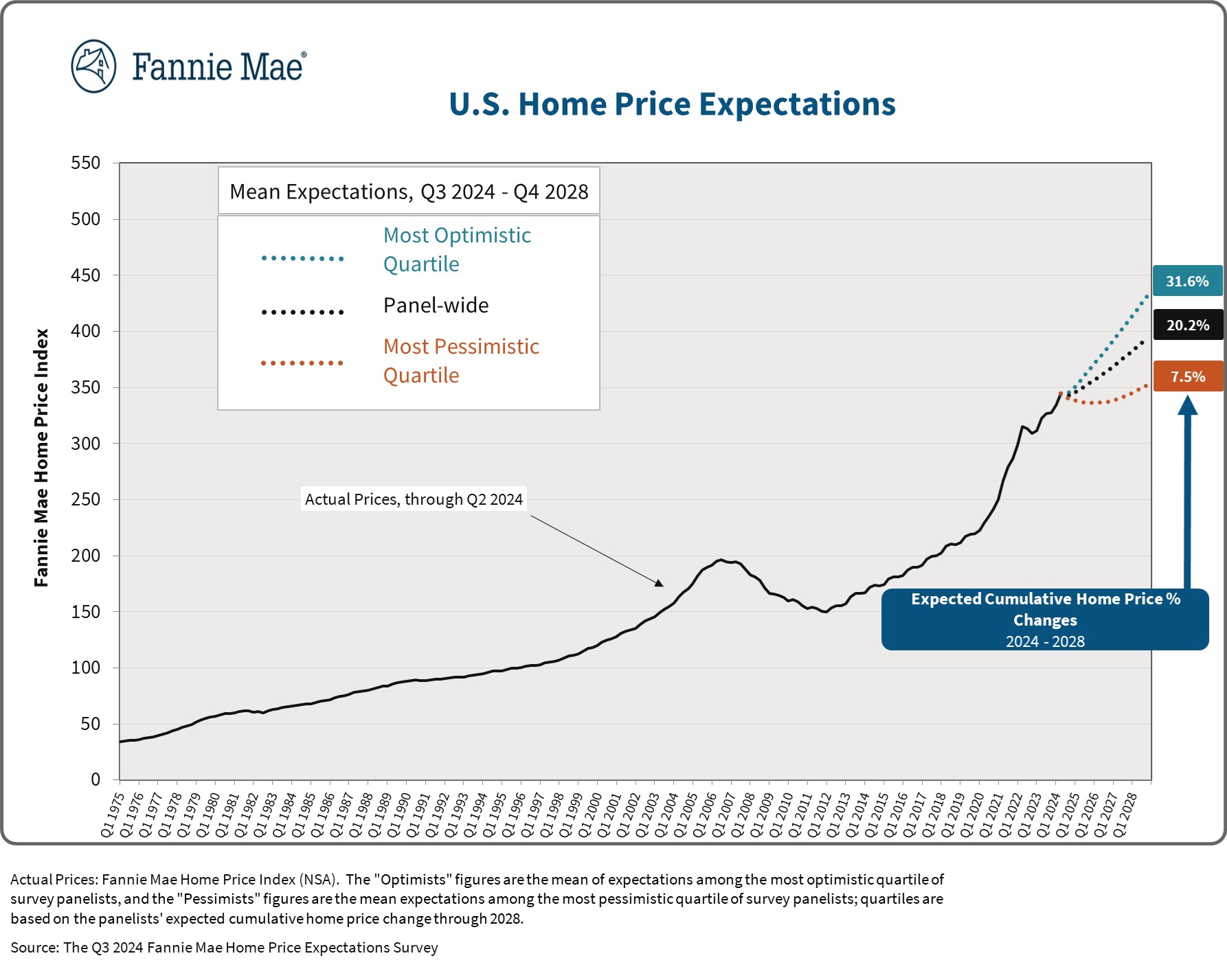
The panel’s projections reveal a wide range of outcomes, from optimistic to pessimistic scenarios. By the end of 2028, the most optimistic forecasts suggest a 31.6% cumulative gain in home prices, while the most pessimistic predict only a 7.5% increase. This divergence highlights the uncertainty and complexity of the market’s future.
Historical Context and Future Implications
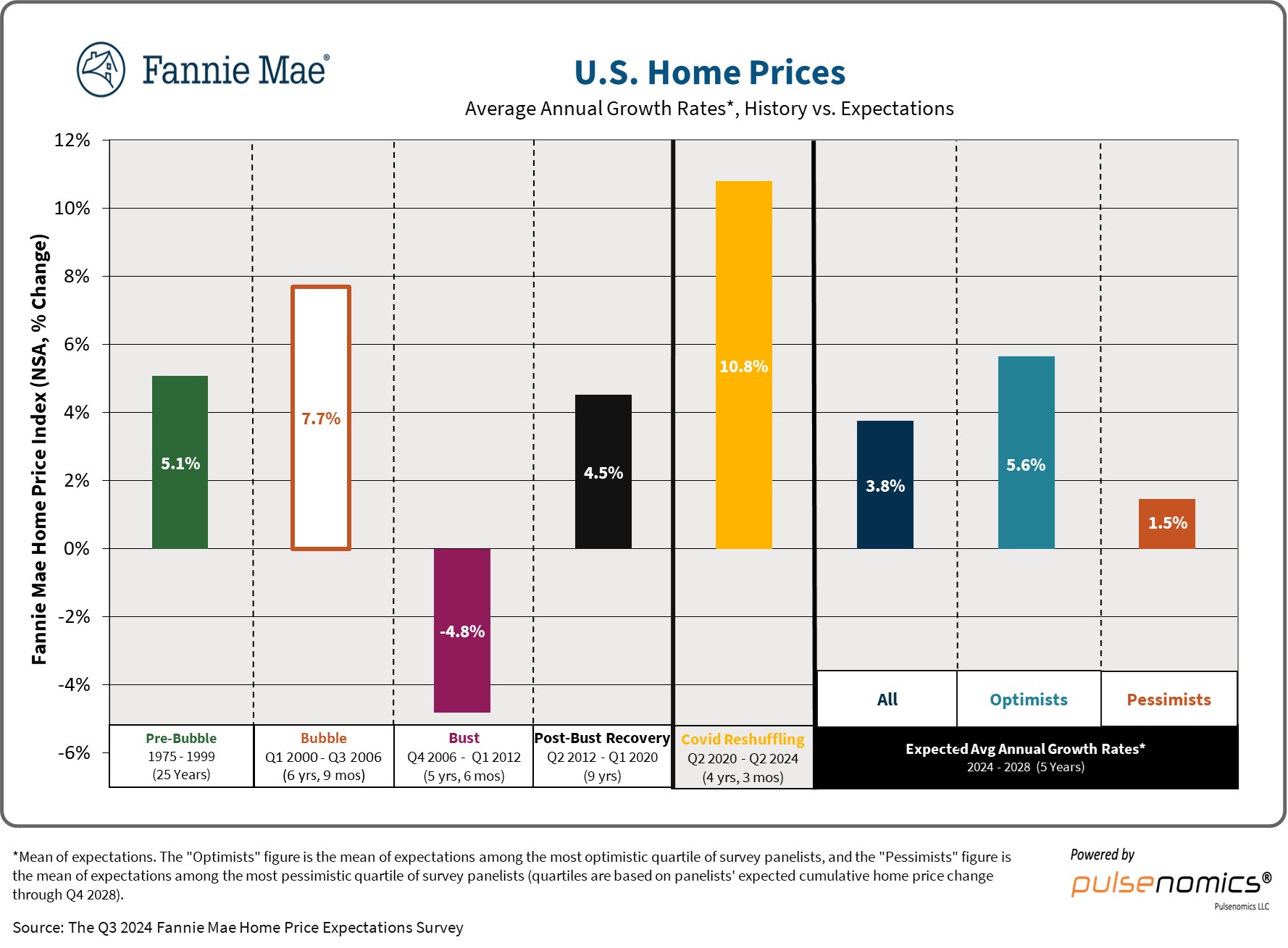
Examining historical data from key periods such as the “Pre-Bubble”, “Bubble”, “Bust”, and “Covid Reshuffling” phases, the survey provides a comprehensive view of market fluctuations. These insights are invaluable for buyers, sellers, and investors, each facing unique challenges and opportunities in light of the projected trends.
For Buyers: Expect a more moderate pace of price appreciation and continued affordability challenges due to the housing shortage.
For Sellers: Anticipate slower home price appreciation and a potentially more balanced market.
For Investors: Returns might moderate, but rental demand is likely to remain strong.
The Role of Policy and Supply Constraints
The persistent shortage of housing remains a major issue, with an estimated deficit of approximately 2.8 million homes. Potential policy reforms, such as zoning and permitting changes, could positively impact housing supply, but there is skepticism about their widespread adoption and effectiveness.
The Path Ahead
While home prices are expected to continue their upward trend, albeit at a reduced pace, the future of the housing market remains intricately linked to external factors such as policy reform and economic conditions. For a deeper understanding, readers are encouraged to explore the original article and related reports provided by Norada Real Estate Investments.
More Articles
Getting licensed or staying ahead in your career can be a journey—but it doesn’t have to be overwhelming. Grab your favorite coffee or tea, take a moment to relax, and browse through our articles. Whether you’re just starting out or renewing your expertise, we’ve got tips, insights, and advice to keep you moving forward. Here’s to your success—one sip and one step at a time!
In a rapidly evolving healthcare landscape, the Arab Health 2025 exhibition in Dubai emerges as a pivotal event, set to showcase the transformative role of technology in medicine across the Middle East.
The world of healthcare is on the brink of a revolution, as new technologies promise to reshape the landscape of medicine by 2025. As reported by The Island News, these advancements are poised to bring about transformative changes, ensuring that the future of healthcare is both innovative and patient-centric.
Modern wearables, particularly smartwatches, now offer functionalities such as heart rate monitoring, oxygen saturation, blood pressure tracking, and ECG readings. These features support the growing concepts of quantified self, body hacking, and self-surveillance, fostering a proactive approach to health management.
The cyber insurance and reinsurance industry is on a trajectory towards sustained profitability through 2025, as highlighted by a recent assessment from S&P Global Ratings. This optimism stems from consistent underwriting gains anticipated for 2023 and 2024, primarily driven by significant premium rate hikes and stricter policy terms implemented between 2021 and 2022.
2025 has ushered in a new era of innovation that seamlessly integrates convenience, security, and efficiency into our daily lives, creating a cohesive ecosystem that elevates your home’s IQ.
V2X technology enables seamless communication between vehicles, pedestrians, and infrastructure, transforming a vision once confined to science fiction into a tangible reality.