Gulf of America? Google Maps Just Got Political, and We’re Still Processing

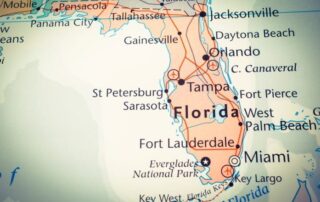
You ever wake up, check the news, and immediately question if you’re still dreaming? That was me this morning when I saw this headline: The Gulf of Mexico has been renamed the Gulf of America. Excuse me? Come again?

Wait, What Just Happened?

So, here’s the deal. President Trump, on his first day back in office, signed an executive order renaming the Gulf of Mexico to the Gulf of America. (Because apparently, top priority.) Google Maps, not one to shy away from a government-approved change, hopped right on board and updated the name on their platform. They even posted on X (formerly Twitter) that they have a “longstanding practice” of adjusting names according to official sources.

Translation: “Hey, don’t blame us. We’re just following the paperwork.”

Oh, and here’s the kicker—if you’re in Mexico, it’s still the Gulf of Mexico. So, depending on where you’re standing, that body of water has two different names. International waters just got a whole lot pettier.

My Immediate Reaction?

I have so many questions—mostly why? Who woke up and thought: You know what needs fixing? Not the economy, not infrastructure, but the name of that big ol’ body of water.

Also, imagine being a geography teacher right now. Yesterday, they were explaining the Gulf of Mexico. Today, they’re rewriting all their lesson plans.

And let’s not even start on travelers planning spring break trips. Google Maps is out here casually rewriting borders without warning. Imagine trying to meet your friends on the beach and texting, “Just follow the Gulf of Mexico signs—wait, sorry, I mean America. I mean… I don’t even know anymore.”

Is This a Trend Now?

Honestly, this feels like a sequel to that time when Google Maps had Crimea switching names depending on who was looking at the map. One glance from Russia? Crimea. A peek from Ukraine? Nope, different name.

Naming disputes aren’t new. Countries have been playing tug-of-war with names for centuries—Sea of Japan vs. East Sea, anyone? But THIS? This is like renaming Lasagna to ‘Freedom Pasta’ and expecting everyone to just roll with it.

What’s Next?

  • Are we renaming the Atlantic Ocean to the Freedom Pond?
  • Will the Grand Canyon become the Patriot’s Trench?
  • How far does this go?

Honestly, I need to hear from you—because I can’t be the only one feeling like we’ve entered some alternate reality. Do you think this change actually matters? Are you calling it the Gulf of America now? Or will you be forever loyal to “Mexico” like an old-school map purist?

Drop your thoughts (or complaints) in the non-renamed comment section—because at this rate, even that might not be safe.


“`

More Articles

Getting licensed or staying ahead in your career can be a journey—but it doesn’t have to be overwhelming. Grab your favorite coffee or tea, take a moment to relax, and browse through our articles. Whether you’re just starting out or renewing your expertise, we’ve got tips, insights, and advice to keep you moving forward. Here’s to your success—one sip and one step at a time!

Long Island Sets New Commercial Real Estate Record with $4.1 Billion in 2025 Deals

Long Island’s commercial real estate market just smashed every previous record, hitting an unprecedented $4.1 billion in 2025 deal volume—up a massive 71.5 percent from the year before. A surge in specialty-use properties like assisted living centers and self-storage facilities fueled the boom, alongside hundreds of new transactions across Nassau and Suffolk counties. With investor confidence rebounding, interest rates easing, and new buyer profiles entering the scene, the region has become one of the hottest real estate markets to watch.

Federal Housing Rollbacks Ignite a State‑by‑State Regulatory Power Shift

Federal cuts to housing oversight in 2026 are creating a nationwide regulatory scramble, with states—especially California—rapidly stepping in to fill the gap. As the CFPB reduces its enforcement role, lawmakers and agencies across the country are crafting their own rules on mortgage compliance, consumer protection, affordability, and even AI‑driven underwriting. For real estate, mortgage, and finance professionals, the message is clear: state regulations are becoming just as influential as federal policy, making ongoing education and compliance awareness more critical than ever.

Inside the $172 Million Battle: How Insurance Lobbying Is Shaping 2025

The insurance industry poured an eye‑opening $172 million into federal lobbying in 2025, making it the fourth‑largest lobbying sector in the country. Medical insurers led the spending, but property and casualty giants weren’t far behind, with APCIA, Nationwide, Liberty Mutual, and Allstate all landing among the top contributors. And this is only federal spending—state‑level influence, where regulations are truly shaped, remains vastly underreported. For professionals in insurance, real estate, and finance, these lobbying efforts play a powerful role in shaping regulations, costs, and the competitive landscape.

Florida’s Home Insurance Shake‑Up: Why a 3.35% Non‑Renewal Rate Left Hundreds of Thousands Without Coverage

Florida’s home insurance market saw a 3.35% non-renewal rate last year—a small percentage that translated into hundreds of thousands of homeowners suddenly losing coverage. Driven by repeated storm damage, soaring construction costs, heavy litigation, and insurers pulling back from high-risk areas, the state’s insurance landscape is rapidly shifting. Homeowners now face higher premiums, fewer options, and tougher underwriting, while professionals in real estate, mortgage, and insurance must stay informed to guide clients through a tightening market.

Florida’s Tort Reforms Slash Insurance Costs and Spark a Multi‑Billion‑Dollar Economic Boost

Florida’s recent tort reforms are doing far more than reshaping the state’s legal system—they’re driving down property and casualty insurance costs by an average of 14.5% and injecting over $4.2 billion into the state’s economy each year. With nearly 30,000 jobs supported and state and local governments seeing hundreds of millions in new tax revenue, the changes are already transforming Florida’s insurance market. Lawsuits have dropped, insurers are returning, and businesses and homeowners alike are reaping the benefits of a more balanced, competitive, and financially resilient environment.

Commercial Real Estate Rebounds as AI Anxiety Sends Mixed Signals Through the Industry

Major commercial real estate firms are reporting strong revenue and renewed market activity, signaling a rebound in dealmaking and office demand. Yet even with record earnings, CEOs from CBRE, Colliers, and Marcus & Millichap spent much of their earnings calls addressing a growing concern: whether artificial intelligence could threaten traditional brokerage and valuation roles. While leaders insist that complex transactions still rely on human relationships and negotiation, AI‑related market jitters briefly pushed some CRE stocks down before they recovered.