The American housing market is grappling with a crisis of affordability that is reshaping the landscape of homeownership and renting. A recent analysis by Econofact highlights the growing burden of housing costs on American households. With median house prices now six times the median income—up from four to five times two decades ago—the dream of homeownership is slipping away for many. Even renters, who have historically found refuge in more affordable options, are feeling the pinch as the ratio of median rents to median income has crept from 25% to 30%.
The Facts Behind the Crisis
Worsening Affordability: The affordability crisis is not confined to coastal cities like San Francisco and New York. It is a nationwide issue, affecting both urban and rural areas.
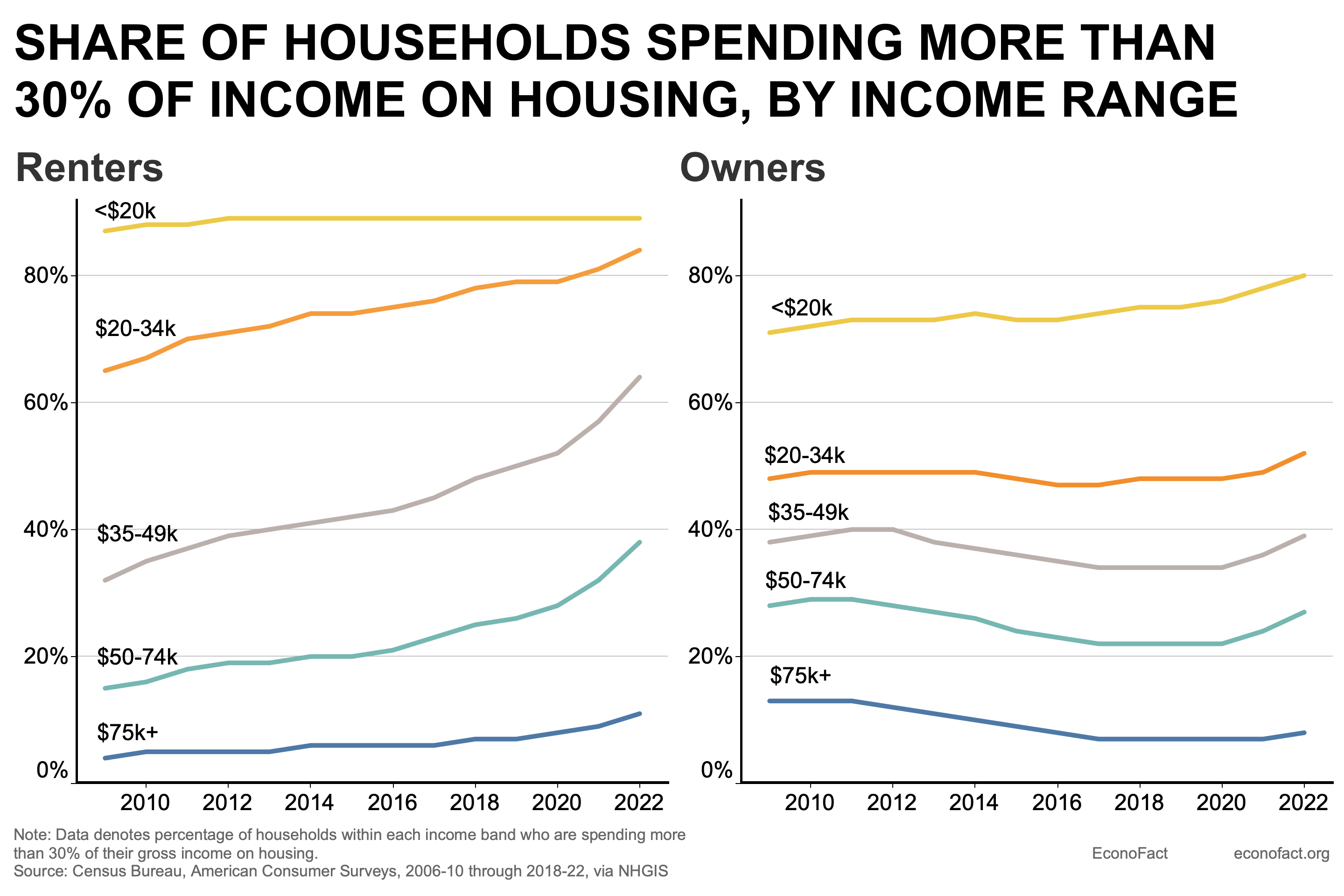
Cost-Burdened Households: A significant increase in cost-burdened renters—those spending more than 30% of their income on housing—has been observed, particularly among those earning between $35,000 and $49,000 annually.
Geographic Variations: Traditionally affordable regions are seeing rapid price appreciation, shrinking the affordability gap with historically expensive areas.
The issue of housing affordability is compounded by a mix of demographic shifts and regulatory hurdles. The aging population, with more seniors opting to age in place, has contributed to a supply crunch. Meanwhile, zoning laws and other regulatory restrictions limit housing density, exacerbating the shortage. These factors, coupled with the rise in mortgage rates from 3.5% to nearly 8% since early 2022, have made the path to homeownership even steeper.
Hope on the Horizon?
Despite the grim outlook, there are glimmers of hope. The anticipated reversal of the Federal Reserve’s tightening cycle could lower mortgage rates, easing the financial strain on households. Additionally, there are signs of change in urban zoning laws to allow more affordable housing construction. A surge in multifamily housing starts and a large pipeline of apartments under construction may help relieve pressure on rents.
The complexity of the housing affordability crisis suggests there is no quick fix. However, with concerted efforts to increase supply and reform regulatory practices, there is potential for a more balanced and accessible housing market.
“`
More Articles
Getting licensed or staying ahead in your career can be a journey—but it doesn’t have to be overwhelming. Grab your favorite coffee or tea, take a moment to relax, and browse through our articles. Whether you’re just starting out or renewing your expertise, we’ve got tips, insights, and advice to keep you moving forward. Here’s to your success—one sip and one step at a time!
The Western U.S. commercial real estate sector is gearing up for a pivotal year in 2026, with new forecasts from Kidder Mathews showing steady economic growth, moderating inflation, and improving fundamentals across office, industrial, retail, and multifamily markets. From slow but stabilizing office recovery to strong retail performance and tightening industrial demand, the region is entering a period of rebalancing that presents fresh opportunities for real estate and related professionals.
A delayed federal jobs report has pushed ADP’s data into the spotlight, revealing that private employers added just 22,000 jobs in January — far below expectations. Revised December numbers and ongoing declines in key sectors like professional services and manufacturing point to a cooling labor market heading into 2025. While wage growth remains steady, uneven job creation across regions and industries is raising new questions about future interest‑rate cuts and what this shifting economy means for professionals in fields like real estate, mortgage, insurance, and finance.
Nashville’s booming tech-driven population is transforming luxury real estate, making smart technology and eco‑friendly design the new standard. From AI‑powered adaptive living and advanced security systems to high‑efficiency construction and green incentives, the city’s top communities—Brentwood, Franklin, and Nolensville—are leading a movement toward intelligent, energy‑saving homes that offer long‑term value and modern comfort.
Florida legislators have confirmed that no new insurance relief is coming in 2026, leaving homeowners to grapple with rising premiums and shrinking options. While Republican leaders argue that past reforms simply need more time to stabilize the market, Democrats are pushing for immediate action as families across the state feel the financial strain. With insurance changes off the table, lawmakers are shifting their focus to property tax relief—creating important ripple effects for real estate, mortgage, and insurance professionals watching the market closely.
A new CBRE survey reveals that 2026 is shaping up to be a bullish year for commercial real estate, with most investors planning to expand their portfolios. Dallas secures the top spot for the fifth year in a row, but Southeast metros like Atlanta, Miami, Tampa, and Charlotte are rapidly gaining ground thanks to population growth, strong job creation, and resilient demand in sectors like tech, logistics, and healthcare.
Washington State University’s Carson College of Business has introduced Carson Pro, a flexible online platform offering non‑credit certificates in finance, management, marketing, accounting, and specialty fields like the business of aging and wine business management. Designed for working professionals seeking practical, career-ready skills or a complete career reset, the program reflects a nationwide shift toward continuous learning as industries—from real estate to finance—evolve at a rapid pace.