How Rising Energy Costs Are Quietly Reshaping the Hudson Valley Real Estate Market
For years, real estate professionals measured affordability through familiar metrics: interest rates, supply, zoning, and construction costs. But in the Hudson Valley, a new variable has surged quietly into the spotlight. Energy costs, once a secondary consideration, are now reshaping how properties are valued, financed, and even livable.
According to reporting from Rockland County Business Journal, the pressure on middle- and lower-income households is reaching a breaking point. Utility bills, driven by rising delivery charges and volatile supply pricing, are now competing directly with essentials like mortgages and health insurance. For many families, the monthly question is no longer how to save, but which critical bill to prioritize.
Click-worthy Insight: Agents who understand energy efficiency are gaining a real competitive edge. These topics now appear more frequently in licensing education, valuation discussions, and property marketing strategies.
The Hidden Cost Reshaping Homeownership
A property’s true carrying cost is no longer only principal, interest, taxes, and insurance. Energy has become a fluctuating expense capable of tipping a household budget from manageable to overwhelming. In older Hudson Valley towns like Rockland and Orange, aging homes magnify this effect.
Outdated HVAC systems, leaky windows, and old insulation can turn standard utility bills into relentless monthly burdens. When rates climb, these aging structures leak money just as fast as they leak heat.
Grid Challenges and Development Delays
While renewable capacity is growing, investment has not kept pace with demand. The grid remains outdated and in many areas at capacity. For developers, this introduces a new challenge: interconnection fees and mandatory infrastructure upgrades are raising budgets and delaying otherwise viable projects.
Meanwhile, energy-heavy facilities like data centers continue to expand across the region. These centers strain local infrastructure but generate limited long-term jobs, adding to community frustration.
Energy Efficiency Is Now a Market Divider
The market is increasingly rewarding homes and buildings with energy-efficient upgrades. Solar installations, LED lighting, modern mechanical systems, and well-sealed envelopes are becoming defining features. Buyers and investors are beginning to calculate energy volatility the same way they evaluate flood zones or deferred maintenance.
For commercial professionals, unpredictable energy expenses squeeze margins and complicate underwriting. Multifamily owners in particular face rising common-area electrical costs that outpace reasonable rent increases.
Policy Lag and Local Solutions
Without a cohesive national plan to upgrade energy infrastructure, local governments may need to take the lead. Potential strategies include:
– Streamlined permitting for solar systems
– PACE financing for energy retrofits
– Community microgrids
– Updated zoning requiring stronger performance standards
Energy is no longer a distant policy issue. It is now directly influencing housing availability, business operations, and the overall real estate market. In the Hudson Valley, these rising energy costs act like a regressive tax that hits lower-income households the hardest.
What This Means for Real Estate Students and Professionals
Energy literacy is quickly becoming essential knowledge for the modern real estate career. Whether you are a new agent preparing for your exam or a seasoned investor advancing your strategy, understanding energy costs strengthens your competitive edge.
This is why programs at Cameron Academy emphasize market analysis, valuation principles, and real-world trends. Students learn how to confidently discuss the forces influencing buyer behavior and property performance, including the rising impact of utility costs.
Want to master these fast-changing topics? Explore real estate licensing and continuing education programs at Cameron Academy and stay ahead of the market.
This article is based on reporting from Rockland County Business Journal. Explore the full story here:
Read the full article on RCBJ
More Articles
Getting licensed or staying ahead in your career can be a journey—but it doesn’t have to be overwhelming. Grab your favorite coffee or tea, take a moment to relax, and browse through our articles. Whether you’re just starting out or renewing your expertise, we’ve got tips, insights, and advice to keep you moving forward. Here’s to your success—one sip and one step at a time!
In 2026, financial advisors are no longer just experimenting with AI — they’re relying on it. Once confined to back-office duties, AI now supports meeting prep, portfolio analysis, and even early-stage financial planning. Advisors say the tech is strengthening client relationships by freeing them from administrative overload, though entry-level roles like paraplanners may feel the squeeze as automation accelerates.
Cybercriminals are weaponizing AI to launch highly convincing email scams and system breaches across the mortgage industry, overwhelming lenders and servicers whose cybersecurity measures can’t keep up. With major companies already hit and regulation lagging behind, experts warn the sector—now considered critical infrastructure—must rapidly upgrade protections, collaborate on threat intelligence, and improve AI governance before the risks escalate further.
Escrow payments are quietly surging across the country as property taxes and insurance premiums spike—pushing many homeowners toward delinquencies and even foreclosure. New data from Cotality shows the sharpest increases hitting the South and Midwest, with Florida among the hardest‑hit states. Even with fixed mortgage rates, rising escrow requirements are driving monthly payments higher and threatening affordability heading into 2026.
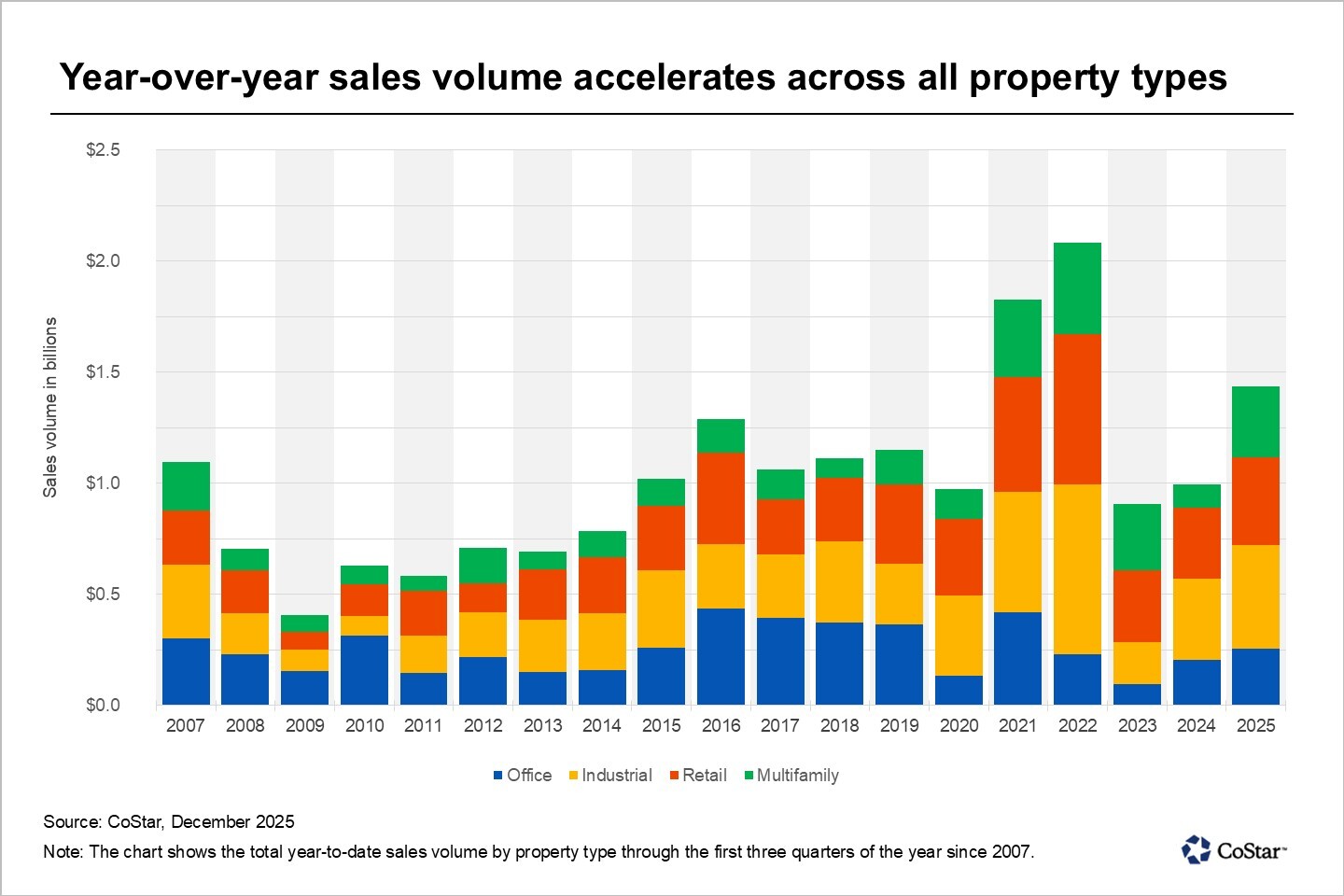
Milwaukee entered 2025 with renewed momentum, posting its strongest commercial real estate sales volume in three years. After a period of uncertainty and high capital costs, investors are returning with a sharper focus on quality assets, realistic pricing, and reliable cash flow. Activity is increasing across industrial, office, multifamily, and retail sectors, signaling a broad-based recovery fueled by stabilizing interest rates and improved market confidence.
As 2026 approaches, the title insurance industry is navigating a complex mix of market recovery, rising fraud threats, and sweeping regulatory changes. Industry leaders say the path forward centers on smarter technology, leaner operations, and stronger support for title agents. With AI-driven workflows, enhanced fraud prevention, and new compliance demands—including FinCEN’s expanded Geographic Targeting Orders—companies like Stewart and First American are reshaping how title work gets done. For real estate and mortgage professionals, the year ahead promises more automation, heightened standards, and major opportunities for those who stay ahead of the curve.
The real estate industry is undergoing a major transformation in 2025 as advancements in AI, proptech, blockchain, and data intelligence redefine how properties are marketed, valued, financed, and experienced. From instant digital valuations and immersive virtual tours to tokenized investments and predictive analytics, technology is reshaping every stage of the real estate lifecycle. Professionals who embrace these innovations—while maintaining the human expertise clients still rely on—will lead the next era of the industry.