Is 2026 the Moment Homebuyers Have Been Waiting For? Here’s What the Market Is Signaling
The U.S. housing market is gearing up for a pivotal year in 2026, and early indicators are giving prospective buyers, investors, and real estate professionals plenty to think about. With mortgage rates expected to dip slightly, new-home construction gaining momentum, and affordability shifting across regions, the upcoming market offers opportunity—if you know where to look.
This article is inspired by a detailed report from Investopedia. For full insights and deeper analysis, their original coverage is available on their website.
Key Takeaways for 2026
Mortgage rates may dip slightly—but will likely remain above pre‑2022 levels.
Affordability varies widely by region, with the Midwest and South offering more favorable conditions.
Adjustable‑rate mortgages (ARMs) and new‑construction homes are becoming increasingly attractive options.
Mortgage Rates: Some Relief, But Not a Major Drop
After spiking above 7% in early 2025, mortgage rates relaxed to roughly 6.2% by year’s end. While welcome, experts warn buyers not to expect dramatic decreases heading into 2026.
The Mortgage Bankers Association predicts rates will hover between 6% and 6.5%. Redfin anticipates a 6.3% average, and the National Association of Realtors expects rates to remain “around 6%.”
Despite multiple Federal Reserve reductions to short‑term rates since 2024, mortgage rates haven’t followed suit—because long‑term bonds, not the Fed’s cuts, ultimately shape mortgage pricing.
“It will be a modest decline that will improve affordability,” said Lawrence Yun, Chief Economist at the National Association of Realtors.
For real estate and mortgage‑industry learners at Cameron Academy, this trend reinforces the necessity of understanding long‑term rate behavior, Treasury yields, and the economic factors that influence home financing.
Affordability Depends on Location—Sometimes Dramatically
The U.S. housing market in 2026 is anything but uniform. High‑cost regions like coastal California and the Northeast remain challenging, while cities throughout the South and Midwest offer significantly more reasonable buying conditions.
Oxford Economics highlights cities such as Cleveland, Cincinnati, Detroit, St. Louis, New Orleans, Louisville, Memphis, Tucson, and Oklahoma City as standout markets where buyers can still find value.
Local taxes and insurance—often overlooked—play a critical role in shaping these affordability gaps.
ARMs Are Making a Comeback
With fixed rates staying elevated, more buyers are transitioning toward adjustable‑rate mortgages. ARMs offer lower introductory rates, providing immediate monthly savings. Roughly 10% of buyers chose ARMs in late 2025, well above the historical 6% average.
“In this environment where borrowers are struggling with lack of affordability, moving to an ARM can result in real savings,” noted MBA Deputy Chief Economist Joel Kan.
Of course, ARMs come with risks—especially if rates spike in later years. But for buyers planning shorter stays or anticipating rate drops, they remain a powerful tool.
New Construction May Be the Smarter Buy
Newly constructed homes continue to outperform existing‑home sales thanks to builder incentives and increasing availability. In a rare reversal of typical trends, the average new‑home price ($413,500) dipped below the average price of existing homes ($422,600).
Options like rate buydowns, closing‑cost credits, and customization features make new construction an appealing choice for many 2026 buyers.
“Buyers are seeing a lot of value in new homes and taking advantage of the unusually high glut of new homes for sale on the market,” shared Heather Long, Chief Economist at Navy Federal Credit Union.
What This Means for Future Real Estate Professionals
Whether you’re launching your real estate career or expanding into mortgage, insurance, or appraisal sectors, understanding the 2026 landscape is vital. Students at Cameron Academy learn that market cycles often create the best professional opportunities—and 2026 appears to be exactly that type of year.
As affordability evolves and buyer behavior shifts, knowledgeable professionals will be in high demand. If you’re looking for flexible, career‑focused licensing education, Cameron Academy continues to support new and seasoned professionals across the nation.
For deeper insights, be sure to explore the full original report directly from Investopedia.
More Articles
Getting licensed or staying ahead in your career can be a journey—but it doesn’t have to be overwhelming. Grab your favorite coffee or tea, take a moment to relax, and browse through our articles. Whether you’re just starting out or renewing your expertise, we’ve got tips, insights, and advice to keep you moving forward. Here’s to your success—one sip and one step at a time!
Fort Myers Beach is becoming the front line of a new Florida—one shaped by hurricane devastation, soaring insurance premiums, and rapid gentrification. Three years after Hurricane Ian, residents are still battling massive rebuilding costs and insurance bills that now exceed $5,700 a year on average, with flood insurance reaching $10,000 for some families. Long-time locals, small businesses, and service workers are being priced out as wealthy investors move in, transforming once-affordable coastal communities. Real estate professionals warn that foreclosures may rise if economic pressures continue, signaling a pivotal moment for Florida’s housing market and the professionals who serve it.
Economic uncertainty, AI disruption, slowing population growth, and rising portfolio risk are reshaping commercial real estate heading into 2026. A new report unveiled at NAR NXT highlights the forces that will reward informed professionals — and challenge those who aren’t prepared. From fiscal policy and shifting capital flows to tech transformation and housing shortages, the landscape is evolving fast. Cameron Academy breaks down the key issues so real estate, mortgage, finance, and insurance professionals can stay ahead of the curve.
A sudden federal shutdown of FEMA’s BRIC resiliency program has left cities and commercial property owners scrambling, exposing billions in real estate to rising climate threats. With nearly a billion dollars in mitigation funding clawed back and extreme weather intensifying, insurance premiums are expected to surge and coverage may shrink — placing new pressure on markets like Florida and New York.
A new Florida Senate bill aims to stop cities and counties from blocking residential developments over vague “compatibility” concerns. Supporters say the measure would speed up homebuilding and ease housing shortages, while opponents argue it strips communities of essential oversight and could accelerate growth without proper planning. The proposal could reshape development timelines and land-use decisions statewide, making it a major issue for real estate professionals to watch.
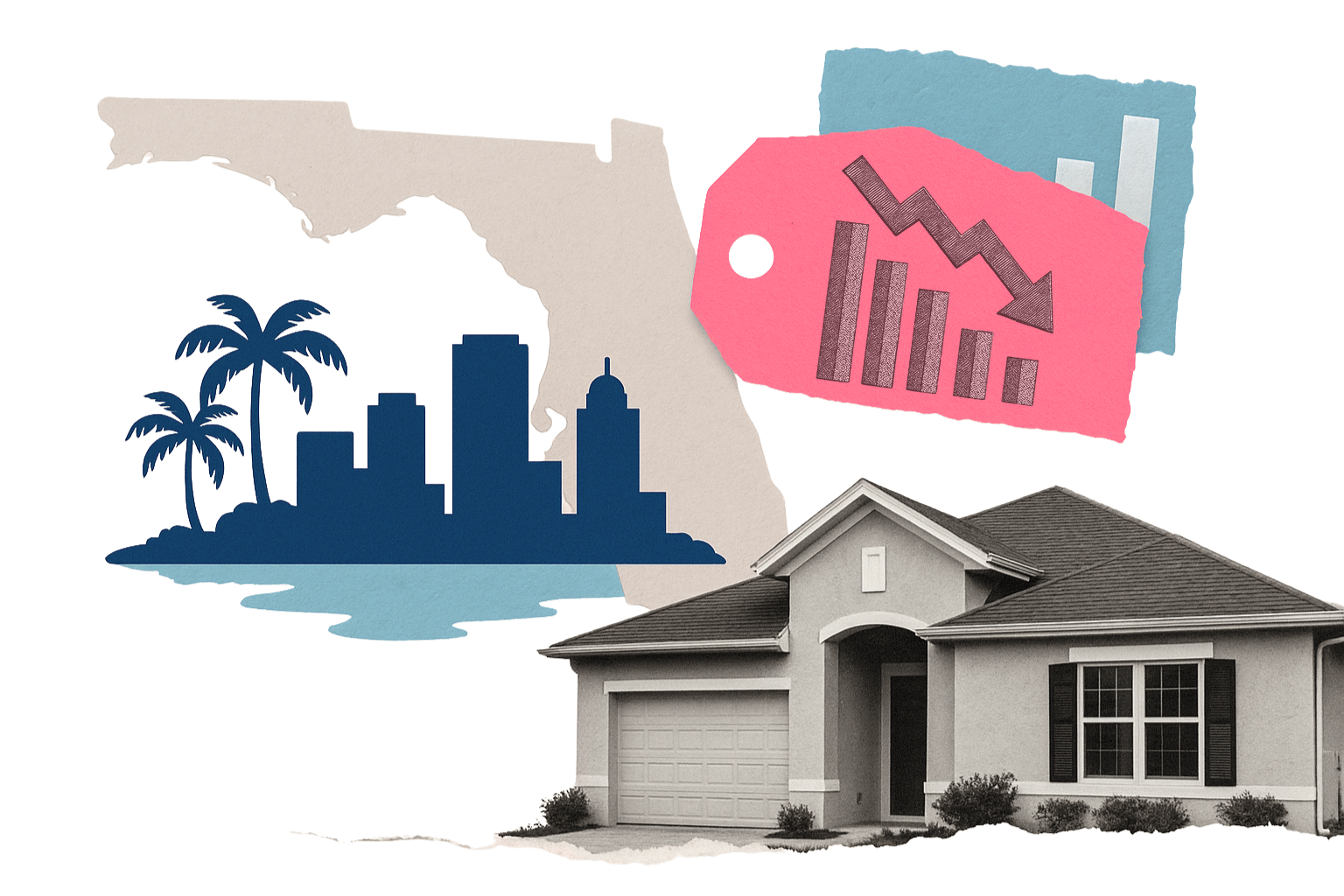
Cape Coral–Fort Myers has officially moved into buyer-friendly territory, with homes now sitting a median 119 days on the market—far longer than both the Florida and U.S. averages. Rising inventory, a 36.9 percent price‑reduction rate, and slower absorption compared to accumulated supply are giving buyers more leverage and time to negotiate, signaling a meaningful reset in this once‑fast‑moving Florida market.
Kansas City’s commercial real estate sector is finally turning a corner after several years of sluggish activity. Retail is leading the rebound, while multifamily and industrial properties are gaining traction as pricing stabilizes and buyer confidence returns. A standout 2025 transaction—the sale of the 380‑unit Cyan Southcreek community—signals that capital is flowing back into the market. With bid‑ask spreads tightening and investor optimism rising, Kansas City is entering a period of renewed opportunity for real estate professionals and investors alike.


 Florida’s Middle Class Is Being Squeezed Out: Insurance Costs, Rebuilding Struggles, and a Changing Coastline Gallery