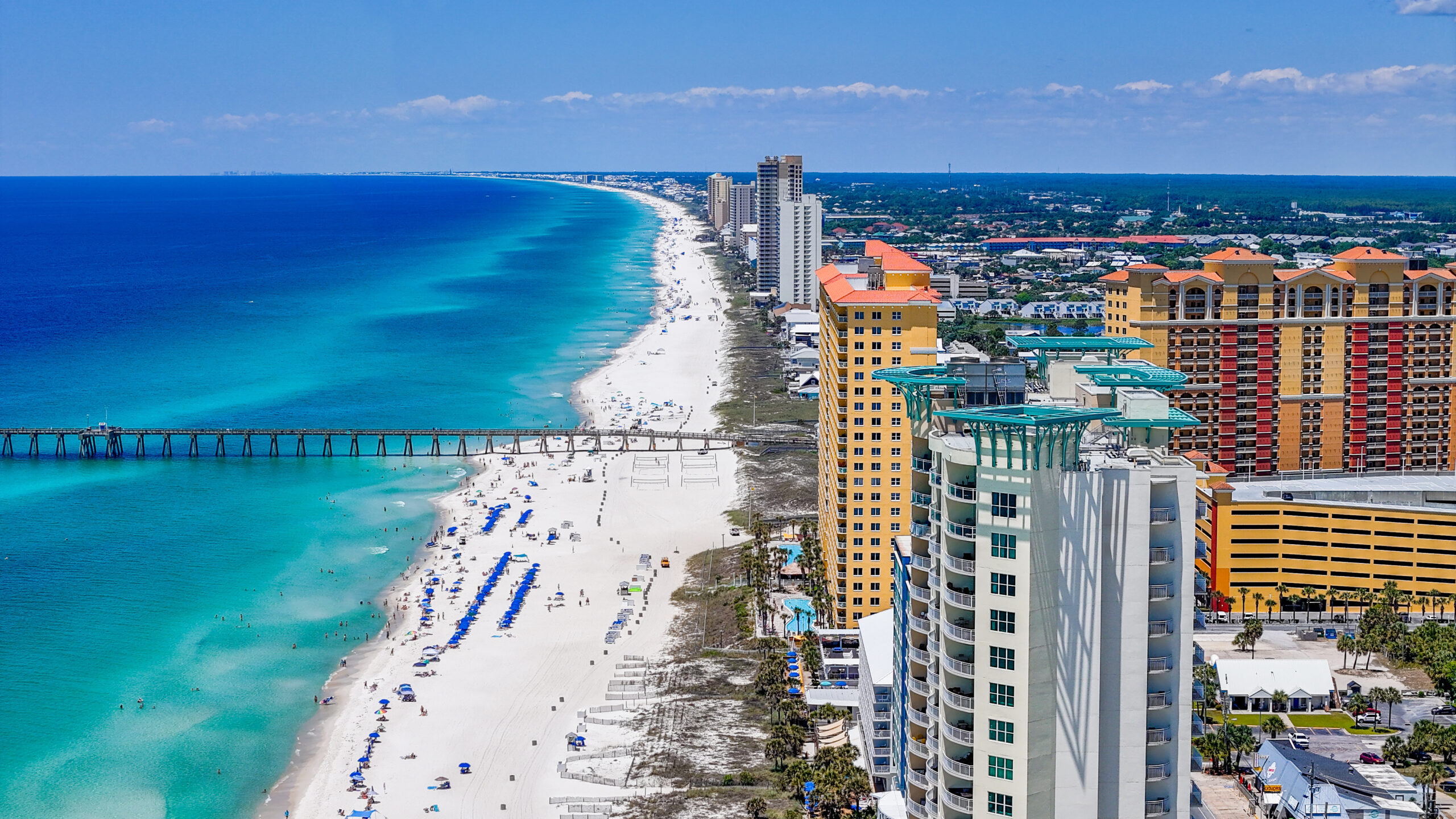
That’s the mood in a segment buzzing about South Florida realtors fielding calls from New Yorkers bracing for a potential political shift up north. The clip centers on a Financial Times story about Miami developers pitching “safe spaces” for millionaires if a self-described Democratic Socialist—referred to in the segment as Zoran Mandani—wins the NYC mayoral race. The worry list is familiar: higher taxes, looser criminal enforcement, and a new policy mix that includes a rent freeze and free buses funded by a 2% tax increase on top earners. Meanwhile, Florida’s pitch is the same as always: sunshine, zero state income tax, and a developer on every corner who swears, trust me, this glass tower will change your life.
Here’s what jumped out, beyond the palm trees and punchlines.
First, the safety-and-tax two-step is back. One voice in the segment says plainly: taxes move money; crime moves families. That lands. Years ago, a neighbor on my block had a break-in and I couldn’t sleep for a week—suddenly, the “vibe” of a neighborhood became as real as the rent. People love a city until they don’t feel safe walking the dog. Add a video clip of the candidate challenging what counts as “violent crime,” and the reaction isn’t academic; it’s visceral.
Second, the migration math got spicy. One panelist dropped a vivid stat: roughly 220,000 homes for sale in Florida versus 385,000 millionaires in New York. Not exactly one-to-one, but the point stands—if even a sliver of high earners decamp, pressure builds fast. Another person argued rate cuts will toss gasoline on prices because, well, they usually do. A counterpoint came fast: rising home values aren’t the villain for the two-thirds of Americans who already own—home equity is how a lot of ordinary families build wealth. That’s not theory; it’s how my first condo turned into the down payment that got me out of the “apartment with a view of a brick wall” phase of life.
Still, affordability is not a Twitter myth. The median age of first-time buyers creeping from 32–33 to around 40 is a loud alarm. The segment boiled the path forward into three levers:
Prices fall (ugly for lending, ugly for psychology).
Rates fall (great until prices pop again).
Time does its slow work (incomes rise, even if unevenly).
The “time” argument included a useful nuance: buyers don’t spend 100% of income on housing, so income growth can outpace affordability stress even if it looks flat on paper. Fair. But tell that to a couple touring a $1 million “starter” in Miami that used to be a cute bungalow and is now a concrete bunker with “character.” Time helps; it doesn’t hand over keys.
There was also an old-but-telling migration tale: U-Haul once paying students to drive trucks back to California because too many were heading to Texas one-way. When truck logistics get weird, people are moving. The panel’s thesis is similar: if New York changes quickly—especially on taxes and enforcement—expect a “first wave” south. And they weren’t just calling for hedge funders; they want roofers, HVAC owners, window retrofitting crews—the unglamorous backbone that every growth market needs. Miami loves a DJ, but roofs, not remixes, make a city livable.
So does this all add up to a Miami surge? Short-term, maybe stabilization with a nudge up. Inventory is healthier than during the pandemic rush, and cranes are still doing crane things. But demand from high earners arrives like a tide: slow, then suddenly. If rates drop and the policy gap between the cities widens, the waterline moves higher.
A word on the “safe space for millionaires” framing: it’s cheeky branding, but the subtext is broader than the top 1%. When a city signals “we’re changing the rules,” the first movers tend to be those with options. The second movers are the jobs that follow them. The third movers are the people who just want a predictable school year and a commute that doesn’t require carrying pepper spray. That’s not ideology; that’s how migration waves have always worked.
Personal reality check: the grass isn’t automatically greener—sometimes it’s Astroturf. Taxes go down in Florida; insurance goes up. Sunshine is free; shade is not. A friend who left Brooklyn for Brickell swears his serotonin levels quadrupled—then his HOA fees did, too. Even so, I get the calculus. Quality of life is a composite score, and for a lot of families, certainty outranks nostalgia.
Curious how this plays out on the ground:
New Yorkers contemplating a move—what’s the tipping point: policy, safety, or price?
South Floridians—seeing a pick-up in out-of-state buyers again, or is it just inbox noise?
First-time buyers in either market—what’s the real blocker right now: rates, inventory, or runway for saving?
If the past few years proved anything, it’s that real estate is never just about real estate. It’s where politics, psychology, and personal safety intersect—with U-Hauls idling at the curb.
More Articles
Getting licensed or staying ahead in your career can be a journey—but it doesn’t have to be overwhelming. Grab your favorite coffee or tea, take a moment to relax, and browse through our articles. Whether you’re just starting out or renewing your expertise, we’ve got tips, insights, and advice to keep you moving forward. Here’s to your success—one sip and one step at a time!
After years of sluggish commercial real estate performance, falling interest rates may finally set the stage for a market rebound. As the Federal Reserve signals further cuts, investors are eyeing REITs—and especially the Direxion Real Estate Bull 3X ETF (DRN), a leveraged fund designed to triple the daily movement of major commercial real estate stocks. DRN offers powerful upside potential during a rally, but its high‑risk, short‑term nature means it’s best suited for experienced traders who understand volatility and the mechanics of leverage.
A new proposal in Florida’s legislature could reshape the path to homeownership for working residents. House Bill 311, championed by State Rep. Jervonte Edmonds, would require certain private employers to contribute up to $5,000 toward their first-time homebuyer employees’ down payments or closing costs. Backed by bipartisan support, the bill ties employer tax write-offs directly to helping workers purchase homes, marking a unique approach to housing affordability. Now moving through committee, HB 311 could become one of the nation’s most innovative employer-assisted housing programs.
Artificial intelligence is pushing the real estate industry to confront a long‑standing problem: its data is fragmented, inconsistent, and nearly impossible for AI systems to interpret. From leases and rent rolls to county records and work orders, nothing is standardized, making AI adoption costly and inefficient. Industry leaders are now turning toward shared data standards and ontologies—like OSCRE’s “smart data highway”—to create cleaner, interoperable information systems. As real estate evolves, professionals who understand data and AI will have a major advantage, and schools like Cameron Academy are helping prepare them for this shift.
The U.S. housing market stumbled into 2026 as January home sales tumbled 8.4% from December, hitting their lowest pace in over a year. With inventory still tight, prices rising, and market activity stagnating, NAR’s chief economist warns that Americans—especially renters—are “stuck” in a new kind of housing crisis. Despite improving affordability on paper, sluggish movement and regional declines signal a market demanding sharper strategy and adaptability from today’s real estate professionals.
A fresh 2026 analysis reveals the top home insurance companies in the U.S., breaking down which carriers offer the best value, coverage options, and customer satisfaction. State Farm leads for customer experience, American Family shines for first-time buyers, and Allstate, Farmers, and Nationwide each earn top marks in specialized categories. With Florida’s premiums surging to more than double the national average, industry pros and homeowners alike gain a clear advantage by understanding which insurers remain strong—especially as weather risks, insurer withdrawals, and rising reconstruction costs reshape the market.
A new Perryman Group analysis shows Florida’s 2022–2023 insurance reforms are paying off, lowering property‑casualty costs by 14.5% and generating more than $4.2 billion in economic activity. With over 29,000 jobs created and premium increases nearly flat in 2025, the state’s long‑troubled insurance market is finally stabilizing as major carriers reduce rates and return to the market.