That’s the mood in a segment buzzing about South Florida realtors fielding calls from New Yorkers bracing for a potential political shift up north. The clip centers on a Financial Times story about Miami developers pitching “safe spaces” for millionaires if a self-described Democratic Socialist—referred to in the segment as Zoran Mandani—wins the NYC mayoral race. The worry list is familiar: higher taxes, looser criminal enforcement, and a new policy mix that includes a rent freeze and free buses funded by a 2% tax increase on top earners. Meanwhile, Florida’s pitch is the same as always: sunshine, zero state income tax, and a developer on every corner who swears, trust me, this glass tower will change your life.
Here’s what jumped out, beyond the palm trees and punchlines.
First, the safety-and-tax two-step is back. One voice in the segment says plainly: taxes move money; crime moves families. That lands. Years ago, a neighbor on my block had a break-in and I couldn’t sleep for a week—suddenly, the “vibe” of a neighborhood became as real as the rent. People love a city until they don’t feel safe walking the dog. Add a video clip of the candidate challenging what counts as “violent crime,” and the reaction isn’t academic; it’s visceral.
Second, the migration math got spicy. One panelist dropped a vivid stat: roughly 220,000 homes for sale in Florida versus 385,000 millionaires in New York. Not exactly one-to-one, but the point stands—if even a sliver of high earners decamp, pressure builds fast. Another person argued rate cuts will toss gasoline on prices because, well, they usually do. A counterpoint came fast: rising home values aren’t the villain for the two-thirds of Americans who already own—home equity is how a lot of ordinary families build wealth. That’s not theory; it’s how my first condo turned into the down payment that got me out of the “apartment with a view of a brick wall” phase of life.
Still, affordability is not a Twitter myth. The median age of first-time buyers creeping from 32–33 to around 40 is a loud alarm. The segment boiled the path forward into three levers:
Prices fall (ugly for lending, ugly for psychology).
Rates fall (great until prices pop again).
Time does its slow work (incomes rise, even if unevenly).
The “time” argument included a useful nuance: buyers don’t spend 100% of income on housing, so income growth can outpace affordability stress even if it looks flat on paper. Fair. But tell that to a couple touring a $1 million “starter” in Miami that used to be a cute bungalow and is now a concrete bunker with “character.” Time helps; it doesn’t hand over keys.
There was also an old-but-telling migration tale: U-Haul once paying students to drive trucks back to California because too many were heading to Texas one-way. When truck logistics get weird, people are moving. The panel’s thesis is similar: if New York changes quickly—especially on taxes and enforcement—expect a “first wave” south. And they weren’t just calling for hedge funders; they want roofers, HVAC owners, window retrofitting crews—the unglamorous backbone that every growth market needs. Miami loves a DJ, but roofs, not remixes, make a city livable.
So does this all add up to a Miami surge? Short-term, maybe stabilization with a nudge up. Inventory is healthier than during the pandemic rush, and cranes are still doing crane things. But demand from high earners arrives like a tide: slow, then suddenly. If rates drop and the policy gap between the cities widens, the waterline moves higher.
A word on the “safe space for millionaires” framing: it’s cheeky branding, but the subtext is broader than the top 1%. When a city signals “we’re changing the rules,” the first movers tend to be those with options. The second movers are the jobs that follow them. The third movers are the people who just want a predictable school year and a commute that doesn’t require carrying pepper spray. That’s not ideology; that’s how migration waves have always worked.
Personal reality check: the grass isn’t automatically greener—sometimes it’s Astroturf. Taxes go down in Florida; insurance goes up. Sunshine is free; shade is not. A friend who left Brooklyn for Brickell swears his serotonin levels quadrupled—then his HOA fees did, too. Even so, I get the calculus. Quality of life is a composite score, and for a lot of families, certainty outranks nostalgia.
Curious how this plays out on the ground:
New Yorkers contemplating a move—what’s the tipping point: policy, safety, or price?
South Floridians—seeing a pick-up in out-of-state buyers again, or is it just inbox noise?
First-time buyers in either market—what’s the real blocker right now: rates, inventory, or runway for saving?
If the past few years proved anything, it’s that real estate is never just about real estate. It’s where politics, psychology, and personal safety intersect—with U-Hauls idling at the curb.
More Articles
Getting licensed or staying ahead in your career can be a journey—but it doesn’t have to be overwhelming. Grab your favorite coffee or tea, take a moment to relax, and browse through our articles. Whether you’re just starting out or renewing your expertise, we’ve got tips, insights, and advice to keep you moving forward. Here’s to your success—one sip and one step at a time!
In 2026, financial advisors are no longer just experimenting with AI — they’re relying on it. Once confined to back-office duties, AI now supports meeting prep, portfolio analysis, and even early-stage financial planning. Advisors say the tech is strengthening client relationships by freeing them from administrative overload, though entry-level roles like paraplanners may feel the squeeze as automation accelerates.
Cybercriminals are weaponizing AI to launch highly convincing email scams and system breaches across the mortgage industry, overwhelming lenders and servicers whose cybersecurity measures can’t keep up. With major companies already hit and regulation lagging behind, experts warn the sector—now considered critical infrastructure—must rapidly upgrade protections, collaborate on threat intelligence, and improve AI governance before the risks escalate further.
Escrow payments are quietly surging across the country as property taxes and insurance premiums spike—pushing many homeowners toward delinquencies and even foreclosure. New data from Cotality shows the sharpest increases hitting the South and Midwest, with Florida among the hardest‑hit states. Even with fixed mortgage rates, rising escrow requirements are driving monthly payments higher and threatening affordability heading into 2026.
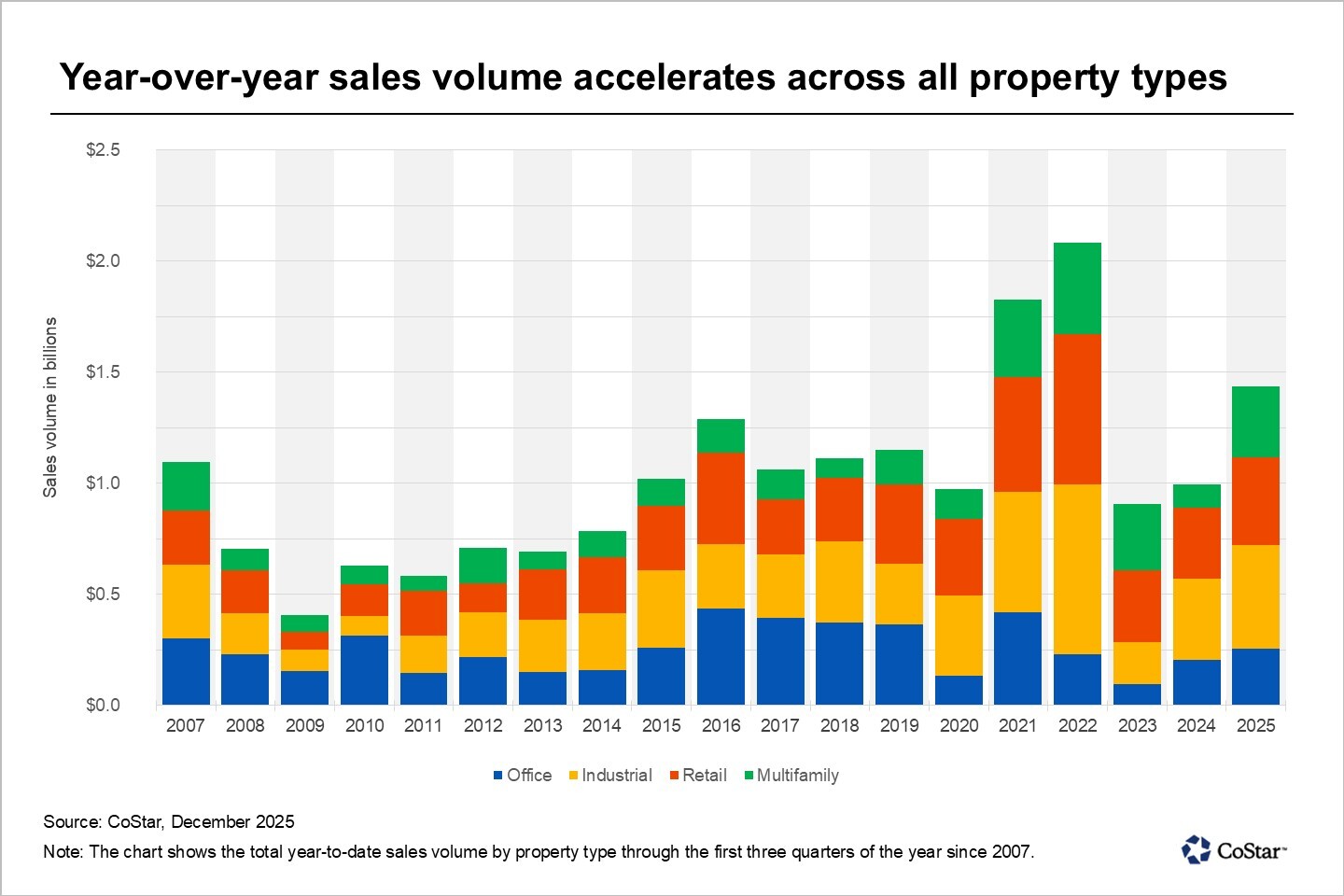
Milwaukee entered 2025 with renewed momentum, posting its strongest commercial real estate sales volume in three years. After a period of uncertainty and high capital costs, investors are returning with a sharper focus on quality assets, realistic pricing, and reliable cash flow. Activity is increasing across industrial, office, multifamily, and retail sectors, signaling a broad-based recovery fueled by stabilizing interest rates and improved market confidence.
As 2026 approaches, the title insurance industry is navigating a complex mix of market recovery, rising fraud threats, and sweeping regulatory changes. Industry leaders say the path forward centers on smarter technology, leaner operations, and stronger support for title agents. With AI-driven workflows, enhanced fraud prevention, and new compliance demands—including FinCEN’s expanded Geographic Targeting Orders—companies like Stewart and First American are reshaping how title work gets done. For real estate and mortgage professionals, the year ahead promises more automation, heightened standards, and major opportunities for those who stay ahead of the curve.
The real estate industry is undergoing a major transformation in 2025 as advancements in AI, proptech, blockchain, and data intelligence redefine how properties are marketed, valued, financed, and experienced. From instant digital valuations and immersive virtual tours to tokenized investments and predictive analytics, technology is reshaping every stage of the real estate lifecycle. Professionals who embrace these innovations—while maintaining the human expertise clients still rely on—will lead the next era of the industry.