Lofty Unveils the First Agentic AI Operating System: A New Era for Real Estate Productivity

Human and ai collaboration illustration

Artificial intelligence has officially entered its next evolution in the real estate world—and it’s far more than just smart prompts or automated messages. Lofty has launched Lofty AOS, the industry’s first agentic AI operating system, built to autonomously plan, execute, and manage entire real estate workflows.

For busy agents and brokerages, this marks a transformative shift. Instead of juggling dozens of manual tasks or relying on disconnected platforms, Lofty AOS acts like an intelligent digital workforce that manages lead handling, marketing, websites, transactions, and more—without waiting for step-by-step prompting.

AOS: AI That Doesn’t Wait for Instructions

Traditional AI reacts. Agentic AI takes initiative. Lofty AOS understands priorities, coordinates tasks, and completes end-to-end operations while adapting to each brokerage’s structure and goals.

Lofty CEO Joe Chen highlighted this evolution, emphasizing that organizations embracing agentic systems will “move beyond simple AI tools” and unlock exponential growth in productivity and business performance.

A Fully Specialized Network of AI Agents

Lofty AOS functions as a team of advanced digital agents—each one mastering a crucial pillar of real estate operations:

  • AI Assistant – Prioritizes high-value agent activities
  • Sales Agent – Engages leads, qualifies prospects, analyzes calls, and generates scripts
  • Social Agent – Builds and executes social media strategies
  • Homeowner Agent – Enriches databases and automates valuation-driven marketing
  • Website Builder – Creates SEO-optimized websites without design expertise
  • SEO/AEO Manager – Boosts visibility across traditional and AI-driven search systems
  • Transaction Coordinator – Manages mission‑critical steps during property transactions

Together, these agents eliminate tedious administrative work and ensure nothing slips through the cracks—something every real estate professional can appreciate.

Changing How Real Estate Teams Work

According to Taylor from Lofty, transitioning from traditional to agentic AI is more than a technological upgrade—it’s a reshaping of brokerage operations. This shift encourages teams to rethink workflows and redefine responsibilities to unlock AI’s true potential.

In a world where agents must balance marketing, lead nurturing, client communication, and compliance, offloading these tasks to an autonomous AI system could entirely redefine what “productive” means.

What This Means for Real Estate Professionals

Tools like Lofty AOS are reshaping the skill sets modern agents need. While AI handles more operational work, the industry still heavily relies on licensed, knowledgeable professionals who excel at negotiation, contract comprehension, and client guidance.

This is where Cameron Academy remains vital. As AI transforms workflows, agents who are well-trained, well-licensed, and adaptable will not just keep up—they’ll thrive.

Professionals who combine strong foundational knowledge with a keen understanding of emerging technologies will be the ones who lead the next wave of real estate success.

Explore Lofty AOS firsthand at lofty.com. Original coverage from RISMedia can be found here: read the full article.

More Articles

Getting licensed or staying ahead in your career can be a journey—but it doesn’t have to be overwhelming. Grab your favorite coffee or tea, take a moment to relax, and browse through our articles. Whether you’re just starting out or renewing your expertise, we’ve got tips, insights, and advice to keep you moving forward. Here’s to your success—one sip and one step at a time!

Florida Judge Reopens Hundreds of Citizens Insurance Disputes, Triggering Statewide Arbitration Shake‑Up

A Leon County judge has ordered Florida’s administrative courts to restart arbitration on more than 400 stalled Citizens Insurance cases, reigniting a legal showdown over whether the state’s insurer of last resort can force policyholders out of traditional courtrooms. The ruling directly conflicts with a separate Hillsborough County injunction that called Citizens’ arbitration system “likely unconstitutional,” setting up a rare judicial clash that could reshape how Floridians fight denied or underpaid property claims.

Inhabit Unveils Cutting‑Edge AI, Fraud Prevention, and Compliance Tech Set to Transform Property Management in 2025

Inhabit has launched a powerful new suite of AI‑driven tools designed to modernize leasing, strengthen fraud prevention, and simplify compliance for property managers nationwide. From advanced leasing assistants and NYC‑specific regulatory AI to instant income verification and upcoming identity‑screening tech, these innovations aim to solve some of the industry’s toughest challenges. Real estate professionals—especially in multifamily—can expect faster operations, stronger safeguards, and a more efficient workflow as these technologies roll out.

The Coming Housing Surplus: How Baby Boomer Demographics Could Reshape the Real Estate Market

A growing body of demographic research suggests that today’s housing shortage may give way to a future surplus as millions of Baby Boomer–owned homes return to the market over the next two decades. With affordability at historic lows and inventory still tight, this long‑term shift could eventually cool prices and transform the landscape for real estate professionals. The analysis draws parallels to aging populations abroad and highlights why understanding demographic cycles is becoming essential knowledge for agents, brokers, and mortgage professionals preparing for the next era of the housing market.

Griffin Funding Elevates John Jones to SVP of Growth as Lender Targets $3B in Non‑QM Volume

Griffin Funding has appointed John Jones as Senior Vice President of Growth and EOS Integrator, a move aimed at accelerating the lender’s push toward $3 billion in annual non‑QM loan volume by 2030. Jones, previously the company’s fractional integrator and COO, will lead expansion strategies, operational optimization, and leadership development as the lender strengthens its position in the increasingly competitive non‑QM market.

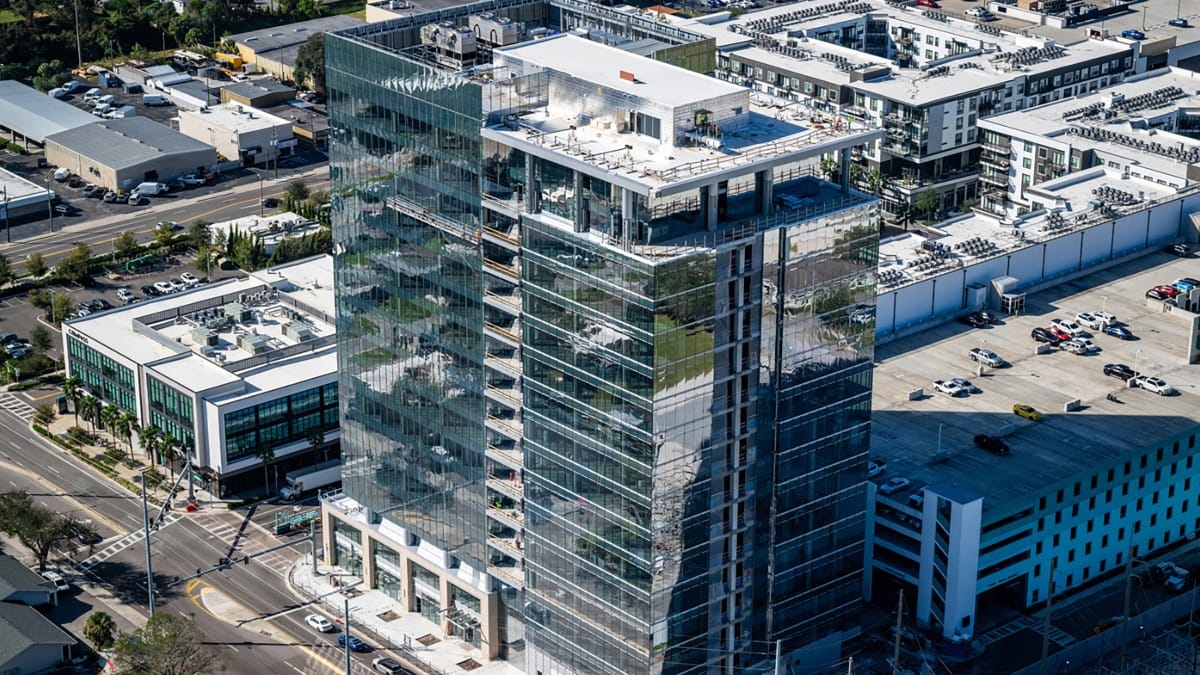
Tampa Defies National Real Estate Slowdown With Nearly 20% Stronger Multifamily Returns

A new report shows Tampa outperforming the national real estate slowdown with a 6.5 percent annualized multifamily return, nearly 20 percent higher than the U.S. average. While many metros face oversupply or regulatory drag, Tampa’s balanced development pipeline, strong population growth, and investor confidence continue to fuel resilient performance heading into 2026.

Global Investors Are Re‑Entering the Market—and Their Next Moves Could Reshape 2026

A new Colliers outlook reveals that global capital is picking up momentum again, with investors shifting toward more active, hands‑on strategies. Data centers are surging, offices are rebounding, and value‑add plays like adaptive reuse are defining the next wave of opportunity. Regional markets—from the U.S. to APAC—are seeing renewed demand as fundraising spreads across continents and investors seek speed, control, and scale. This snapshot helps today’s real estate and finance professionals stay aligned with where global money is moving next.