The IRS is ushering in a new era of tax reporting that will significantly affect freelancers, small business owners, and anyone who earns income through third-party payment apps like Venmo or PayPal. These changes are embodied in the form of adjusted thresholds for the Form 1099-K, a tax document used to report income from such platforms. Previously, this form was only required for those earning at least $20,000 annually through these services. However, new phased-in rules will reduce this threshold to $600 by 2026, starting with earnings over $5,000 in 2024.

This adjustment is intended to streamline tax monitoring and compliance, affecting millions of users engaged in the gig and sharing economies. It’s crucial to understand that income must be reported to the IRS regardless of whether you receive a 1099-K. Many platforms are already notifying users of these changes and are beginning to differentiate between business and personal transactions. Some states, like Maryland and Massachusetts, are implementing even stricter reporting thresholds.

If you find yourself affected by this shift, it is essential to report your earnings accurately. In the event of discrepancies, such as receiving a 1099-K for non-business transactions, corrections can be requested. Keeping meticulous records and consulting professionals can help navigate this evolving tax landscape effectively.

For more detailed information, including insights from tax experts like Mark Steber from Jackson Hewitt, and resources on managing new tax obligations, refer to the full article on CNBC’s website and other linked resources.

Understanding the 1099-K Form

The Form 1099-K is a critical document for reporting income received through payment apps, online marketplaces, or gift cards. As the IRS starts implementing new reporting requirements, understanding this form becomes increasingly crucial for those using platforms like Venmo or PayPal.

Who Will Receive a 1099-K?

Starting in 2024, if you earn more than $5,000 through third-party payment apps, you will receive a 1099-K form. This new threshold means far more people with side hustles, home businesses, and other gigs will be receiving these forms. According to a 2023 Government Accountability Office report, fully implementing the $600 threshold in 2027 will result in an additional 30 million Forms 1099-K issued annually.

What to Do If You Receive a 1099-K

For the 2024 tax year, if you receive a 1099-K, you should report this income on your 1040 Schedule C, Profit or Loss From Business. It’s advisable to open a separate business account on the appropriate app to keep funds distinct, regardless of IRS requirements.

If you receive a 1099-K incorrectly, you can ask the provider for an amended form with an explanation of what is wrong. You can also just enter the correct amount on your 1040’s Schedule 1. If a payment listed on a 1099-K doesn’t reflect a true taxable gain, gather receipts and other documentation to support your case.

Consulting Professionals

Navigating these changes can be complex, especially for gig workers, self-employed individuals, or small business owners. Consulting a tax professional or using reliable tax-prep software can help offset liabilities, such as travel expenses or home office costs.

For more insights, visit the IRS Tax Reporting page and explore resources provided by platforms like PayPal, Venmo, and Cash App.

More Articles

Getting licensed or staying ahead in your career can be a journey—but it doesn’t have to be overwhelming. Grab your favorite coffee or tea, take a moment to relax, and browse through our articles. Whether you’re just starting out or renewing your expertise, we’ve got tips, insights, and advice to keep you moving forward. Here’s to your success—one sip and one step at a time!

Proptech Promised a Revolution — So Why Does Real Estate Still Feel the Same?

Despite billions poured into proptech and a decade of flashy digital upgrades, the real estate experience remains largely unchanged. Apps made processes smoother, but not more transparent — because the industry’s core structures, data control and power dynamics stayed the same. True disruption will come from platforms that shift information and control to consumers, not just digitize outdated systems.

CRE Markets Wake Up in 2026: What Real Estate Professionals Need to Know

Early 2026 is delivering a clear message: commercial real estate is entering a recalibration phase. Construction is softening, pending home sales just saw a sharp drop, consumer sentiment is inching upward but remains fragile, and capital markets are tightening as major CRE sectors face rising distress. From data centers powering ahead to CMBS foreclosures climbing and office-to-residential conversions gaining momentum, professionals across real estate, mortgage, insurance, and finance need to stay sharp as the industry shifts.

Top 10 Highest-Paying Real Estate Careers of 2026

Discover the real estate roles earning the biggest paychecks in 2026. From investment consultants to commercial leasing managers, this breakdown highlights the salaries, responsibilities, and career paths offering the strongest financial potential in today’s evolving market—perfect for newcomers and seasoned professionals mapping their next big move.

Montana Launches Bold Licensing Reform Task Force to Boost Workforce Participation

Montana is taking major steps to remove outdated licensing barriers and strengthen its workforce. Governor Greg Gianforte has created a new Licensing Reform Task Force aimed at modernizing regulations, speeding up approvals, and helping more professionals enter high‑demand fields like construction and healthcare. With licensing numbers doubling over the past decade and rural communities facing critical shortages, the state is pushing for faster, more efficient pathways to work. The task force begins meeting in February and will deliver its full reform report by September 2026 — a move that could influence licensing modernization efforts nationwide.

AI Becomes Standard Gear for Real Estate Agents in 2026

Artificial intelligence has officially moved from novelty to necessity in the real estate world. According to new industry data, 97% of brokerage leaders say their agents now rely on AI tools for everything from listing descriptions to full-scale marketing campaigns. As adoption skyrockets, so do concerns over training, accuracy, and compliance — especially among smaller firms. The message is clear: for today’s real estate professionals, AI literacy isn’t optional anymore.

How the Biggest Players Shaped the 2025 Commercial Real Estate Comeback

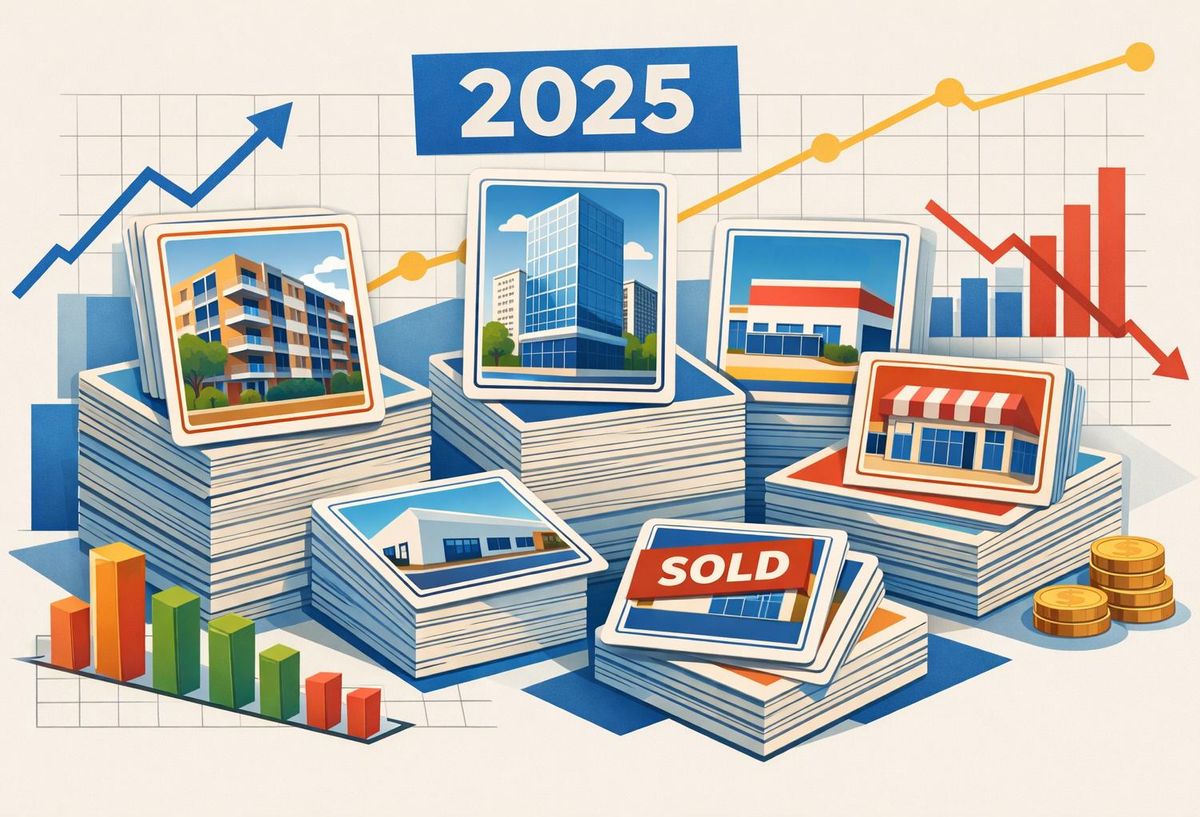
Commercial real estate roared back to life in 2025, with more than $255B pouring into multifamily, industrial, office and retail assets. Major investors moved fast on falling interest rates, improving bond yields and rising confidence across sectors. Multifamily dominated with over $115B in deals, industrial surged under private equity leadership, office saw renewed activity from owner-users and retail proved surprisingly resilient. For today’s real estate and finance professionals, the message is clear: opportunity favors those who stay informed and ready to act.